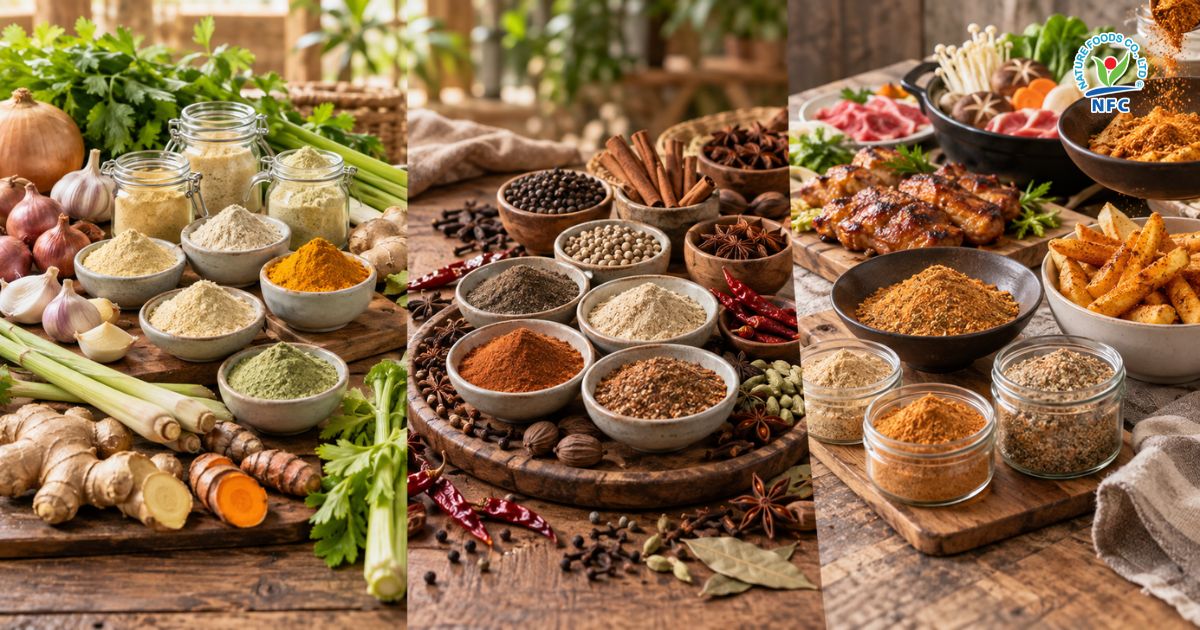
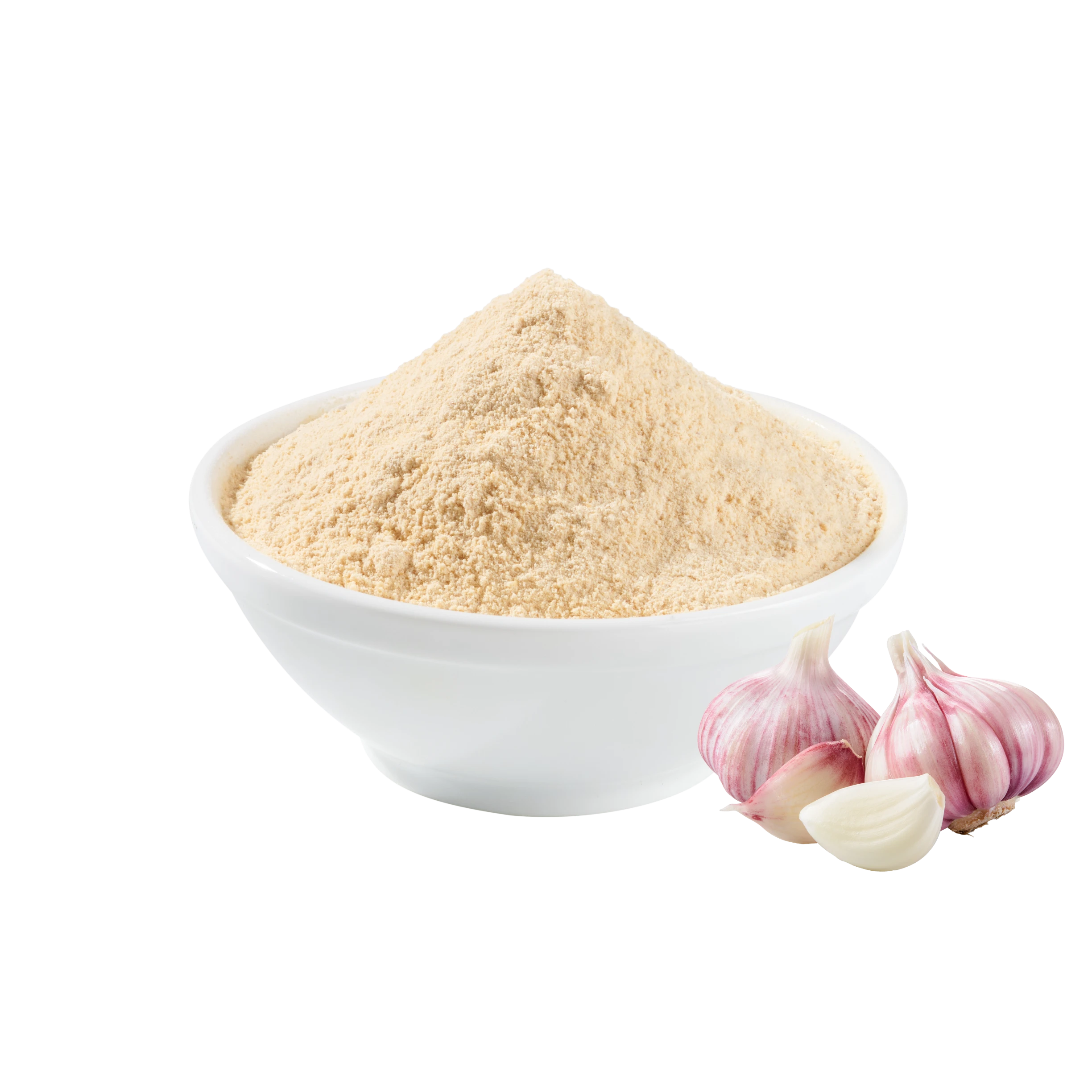
Garlic Powder
-
Formats & Granulometry: Ultra-fine powder (80–120 mesh), coarse ground meal, or customized granulated particle sizes tailored to corporate formulation specifications.
Characteristics: Natural ivory-to-pale-cream coloration, pungent allicin-derived aromatic profile, uniform bulk density, optimized for automated batch dosing and dry-blending dispersion.
Ingredients: 100% selected Allium sativum bulbs, washed, peeled, dehydrated, and precision-milled; available as pure single-ingredient powder or custom seasoning blends.
From industrial savory marinades, emulsified dressings, and processed meat manufacturing to convenience snack seasonings and ready-to-eat meal kits, garlic powder stands as one of the most indispensable spice ingredients across modern commercial food processing. Valued for its concentrated savory aroma, signature allicin-driven flavor punch, and exceptional formulation versatility, fine-milled dehydrated garlic provides industrial food processors with precise volumetric dosing, streamlined inventory handling, pneumatic conveyability, and absolute batch-to-batch flavor consistency across high-speed automated production lines.
Compared to raw whole garlic—which introduces substantial pre-treatment labor, rapid moisture spoilage, seasonal price volatility, and enzymatic discoloration—dehydrated garlic powder eliminates factory floor peeling overheads while dramatically stabilizing raw material costs. Nature Foods manufactures and supplies high-grade wholesale garlic powder engineered to satisfy the rigorous technical, chemical, and microbiological compliance parameters demanded by domestic food factories, multinational seasoning houses, commercial distributors, and private-label brand owners worldwide. In addition to high-capacity bulk raw material distribution.
Nature Foods delivers full-scale turnkey OEM, ODM, and contract blending services tailored to the specific product positioning and nutritional frameworks of each commercial partner.
Overview of Nature Foods’ Industrial Garlic Powder Products
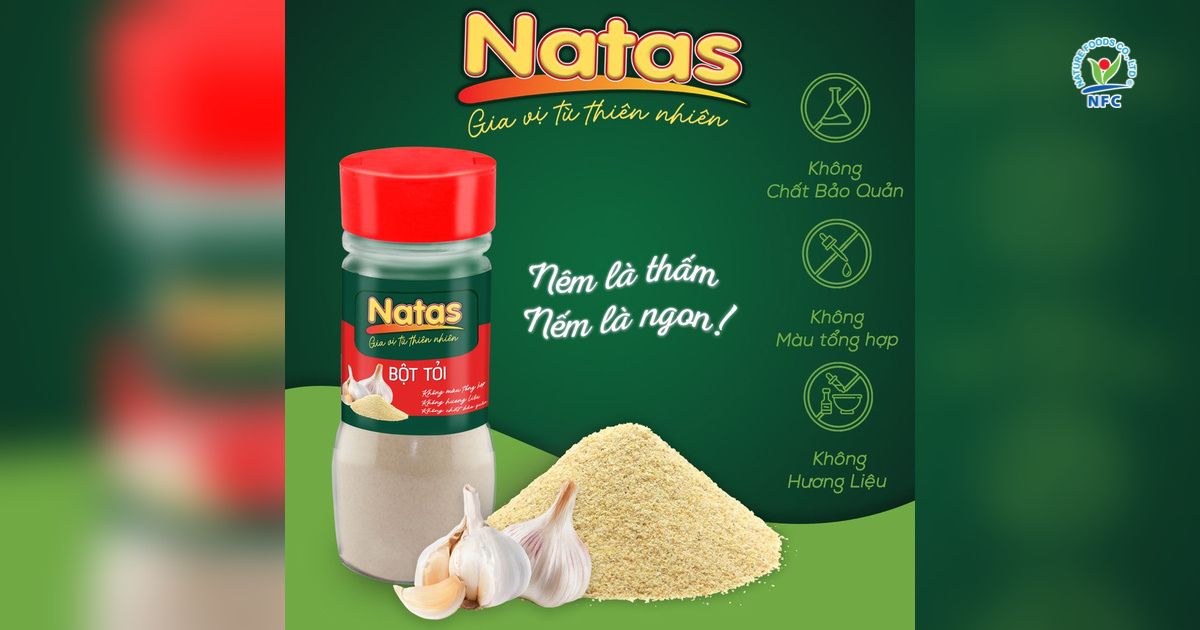
Nature Foods’ NATAS-grade garlic powder is manufactured from carefully vetted, mature garlic bulbs (Allium sativum) sourced from controlled agricultural farming zones. The raw bulbs undergo multi-stage optical sorting, automated clove separation, mechanical de-skinning, sanitization, low-temperature moisture dehydration, and high-velocity milling. This technical processing loop transforms fresh, perishable bulbs into a standardized, free-flowing dry ingredient designed for ambient warehouse storage, cost-efficient long-haul container freight, and seamless integration into automated industrial food manufacturing equipment.
To accommodate the wide spectrum of functional requirements across the food processing sector, Nature Foods supplies garlic ingredients across diverse particle sizes and formulation grades:
- Ultra-Fine Garlic Powder (80 to 120 mesh): Engineered for instant solubility, liquid dispersion, and pneumatic dry-powder blending without grittiness.
- Coarse Ground Garlic Powder (40 to 60 mesh): Ideal for dry spice rubs, sausage emulsions, and topical coatings requiring controlled flavor release.
- Granulated Garlic (20 to 40 mesh): Free-flowing, non-dusting granules providing excellent anti-caking properties in humid factory environments.
- Garlic Flakes & Minced Slices: Dehydrated whole clove pieces suitable for instant soup bases, canned food preparations, and culinary infusions.
- 100% Pure Clean Label Garlic Powder: Unadulterated, single-ingredient formulation with zero added carriers, starches, salts, or synthetic additives.
- Custom Blended Seasoning Formulations: Proprietary garlic salts, garlic-herb rubs, and multi-spice seasoning blends pre-mixed to exact client specifications.
- Heavy-Duty Industrial Bulk Packaging: Multi-layer poly-lined kraft sacks, moisture-proof aluminum barrier totes, and industrial cartons for factory lines.
- Private Label Retail Packaging: Ready-to-sell retail PET spice jars, glass canisters, and stand-up zipper pouches sealed under private corporate branding.
Fine-milled garlic powder is engineered for applications demanding rapid dissolution, smooth texture, and homogeneous flavor dispersion—such as powdered bouillons, liquid table sauces, canned gravies, instant noodle seasoning sachets, and extruded snack slurry coatings. Conversely, coarse ground and granulated garlic formats deliver tactile mouthfeel and visible spice inclusions, making them the preferred choice for meat marinades, pizza toppings, bakery dough dustings, and surface seasoning blends.
Across the global food and beverage manufacturing ecosystem, Nature Foods’ garlic powder is widely utilized in:
- Commercial Bouillon Powders & Compound Seasoning Blends: Serving as the savory foundational note in dry seasoning cubes, all-purpose seasoning salts, and ramen soup bases.
- Meat, Poultry & Seafood Marinades: Imparting deep savory aromatics, masking gamey notes, and enhancing umami in value-added frozen meats, poultry fillets, and seafood processing.
- Extruded Snacks & Topical Dusting Systems: Providing high-adhesion seasoning coatings for potato chips, rice crackers, extruded corn puffs, pretzels, and roasted nuts.
- Sauces, Condiments & Emulsified Dressings: Functioning as the core aromatic in BBQ sauces, sriracha variations, hot sauces, salad dressings, pasta sauces, and marinades.
- Emulsified Sausages, Cured Meats & Pâtés: Distributing evenly through protein matrices in frankfurters, bologna, pepperoni, salami, meatballs, and canned luncheon meats.
- Plant-Based Proteins & Vegetarian Formulations: Adding hearty, savory depth and rounding out natural beany off-notes in soy, pea, and mushroom protein analogues.
- Industrial Bakery & Frozen Convenience Meals: Enhancing savory flavor profiles in garlic breads, cracker doughs, frozen pizzas, and retort-packaged entrées.
By replacing raw bulbs with standardized industrial garlic powder, commercial food processors streamline material handling, eliminate manual peeling waste, prevent unhygienic juice spillage on factory floors, and ensure consistent organoleptic and microbiological quality across thousands of metric tons of finished goods.
Standardized Garlic Powder Industrial Manufacturing Process
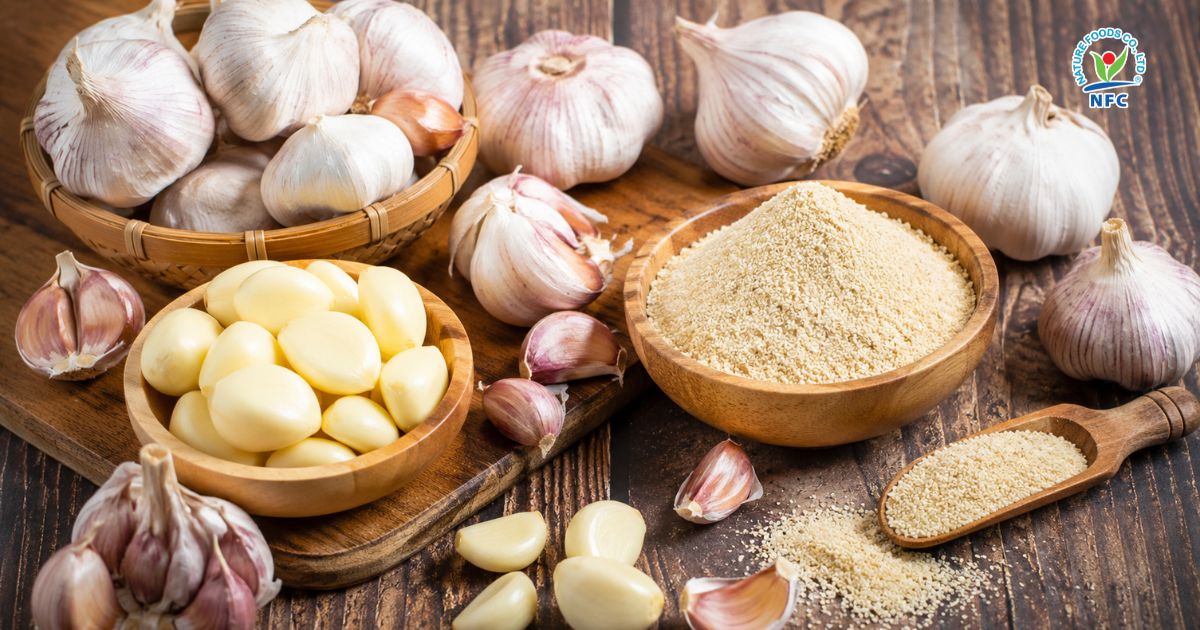
The finished quality of industrial garlic powder—specifically its allicin-generating potential, visual color stability, flowability, and microbiological safety—relies heavily on strict process controls across every stage of processing. At Nature Foods, processing follows a closed-loop sequence to maintain color integrity, aromatic intensity, and analytical compliance.
Step 1: Agronomic Selection & Raw Material Inbound Quality Audit
The production workflow begins at the agricultural sourcing gate. Garlic bulbs are inspected for density, firmness, natural color uniformity, pungency, and total soluble solids (°Brix). Bulbs displaying softness, mold, sprouting, mechanical rot, or off-odors are rejected at the receiving dock.
Standardizing raw material inputs minimizes lot-to-lot color shifts, volatile allicin variations, and moisture discrepancies in finished batches. Depending on client specifications, raw bulbs are selected by specific varietal strain, bulb diameter, and agronomic growing zone to guarantee traceability.
Step 2: Clove Breaking, Mechanical De-Skinning & Sanitization
Selected whole bulbs enter mechanical clove breakers that separate individual cloves without crushing the fleshy tissue. The cloves pass through high-velocity pneumatic de-skinning tunnels that peel outer papery husks using compressed air, eliminating manual handling.
The peeled cloves are transferred through high-pressure aqueous washing systems to remove soil residue and debris. Automated optical inspection sorters and secondary inspection tables remove discolored, bruised, or root-damaged cloves. The cleaned cloves are sliced into uniform chips (typically 1.5 to 2.5 mm thickness) to optimize drying efficiency and prevent surface case-hardening during dehydration.
Step 3: Precision Thermal Dehydration & High-Velocity Fine Milling
Sliced garlic chips enter continuous hot-air convective belt drying tunnels. Dehydration temperature curves are precision-monitored (typically between 50°C and 65°C) to remove moisture while preserving alliin and alliinase enzyme precursors.
If drying temperatures run too low, residual moisture remains high, leading to clumping, poor grindability, and mold risk. If temperatures spike too high, sugars caramelize, causing darkening and burning off volatile aromatic oils. Dehydration continues until the garlic flakes reach a uniform residual moisture baseline below 6.0% and a water activity threshold of $a_w < 0.30$.
The dried garlic flakes are cooled in climate-controlled dehumidified rooms before entering temperature-controlled industrial pin mills or hammer mills. The output is processed into:
- Ultra-fine garlic powder (80–120 mesh).
- Medium-coarse ground garlic (40–60 mesh).
- Granulated garlic particles (20–40 mesh).
- Dehydrated minced garlic flakes (8–16 mesh).
Milled particles pass through vibrating multi-deck mechanical sifters to ensure uniform particle size distribution, re-routing oversized particles for re-milling to achieve a homogeneous granulometry curve.
Step 4: Quality Assurance, Metal Detection & Protective Barrier Packaging
Every production lot undergoes comprehensive analytical laboratory screening before packaging. Quality parameters evaluated include:
- Visual Color Metrics: Measuring Hunter $L^*a^*b^*$ color values to ensure a bright ivory-cream hue.
- Aroma & Allicin Potency: Measuring volatile alliin/allicin generation via HPLC spectrophotometry.
- Particle Size Granulometry: Sieve analysis verifying mesh distribution percentages.
- Residual Moisture & Water Activity: Verifying moisture content (≤ 6.0%) and water activity ($a_w ≤ 0.30$).
- Bulk Density & Flowability: Standardizing g/mL bulk density for automated filling lines.
- Microbiological Screening: Testing Total Plate Count (TPC), Yeast & Mold, Coliforms, E. coli, and absence of Salmonella (per 375g).
- Heavy Metal & Pesticide Residue Analysis: ICP-MS testing verifying Lead, Arsenic, Cadmium, and Mercury limits.
Because fine garlic powder is naturally hygroscopic, exposure to ambient humidity triggers caking and enzymatic degradation. Finished lots pass through high-intensity magnetic separators and multi-frequency digital metal detectors before being sealed inside climate-controlled cleanrooms ($RH < 40\%$). Packaging options include multi-layer polyethylene-lined kraft paper sacks, aluminum foil barrier bags with optional nitrogen flushing ($N_2$), or retail packaging formats. Every container is labeled with lot numbers, production dates, technical specifications, and shelf-life tracking data.
Common Industrial Garlic Powder Formats in the Marketplace
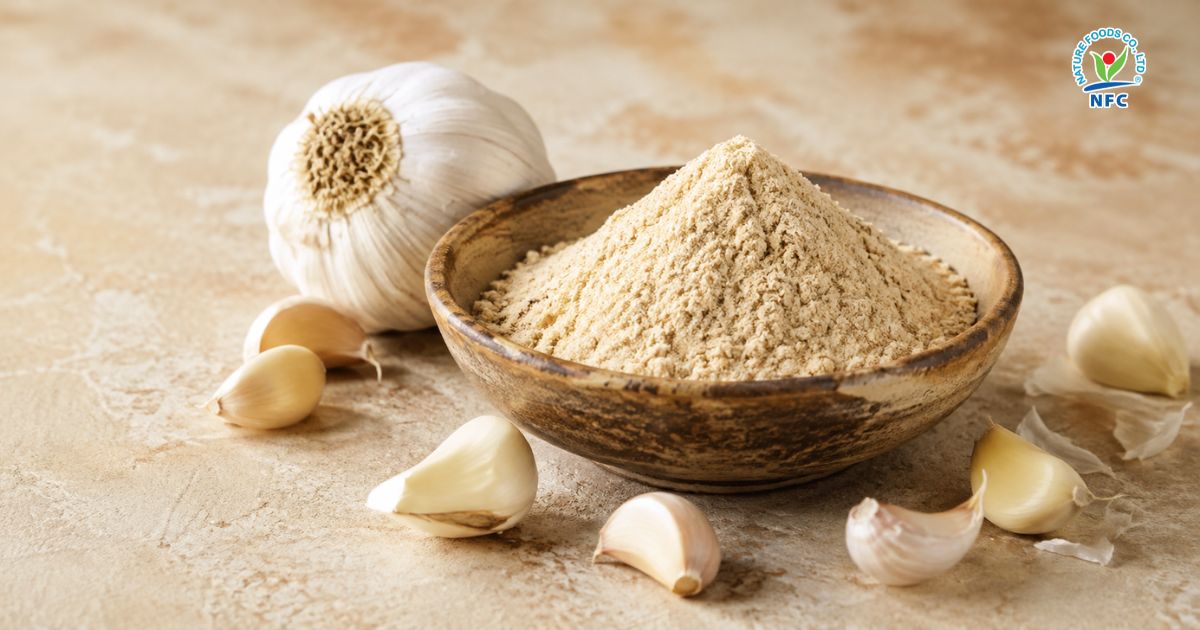
Industrial garlic ingredients are processed into various physical particle sizes and formulations to match specific culinary, operational, and textural requirements:
- 100% Pure Garlic Powder: Produced exclusively from dehydrated garlic cloves without added carriers, salt, or fillers. Preserves authentic allicin pungency and aroma, serving as a base raw material for custom formulations.
- Ultra-Fine Garlic Powder (80–120 Mesh): Characterized by small particle sizes and rapid solubility. Ideal for seasoning sachets, bouillons, liquid marinades, sauces, and extruded snack slurries where smooth texture is essential.
- Granulated Garlic (20–40 Mesh): Features larger particle dimensions that resist caking, making it easy to dispense in high-humidity processing rooms. Suitable for topical meat rubs, pizza seasonings, and spice blends.
- Minced Garlic & Garlic Flakes (8–16 Mesh): Coarser cuts that rehydrate to provide visible garlic pieces and texture in canned goods, ready-to-eat stews, and instant soups.
- Custom Blended Industrial Garlic Seasonings: Homogeneous mixtures of garlic powder combined with salt, sugar, black pepper, chili, onion powder, or culinary herbs. Provides a turnkey seasoning solution that reduces ingredient weighing steps on assembly lines.
Depending on manufacturing requirements, food companies can select pure garlic powder for internal formulation control or utilize pre-blended seasonings to standardize flavor delivery and streamline operations.
Comparative Analysis: Pure Garlic Powder vs. Industrial Blended Garlic Seasoning
Pure garlic powder and blended garlic seasonings both play important roles in commercial food processing, differing in composition, functional flexibility, and application scope:
- Pure Garlic Powder: Contains 100% dehydrated garlic solids, delivering concentrated aroma and heat. Ideal for food manufacturers requiring precise control over spice ratios in proprietary recipes.
- Industrial Blended Garlic Seasoning: Combines garlic powder with functional ingredients like salt, dextrose, anti-caking agents, and complementary spices. Designed for direct addition to production lines as a complete seasoning profile.
- Compositional Purity: Pure garlic powder contains single-ingredient declarations suitable for Clean Label products. Blended seasonings contain multi-component matrices engineered for specific flavor profiles.
- Formulation Flexibility: Pure garlic powder provides R&D teams with total flexibility to adjust spice, sodium, and sweetness levels independently. Blended seasonings standardize flavor profiles across multiple production shifts.
- Industrial Applications: Pure garlic powder functions as an ingredient in dry mixes, sauces, extruded snacks, and processed meats. Blended seasonings are used as topical dustings, meat marinades, or table seasonings.
Selecting between pure and blended garlic formats depends on recipe design, operational setup, target cost parameters, and clean-label objectives.
Multi-Sector Applications of Garlic Powder in Food Processing
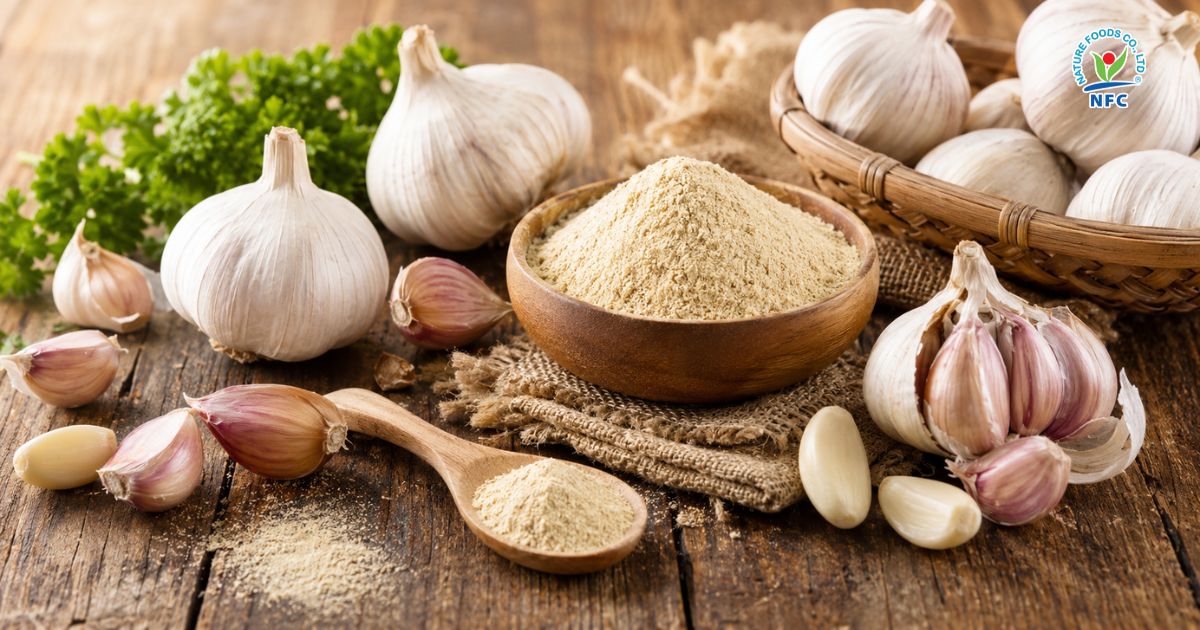
Thanks to its concentrated flavor profile, low water activity, and consistent dispersion, garlic powder is widely applied across multiple food processing sectors:
- Bouillons, Dry Stocks & Multi-Spice Seasoning Mixes: Blended with onion powder, pepper, salt, and yeast extracts to create bouillon cubes, ramen seasoning sachets, and curry bases.
- Meat, Poultry & Seafood Marinades: Used in wet marinades and dry rubs for barbecue meats, cured jerky, breaded chicken fillets, and frozen seafood preparations.
- Snack Foods & Topical Dusting Systems: Imparts savory flavor to potato chips, crackers, extruded corn snacks, roasted nuts, and popcorn.
- Sauces, Condiments & Dressings: Incorporates into garlic mayonnaise, BBQ sauces, pizza sauces, pasta gravies, and hot sauces, providing flavor without separation.
- Sausages, Cured Meats & Pâtés: Blends into protein emulsions for hot dogs, mortadella, pepperoni, meatballs, and canned meats, ensuring uniform flavor distribution.
- Plant-Based & Vegetarian Meats: Enhances savory notes and masks botanical off-flavors in soy, pea, and mycoprotein meat alternatives.
- Bakery, Pizza & Topical Garnishes: Used in savory doughs, garlic bread spreads, pizza crust dustings, and packaged croutons.
Depending on the product format, food companies can choose ultra-fine powder for seamless liquid dispersion or granulated particles for visible seasoning inclusions and textured bite.
Commercial Advantages of Using Industrial Garlic Powder in Food Manufacturing
Switching from fresh raw garlic to standardized industrial garlic powder provides significant operational, economic, and quality benefits:
- Eliminates Factory Pre-Treatment Labor: Eliminates manual sorting, clove separation, peeling, washing, and chopping, cutting floor labor costs.
- Precision Batch Dosing: Standardized dry powder allows automated weighing and dosing, minimizing batch variations.
- Consistent Flavor Profile: Standardized allicin and moisture levels ensure consistent flavor delivery across production runs.
- Excellent Dispersion: Fine mesh powder blends smoothly into dry seasoning mixes, brines, and emulsion matrices without settling.
- Decouples Production from Crop Seasonality: Dehydrated inventory insulates supply chains from fresh garlic price volatility and harvest shortages.
- Eliminates Organic Pre-Treatment Waste (Zero Waste): Eliminates peel, stem, and spoil waste, achieving 100% yield efficiency in processing.
- Logistics & Storage Efficiency: Moisture extraction reduces raw weight by 80–85%, significantly lowering freight costs and eliminating cold storage utility bills.
- Compatible with Automated Production Equipment: Free-flowing powder works reliably in automated pneumatic transfer systems, batch hoppers, and continuous blenders.
B2B Wholesale & Contract Procurement Policies at Nature Foods
Nature Foods supplies certified, high-grade garlic powder to commercial food manufacturing plants, seasoning processors, distributors, and private-label brand owners.
- Tiered Wholesale Pricing & Flexible MOQs: Wholesale pricing is structured around order volumes, mesh fineness, formulation specifications, and packaging styles. Minimum Order Quantities (MOQs) are tailored to standard catalog items or custom OEM contract runs.
- Complimentary R&D Pre-Order Sampling: Nature Foods provides laboratory test samples (100g to 500g) for client R&D and QA/QC teams to evaluate color, aroma, solubility, bulk density, and recipe compatibility prior to contract signing.
- Technical Customization Capabilities: We support custom mesh sizes (80–120 mesh fine powder, 40–60 mesh coarse ground, 20–40 mesh granulated), custom moisture thresholds, and proprietary multi-spice seasoning blends.
- Turnkey Private Label OEM/ODM Manufacturing: Through our OEM/ODM and White Label services, products can be packaged in industrial bulk totes (20–25kg poly-lined cartons) or retail packaging (PET spice jars, glass bottles, stand-up zipper pouches).
Nature Foods assists partners with technical documentation, including Certificates of Analysis (CoA), Technical Data Sheets (TDS), and food safety compliance files, while optimizing packaging and shipping logistics for domestic and international destinations.
Frequently Asked Questions Regarding Industrial Garlic Powder (FAQ)
1. Does Nature Foods’ garlic powder contain chemical preservatives, anti-caking agents, or artificial flavorings?
2. What is the standard commercial shelf life of bulk garlic powder, and what storage conditions are required?
When stored unopened in original moisture-barrier packaging under recommended conditions, industrial garlic powder maintains a commercial shelf life of 12 to 24 months. Detailed shelf-life and re-test dates are provided on each shipment’s Certificate of Analysis (CoA).
Because garlic powder is hygroscopic, opened packages must be tightly re-sealed immediately and stored in a cool, dry, well-ventilated warehouse below 20°C (68°F) and relative humidity (RH) under 60%, away from direct sunlight and heat sources to prevent moisture absorption, caking, and color browning.