From a familiar snack product, dried apples are increasingly widely applied in many fields such as processed food, cereals, granola, confectionery, beverages, and premium gifts. With their natural flavor, excellent shelf life, and processing versatility, dried apples not only satisfy consumer demands but have also become a strategic raw material preferred by many enterprises to develop value-added product lines.
However, when executing manufacturing at an industrial scale, selecting dried apples moves far past mere flavor parameters to mandate strict uniformity regarding color depth, residual moisture, structural profiles, and batch-to-batch quality. These critical indicators directly impact plant floor efficiency, quality control capabilities, and ultimate end-user sensory experiences.
Therefore, establishing an alliance with a procurement partner that possesses a stable production capacity and satisfies custom specifications tailored to individual food applications will effectively assist your enterprise in optimizing variable costs, elevating finished lot parameters, and strengthening your competitive moats within the marketplace.
Classification of Popular Dried Apple Varieties in the F&B Industry
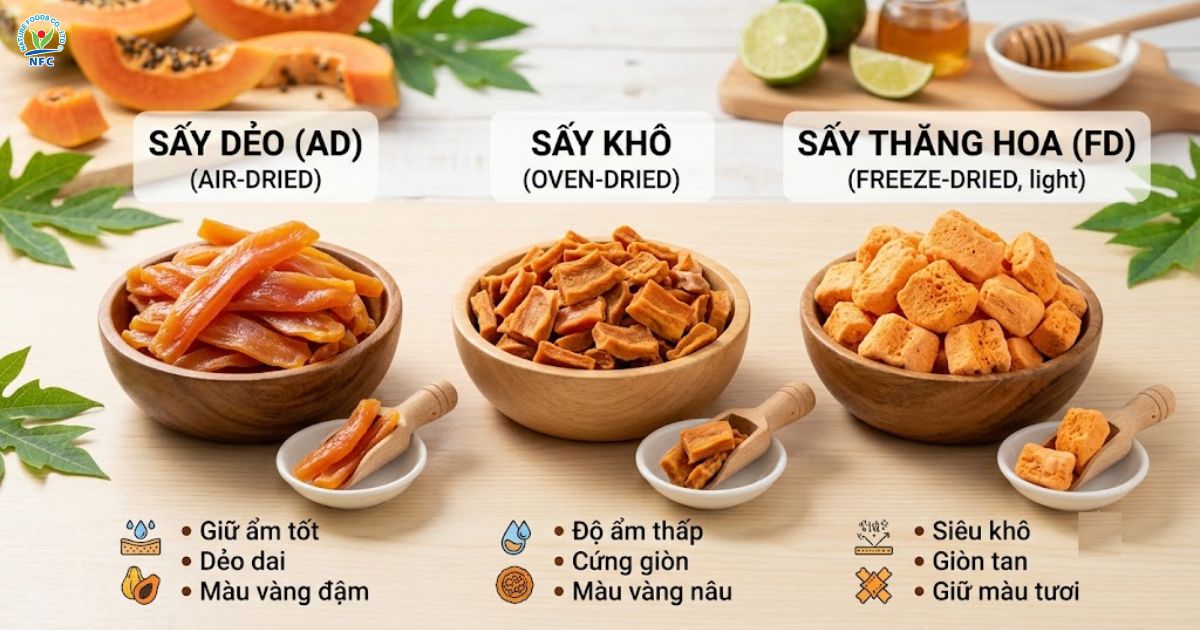
Soft-Dried Apples: Retaining Balanced Mild Sweetness and Natural Tenderness
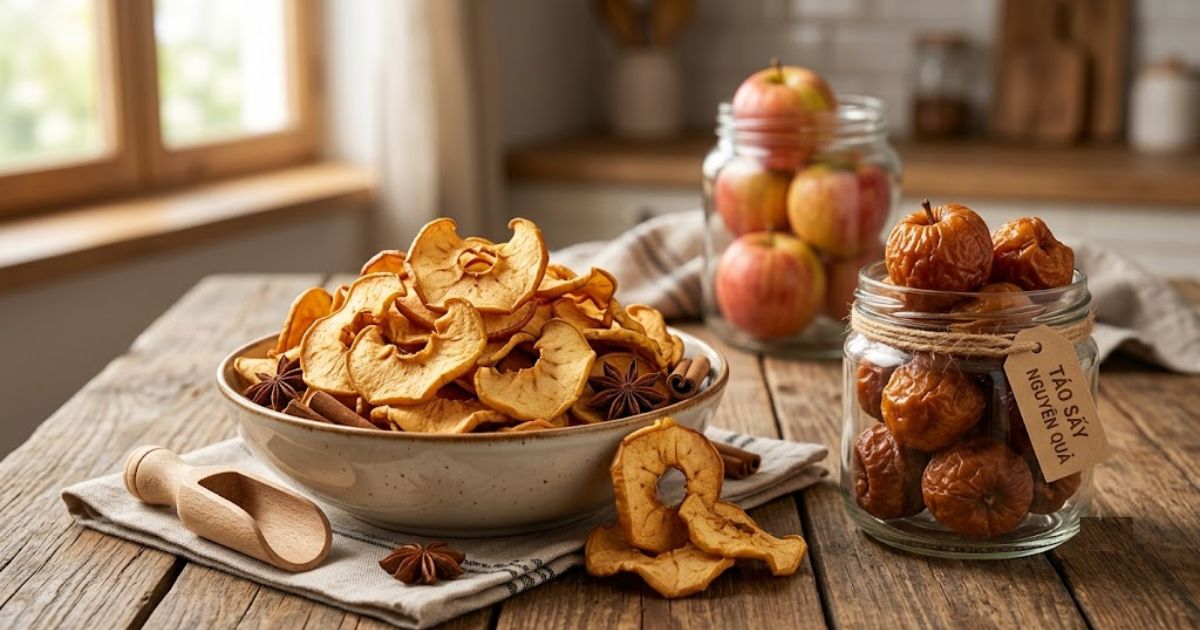
Soft-dried apples have always been a highly favored product category thanks to their capacity to preserve the most natural attributes of fresh crops post-processing. This specific variety displays a tender and pliable texture, locking in a balanced mild sweetness and distinct apple aroma, establishing a pleasant mouthfeel that avoids any dryness during consumption.
Consequently, soft-dried apples stand out as an ideal choice for consumer brands developing natural fruit snack ranges, or implementing them as integrated inclusions inside baked cookies and cereals that require a gentle chewiness and robust flavor notes.
Crispy Dried Apples: Perfectly Suited for Retail Distribution Enterprises
For product lines focusing on convenience and fun sensory experiences, crispy dried apples serve as a premier candidate for your enterprise. Thanks to advanced processing that triggers deep moisture reduction, crispy dried apples possess a porous, crunchy structural profile, yielding an appealing texture that fits perfectly with fast-moving consumer trends.
This specific variety also features strong operational assets regarding long-term shelf preservation, minimal spoilage indices, hassle-free packaging, and optimized transit and distribution economics. It serves excellently as an immediate ready-to-eat snack, or as mixed topping components alongside roasted nuts and dietary cereals.
Freeze-Dried Apples (Freeze Drying): Premium Benchmarks for Sensory Experiences
When your enterprise sets clear targets toward premium market segments that enforce strict parameters across both internal quality and external visual look, vacuum freeze-drying technology (FD) stands as the ultimate fit.
Freeze-dried apples perfectly safeguard near-absolute parameters tracing natural coloration, dimensional shape, structural blocks, distinctive fresh flavor profiles, and baseline nutritional content native to fresh apples.
They serve excellently as high-performance raw materials for tropical fruit tea blends (where the apple easily rehydrates and returns cleanly to its fresh state), high-end cereals, or functional health supplements mandating immaculate sensory indicators.
Long-Term Warehousing Assets and Financial Efficiency of Dried Apples
In the comprehensive macro blueprint of the food processing industry, optimizing raw material costs and mitigating supply chain volatility remain existential challenges for every commercial entity. Compared to utilizing fresh produce, which continuously forces operations to confront nightmares of physical spoilage, micro-bacterial decay, and highly unpredictable harvest seasonality, dried apples emerge as an strategic business asset. This raw input not only empowers corporate manufacturers to remain fully proactive in tracking material channels and streamlining storage expenses, but seamlessly anchors long-range production planning on a stable, predictable, and sustainable framework.
Extending Shelf Life Capabilities, Minimizing Material Waste Rates
One of the primary and most resource-intensive bottlenecks inside the F&B sector is the incredibly short biological lifespan of fresh agricultural produce. Post-harvest fresh apples are highly vulnerable to mechanical crushing during manual unloading spikes, or rapid attack by micro-biological vectors such as molds, yeasts, and rot-inducing bacteria. The practical loss ratios inside processing floors dependent on raw fresh fruits routinely track at excessive scales, immediately undermining enterprise cash flows.
Dried apple raw materials fundamentally close this economic loophole through high-performance water extraction setups (such as vacuum freeze drying – Freeze Drying or cool drying). This moisture stabilization suppresses internal water activity parameters down to a tight minimum, systematically dismantling the biological survival matrix required by destructive micro-organisms and slowing down enzymic cellular degradation pathways.
The resulting output secures a stable ambient shelf life extending from multiple months up to a calendar year (varying with selected drying configurations and barrier packaging specifications) with zero quality depreciation, browning discoloration variations, or nutrient degradation. Expanding ingredient lifespans helps streamline corporate cost architectures cleanly, forcing obsolescence and spoilage write-offs down to near-zero margins.
Trimming Logistics Overheads and Optimizing Space Footprints
Operating a continuous cold chain infrastructure (Cold Chain) for agricultural fresh crops represents a massive variable cost liability. Procurement offices must maintain dedicated cold rooms and active refrigeration transit fleets running around the clock. Any minor breakdown in localized climate values over long-haul transit routes immediately degrades the cargo structure, forcing total lot disposal. Furthermore, water-heavy raw fruits are highly bulky, taking up extensive storage footprint while yielding low real commercial value per unit of physical volume.
Dried apples deliver the ultimate answer for logistics optimization loops due to their distinct processing advantages of ultra-lightweight mass and dense volumetric compactness post-dehydration.
-
Regarding transit logistics: Logistics units can cleanly transport substantially higher material volumes inside standard containers within a single shipping run without deploying expensive refrigerated transport assets, dramatically cutting per-unit freight overheads.
-
Regarding warehousing: Dried apples entirely eliminate all dependencies on capital-intensive cold storage infrastructure. Brands merely store raw inventory within ambient, dry warehouse properties protected from moisture migration and direct sunlight exposure. This operational adjustment drives down factory utility expenses, maximizes central warehouse footprint usage, and relaxes asset management complexity profoundly.
Stabilizing Production Cost Baselines Against Market Fluctuations
Fresh crop values domestically and internationally consistently experience severe market volatility driven by seasonal supply-demand shocks, extreme weather, crop diseases, and shifting localized transport expenses. This instability in incoming fresh material pricing acts as a double-edged sword, making it highly difficult for manufacturers of granola cereals, baked goods, or premium tea sachets to smoothly calculate retail product pricing, which disrupts quarterly financial charts and squeezes projected margins.
Conversely, industrial dried apples possess immense stability regarding both available volume output and pricing metrics all year round thanks to standardized plant processing. Their long-term warehousing resilience empowers procurement directors to deploy smart inventory stockpiling strategies: executing bulk-buying agreements (Bulk-buying) when the primary agricultural supply chain hits peak capacity at optimized cost curves, then storing the dry asset safely to feed manufacturing lines all year round.
This operational insulation helps food brands securely fix their Cost of Goods Sold (COGS) over lengthy fiscal cycles, maintaining stable consumer pricing to elevate retail competitiveness while completely anchoring target profit margins against unpredictable macroeconomic market shocks.
Evaluation Benchmarks for Auditing Export-Grade Dried Apple Contract Factories
When introducing food lines into the international marketplace, validation requirements for dried apple ingredient channels cover far past basic flavor attributes to heavily scrutinize lot uniformity, biological safety, and corporate regulatory compliance. Selecting an accredited strategic contract manufacturer establishes the vital baseline required to support multi-year cross-border scaling.
Below are the three critical criteria used to audit the capabilities of an export-standard dried apple production facility:
Mass Supply Capacity and Meticulous Lot-to-Batch Uniformity
Cross-border commercial shipments typically present large volume parameters and strict departure timelines. A robust contract manufacturer must operate standardized processing protocols to protect finished lots from standard cross-run quality fluctuations. Advanced production machinery, optimized internal logistics patterns, and rich capacity boundaries are necessary to eliminate any supply chain bottlenecks for business partners.
To cleanly answer these modern scaling needs, premier contract processors like Nature Foods (located inside Nhon Trach 1 Industrial Zone, Dong Nai) have constructed optimized manufacturing systems, hitting an annual facility output exceeding 3,000 tons of finished products across a versatile catalog of over 300 items.
This heavy manufacturing footprint empowers the complex to smoothly absorb high-volume B2B orders while maintaining superior flexibility to adjust product features based on individual project configurations.
Strict Quality Control Architecture and Confident Global Export Clearances
Every international trading territory, spanning the USA and Europe to the Middle East, maintains unique technical trade barriers tracking sanitation and food safety. Monitoring analytical metrics like residual moisture, cross-contamination counts, micro-biological baselines, and environmental warehouse storage values requires that the production facility execute an uncompromising quality management framework.
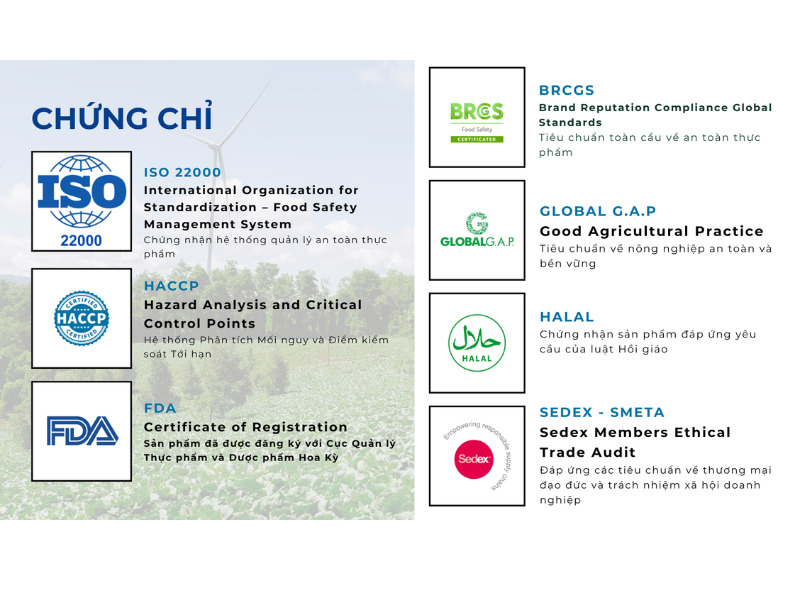
The factory must maintain an accredited portfolio of world-class credentials to verify its capabilities to safeguard absolute bio-safety parameters throughout raw fresh fruit processing down to finished bulk packaging cleanrooms.
Forming an alliance with processing plants that possess an elite regulatory framework like Nature Foods systematically insulates your enterprise from legal risks at customs clearance points. Our industrial pipelines comply with foundational safety protocols like ISO 22000, HACCP, and BRCGS, while holding specialized market registrations including current FDA certifications (for the USA marketplace), full HALAL compliance portfolio (for Islamic nations), paired with strict social responsibility and traceability audits like GLOBALG.A.P. and SEDEX – SMETA.
Agility across OEM/ODM Services and Versatile Processing Technologies
Every distinct brand name works on customized product strategies: while certain clients require diced dried apples for cereal integration, alternative developers demand whole freeze-dried apple slices to formulate premium detox teas. Consequently, the processing plant must demonstrate high advisory agility, adapt recipes flexibly, and operate multifaceted drying technologies to perfectly fine-tune your formulation economics and material structures.
Leveraging extensive tenure inside the contract OEM/ODM food manufacturing sector, strategic allies like Nature Foods step smoothly alongside your team right from concept ideation stages. Mastering both advanced vacuum freeze-drying technology (FD) engineered for premium tiers (demanding immaculate color and shape retention) and standard hot-air drying loops (Air Drying – AD) built for value-driven lines empowers brands to agilely expand their product choices, confidently matching target consumer market preferences precisely.
Frequently Asked Questions in Dried Apple Sourcing and Contract Processing (FAQ)
1. What is the shelf life capability of dried apples?
2. What is the Minimum Order Quantity (MOQ) requirement for bulk wholesale or contract processing?
3. Can the manufacturing plant cut and slice dried apples according to customized formula setups?
Depending closely on intended industrial applications (whether used as crunchy cereal toppings, baking pastry fillings, or light fruit tea slices), enterprises can freely request custom mechanical processing configurations. Standard physical formats include uniform apple slices, multi-sized dices/granules, finely chopped bits, or milled pure apple powders engineered for immediate blending inside hospitality and bakery operations.
In Vietnam, leveraging mass infrastructure networks inside Nhon Trach Industrial Complex paired with decades of strategic tenure as an institutional OEM/ODM contract factory, Nature Foods provides versatile industrial dried apple solutions spanning high-end soft-dried, crispy dried, and freeze-dried variants. Meticulously decoding individual crop behaviors, optimizing warehouse footprint constraints, and executing alliances with an accredited contract processing entity represents a profound commercial opportunity accelerating sustainable corporate growth.