Mangosteen (Garcinia mangostana), globally revered as the “Queen of Tropical Fruits,” is celebrated for its exquisite balance of refreshing sweetness and delicate acidity, paired with a snow-white, melt-in-the-mouth aril segment structure. However, fresh mangosteens are notoriously perishable. With an internal moisture content exceeding 80% to 84%, high concentrations of natural fructose and glucose, and extreme vulnerability to post-harvest pericarp hardening and aril translucency, fresh fruit logistics present massive operational liabilities.
- Technical Advantages and Engineering Limitations of Vacuum Freeze-Dried Mangosteen
- Why Does Freeze-Dried Mangosteen Command Premium Commercial Value?
- Commercial Value, B2B Application Matrix & Supply Chain Optimization
- Key Benchmarks for Auditing a Freeze-Dried Mangosteen Contract Manufacturer
- Frequently Asked Questions Regarding Freeze-Dried Mangosteen (FAQ)
Technical Advantages and Engineering Limitations of Vacuum Freeze-Dried Mangosteen
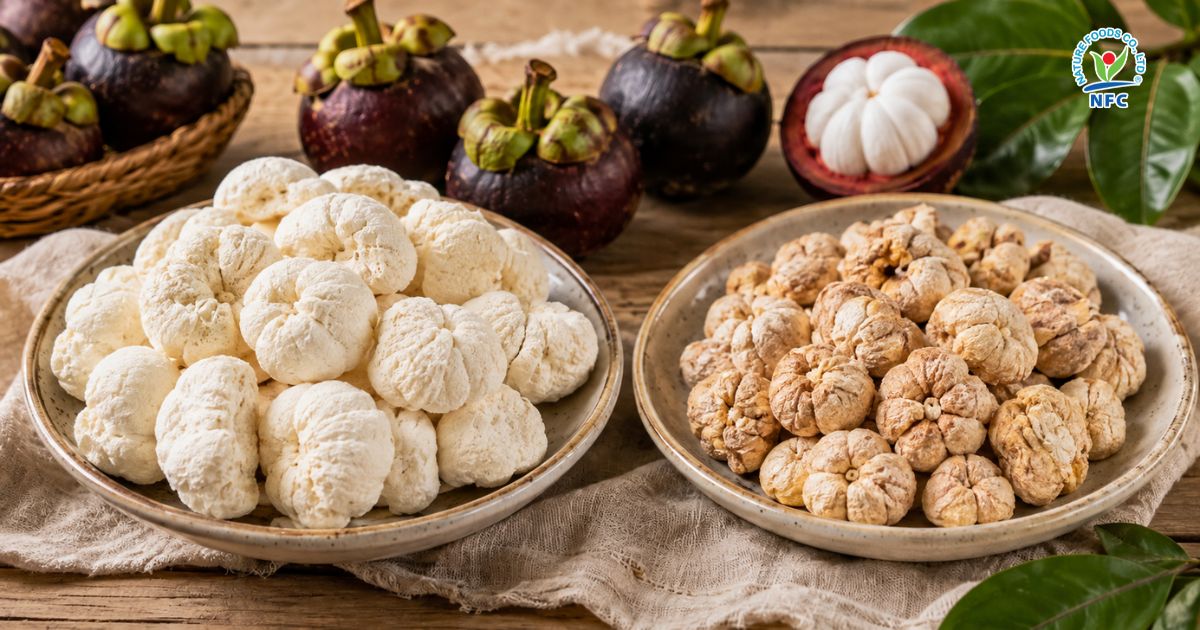
Unlike conventional hot-air convective drying (Air Drying – AD)—which relies on elevated thermal energy to evaporate liquid water, causing severe sugar caramelization, enzymatic browning, and cellular collapse—vacuum freeze-drying (Freeze Drying – FD) operates on fundamental direct ice-to-vapor phase-change physics (sublimation). By bypassing the liquid water state entirely under controlled vacuum fields, moisture is extracted from delicate fruit tissues without capillary force deformation. The standardized industrial manufacturing process comprises three tightly regulated engineering stages:
- Cryogenic Ultra-Rapid Freezing (Freezing Phase): Fresh, mature mangosteen arils are mechanically de-husked, sorted, and loaded onto sanitary stainless steel trays before entering cryogenic blast-freezing tunnels operating at deep sub-zero temperatures ranging between -30°C and -50°C. Rapid thermal quenching forces intracellular water molecules to solidify into microscopic, uniform ice crystals. This rapid crystal formation prevents the growth of large, jagged ice structures, preserving the delicate cell walls and internal biological scaffolding of the mangosteen segments from physical tearing or rupture.
- Primary Sublimation Drying (Primary Phase): Frozen mangosteen trays are transferred into hermetically sealed, high-pressure vacuum drying chambers. Industrial vacuum pumping systems pull atmospheric chamber pressure down below 611 Pa (< 1 mbar), creating a thermodynamic environment beneath water’s triple point. Gentle radiant heating plates introduce calibrated thermal energy into the frozen product matrix. Under these conditions, the embedded microscopic ice crystals sublimate directly into gaseous water vapor without melting. The liberated vapor is continuously drawn out and trapped on cryogenic condenser coils (-50°C to -80°C), safely removing approximately 90% to 92% of unbound free water.
- Secondary Desorption Drying (Secondary Phase): To extract the final 8% to 10% of chemically bound, capillary-adsorbed water trapped deep within the fruit’s cellular boundaries, chamber pressure is driven to maximum vacuum while shelf temperatures are gradually elevated (carefully restricted below 40°C to 45°C to avoid thermal scorching). This phase breaks bound water-solute bonds, pulling finished residual moisture down to an optimal target below 3.0% and driving water activity below 0.3.
By completely isolating the mangosteen pulp from excessive heat and liquid capillary surface tension, vacuum freeze drying delivers an ultra-stable, highly porous finished product with an exceptional sensory profile.
Key Commercial & Technical Advantages:
- 3D Volumetric & Morphological Retention: Preserves the original 3D segment geometry, plump appearance, and delicate white fiber matrix of natural mangosteen arils with virtually zero volumetric shrinkage.
- Authentic Organoleptic Preservation: Retains the natural ivory-white color, sweet-tart flavor balance, and delicate floral aromatic bouquet of fresh-harvested fruit without heat browning.
- Microbiological & Chemical Stability: Ultra-low moisture content and water activity (< 0.3) completely arrest microbial growth and enzymatic degradation, providing 18 to 24 months of ambient shelf life.
- High Market Value & Export Versatility: Positions brand owners to capture high-margin retail snacking tiers, functional nutraceutical ingredient markets, and international cross-border distribution.
Technical & Commercial Limitations:
- Higher Processing Capital & Utility Expenditures: Vacuum sublimation hardware (CapEx) and extended energy-intensive drying cycles (OpEx) result in higher unit manufacturing costs compared to convective drying.
- Extended Processing Cycle Runtimes: Deep-freezing, primary vacuum sublimation, and secondary desorption require multi-hour factory batch cycles (typically 24 to 36 hours per load).
- Strict Raw Crop Sourcing & Manual Grading Criteria: Requires immaculate sorting to reject gamboge-damaged, hardened, or overripe fruit segments that cannot be rectified post-sublimation.
| Technical Parameter | Vacuum Freeze-Dried Mangosteen (FD) | Conventional Hot-Air Dried Mangosteen (AD) |
| Segment Morphology & Volume | Preserves original 3D volume, open porous matrix, zero shrinkage | Severe cellular collapse, volumetric shrinkage, distorted tough core |
| Color Saturation & Flavor Profile | Natural ivory-white tone, authentic sweet-tart tropical flavor | Dark brown/yellow discoloration (Maillard reaction), burnt sugar taste |
| Bioactive Xanthone Preservation | Preserves > 90% – 95% of native biological activity | Heavy thermal degradation, bonds fractured under heat exposure |
| Residual Moisture & Water Activity | Residual moisture < 3%, water activity < 0.3 | Residual moisture 10% – 15%, water activity > 0.6 |
| Rehydration Kinetics | Ultra-rapid capillary absorption (30–60 seconds in liquid) | Slow and incomplete, leathery texture post-hydration |
| Target Retail Market Tier | Premium Clean Label retail snacks, gifting, export SKUs | Value-tier food ingredients, low-cost culinary bulk |
Why Does Freeze-Dried Mangosteen Command Premium Commercial Value?
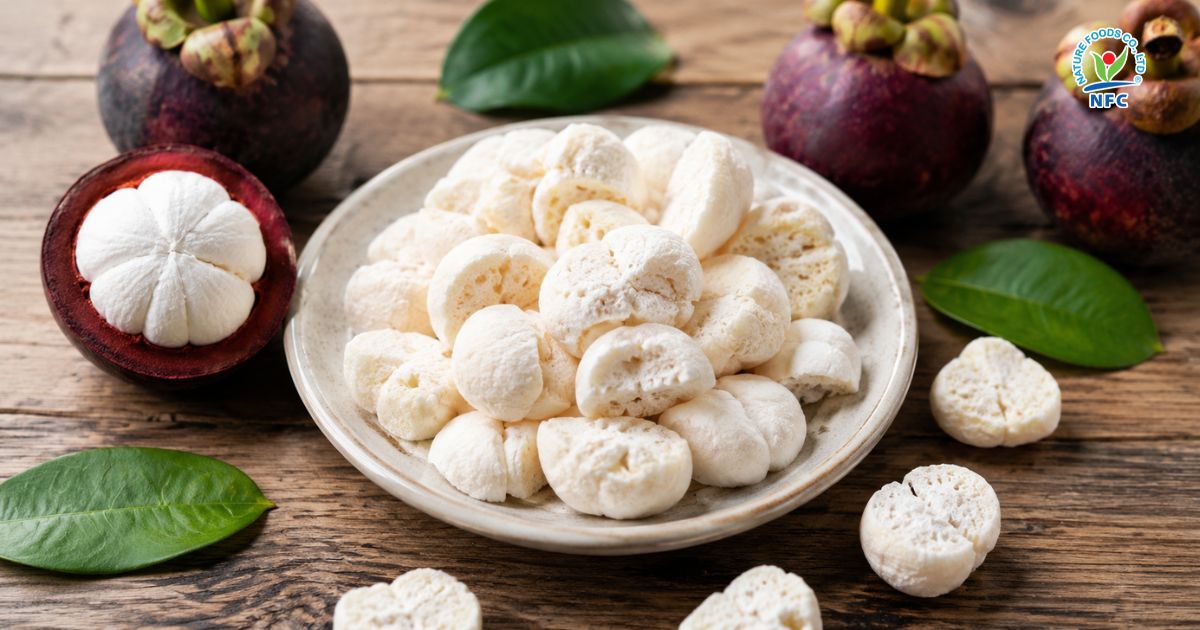
In the global food and beverage industry, freeze-dried mangosteen is positioned at the top of the processed fruit spectrum. This premium valuation is not merely an outcome of manufacturing CapEx—it is driven by unique botanical traits, active phytonutrient density, seasonal scarcity insulation, and unparalleled consumer sensory appeal.
1. Preserving Original Aril Morphology, Natural Color & Crisp Mouthfeel
Mangosteen arils possess a delicate fibrous structure containing volatile aromatic esters and organic fruit sugars. When subjected to positive convective heat, these aromatic compounds volatilize rapidly, and reducing sugars undergo caramelization, turning the white flesh into an unappealing dark brown mass with a cooked, burnt flavor. Vacuum freeze drying operates entirely within negative and ambient temperature boundaries under high vacuum, insulating the material from thermal stress. The finished product retains its natural ivory-white hue, pristine segment geometry, and natural sweet-tart flavor balance. The open honeycomb cell matrix provides a distinctively light, airy crispness that melts smoothly on the tongue upon saliva contact.
2. Maximum Preservation of Bioactive Xanthones & Thermolabile Nutrients
The defining biological asset of mangosteen is its rich concentration of Xanthones—a class of polyphenolic compounds documented for potent antioxidant capacity, free-radical scavenging properties, and anti-inflammatory support. In addition, mangosteen pulp contains valuable concentrations of Ascorbic Acid (Vitamin C), Thiamine (Vitamin B1), Riboflavin (Vitamin B2), and essential dietary minerals.
These bioactive molecules are highly thermolabile and oxidize swiftly when exposed to hot air and atmospheric oxygen. Sub-zero vacuum freeze drying safeguards molecular bonds, retaining over 90% to 95% of native Xanthone potency and vitamin concentrations. This allows health-food brands, functional beverage manufacturers, and dietary supplement formulators to deliver verifiable, scientifically backed nutritional value to consumers under transparent Clean Label declarations.
3. Decoupling Supply Chains from Narrow Crop Harvest Seasonality
Fresh mangosteens carry an intensely concentrated agricultural harvest season, peaking for only 2 to 3 months annually across Southeast Asian growing belts (predominantly Vietnam, Thailand, and Indonesia). During peak harvest, fresh fruit prices plunge, followed by rapid supply depletion and extreme price spikes throughout the rest of the year. Furthermore, fresh mangosteens are prone to pericarp hardening and internal fungal translucency within 5 to 7 days post-harvest.
Industrial freeze drying enables commercial food enterprises to execute high-volume procurement programs during the harvest peak, lock in low crop acquisition costs, process the fruit into shelf-stable dry inventory, and supply premium mangosteen products continuously for 12 months. Distributing a seasonal tropical fruit during winter and spring gives brand owners significant market leverage, protecting gross margins against seasonal commodity volatility.
Commercial Value, B2B Application Matrix & Supply Chain Optimization
For food science R&D directors, corporate procurement managers, and brand strategists, freeze-dried mangosteen transcends basic snack applications. It operates as a multi-functional, high-performance tropical ingredient that enables creative formulation across diverse F&B sectors while resolving critical supply chain bottlenecks.
Practical B2B Product Application Formats
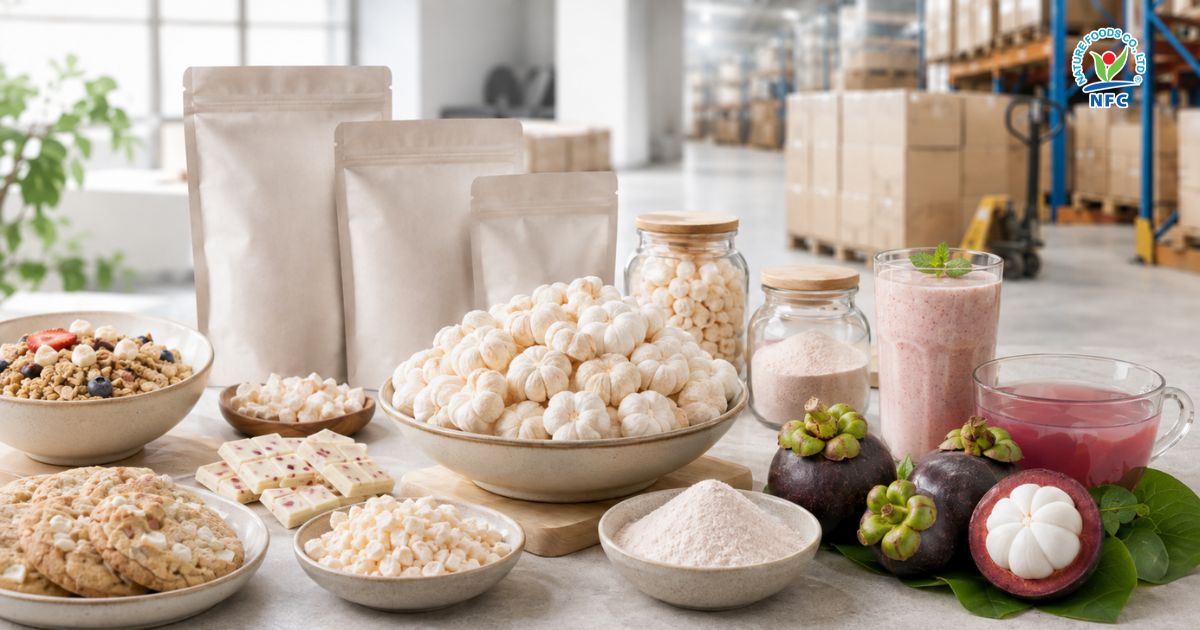
Configured across whole deseeded arils, diced granulations, and ultra-fine powders, freeze-dried mangosteen integrates seamlessly across multiple food processing sectors:
-
Premium Standalone Snacks & Luxury Gifting SKUs (Whole Arils): Intact deseeded mangosteen segments deliver an eye-catching 3D presentation, natural ivory-white color, and a melt-in-the-mouth crispness. This high-margin retail format aligns with global Clean Label consumer trends (100% pure single ingredient, non-fried, zero added sugars, zero chemical preservatives).
-
Nutritional Inclusions in Granola, Muesli & Energy Bars (Diced Pieces): Diced freeze-dried mangosteen carries an ultra-low moisture baseline (< 3.0%), preventing moisture migration that would otherwise soften roasted nuts, oats, and seeds in co-packaged breakfast cereals and protein bars.
-
Artisanal Confectionery, Chocolate Enrobing & Bakery Inclusions: Whole or sliced freeze-dried mangosteen segments enrobed in dark or white chocolate deliver a sophisticated contrast of textures and flavors. Because the material is dry, it eliminates the risk of water seepage that ruins chocolate temper or makes pastry crusts soggy.
-
100% Pure Fine Mangosteen Powder for Mixology & Functional Foods: Milled from 80 to 120 mesh fineness, pure freeze-dried mangosteen powder dissolves rapidly into craft cocktails, specialty fruit teas, smoothie bowls, and dairy yogurts, or serves as a potent Xanthone-rich active ingredient in dietary supplements and wellness blends.
Operational Cost Optimization & Supply Chain Solutions
From an operational and supply chain perspective, transitioning from perishable fresh mangosteens to standardized industrial freeze-dried ingredients delivers transformational economic moats:
-
Zero Cold Chain Liabilities (18 to 24 Months Ambient Stability): Fresh mangosteens are sensitive to chilling injury and decay. Vacuum freeze-drying technology pulls residual moisture below 3.0% and water activity $a_w < 0.30$. At this boundary, microbial life is arrested, allowing inventory to be warehoused at standard ambient room temperatures for 18 to 24 months, completely eliminating cold storage utility overheads and refrigerated freight fees.
-
Trimming Freight Costs by 70% to 80%: Natural water constitutes over 80% of fresh mangosteen aril weight. Moisture extraction yields an ultra-light finished product, drastically lowering variable shipping fees calculated by mass and optimizing container payload economics for long-haul export shipping to North America, Europe, and Northeast Asia.
-
Eliminating Factory Pre-Treatment Waste (Zero Organic Waste): The thick, bitter pericarp (rind) of mangosteen accounts for 60% to 70% of total fresh fruit weight, alongside risks of hardened gamboge-damaged segments. Procuring pre-processed, inspected freeze-dried arils allows food plants to eliminate 100% of manual de-husking labor and organic waste handling costs.
-
Fixing Input Cost of Goods Sold (COGS) Year-Round: Long shelf stability allows procurement directors to contract large manufacturing volumes during the harvest peak at optimal pricing, fixing input raw material costs for the entire operating year and insulating gross margins from fresh market price spikes.
Key Benchmarks for Auditing a Freeze-Dried Mangosteen Contract Manufacturer
1. Multi-Technology Manufacturing Capabilities & Engineering Scale
Depending on targeted retail price points, recipe parameters, and functional requirements, food companies may require flexibility between vacuum freeze drying (FD), hot-air convective drying (AD), microwave drying (MD), or customized combination drying. Partnering with a processor operating diverse infrastructure provides objective technical guidance tailored to your project.
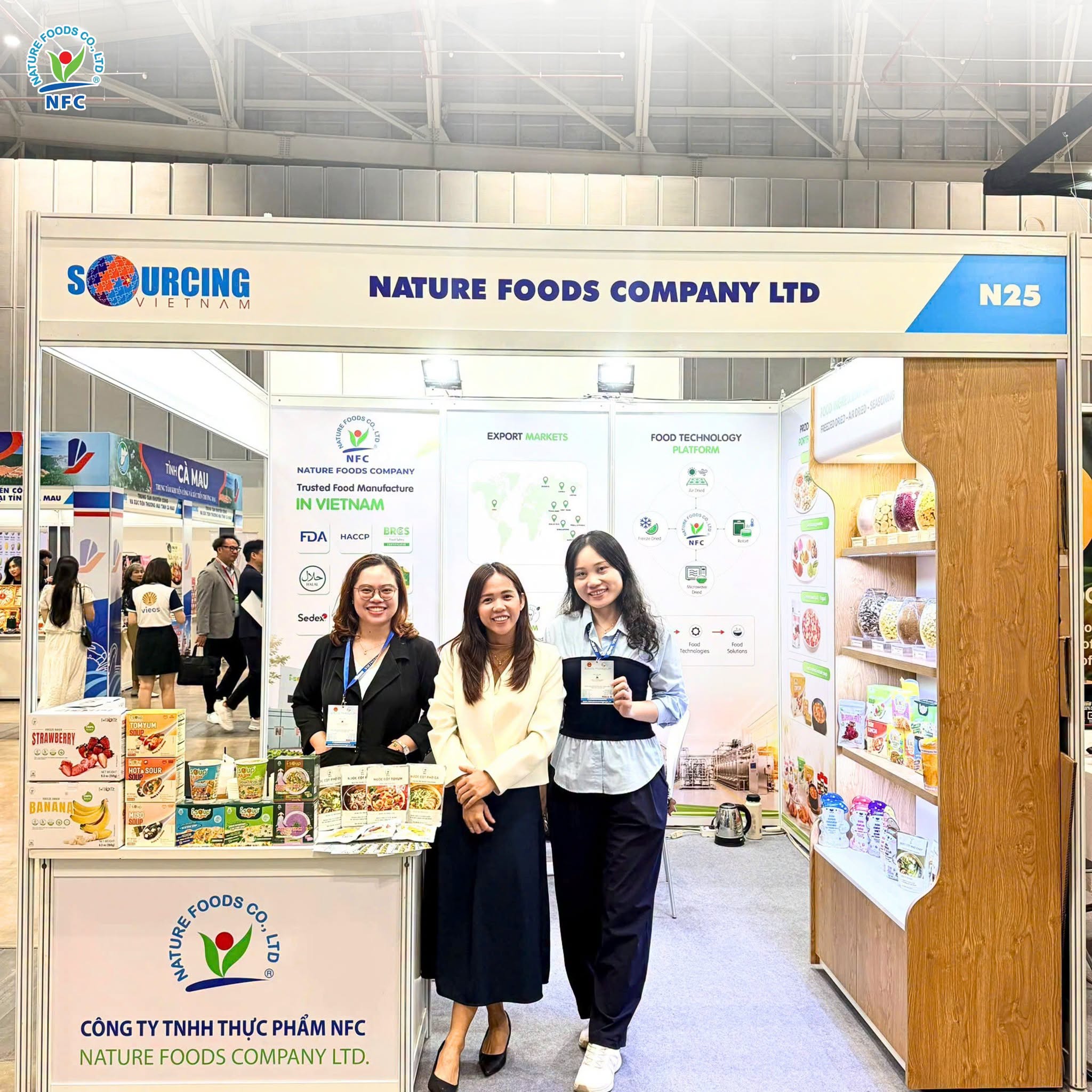
Nature Foods operates as a premier industrial dehydration manufacturer in Vietnam, running advanced Japanese-standard vacuum freeze drying (FD), hot-air convection (AD), microwave drying, and retort thermal sterilization lines. This versatile manufacturing ecosystem allows clients to select the ideal process matching their volume, sensory, and budget parameters.
2. Proven OEM/ODM & Custom Formulation Development Expertise
For brand owners building proprietary retail or foodservice product lines, project success requires comprehensive development support. This spans raw crop selection, seed extraction, particle formatting (whole, diced, powder), pilot batching, and moisture-barrier packaging design. An experienced OEM/ODM partner accelerates development timelines while mitigating technical execution risks.
Nature Foods delivers turnkey OEM, ODM, and White Label contract services, assisting brand owners from initial laboratory sample prototyping to commercial mass manufacturing and automated packaging.
3. Audited International Food Safety & Quality Management Accreditations
Distributing processed mangosteen products through major retail hypermarkets or clearing customs into overseas markets requires strict adherence to international food safety management systems. Audited manufacturing certifications ensure products clear regulatory scrutiny and multi-national Factory Audits smoothly.
Nature Foods operates under an internationally audited quality management matrix, holding certifications for BRCGS (Global Standard for Food Safety), ISO 22000, HACCP, US FDA facility registration, HALAL, GLOBALG.A.P., and SEDEX – SMETA—supplying the compliance assurance required by major global distributors and retailers.