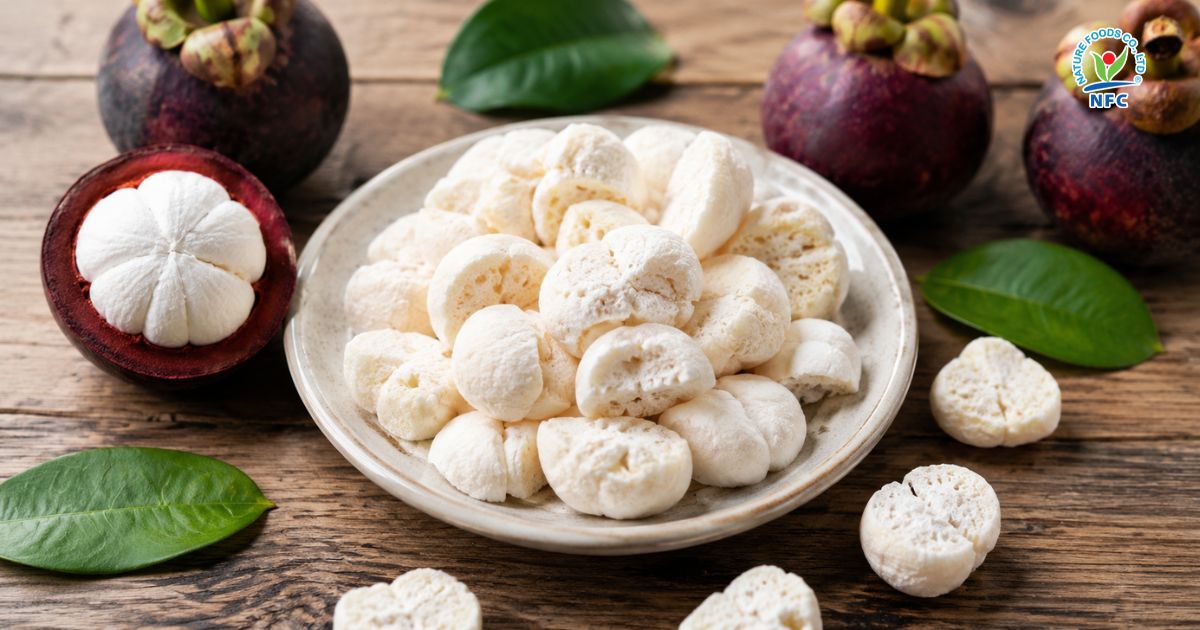
In the context of a global food industry continuously seeking optimized solution structures for product quality and long-term shelf preservation, freeze-drying technology (Freeze Drying – FD) has emerged as the ultimate savior, particularly for premium agricultural crops and high-end raw food materials. This advanced process perfectly safeguards the maximized nutritional values, authentic flavor notes, and vibrant natural coloration of fresh crops while heavily extending useful lifespans completely independent of added chemical preservatives (Nowak et al. 2020).

- What is Freeze Drying?
- 3 Critical Stages of the Freeze-Drying Process:
- Visual Comparison Matrix of Common Dehydration Methods
- 6 Core Commercial Benefits of Freeze-Drying Technology
- Multifaceted Applications Across the Food Sector
- How Nature Foods (NFC) Strategically Deploys Freeze-Drying Technology in Large-Scale Production
- Frequently Asked Questions Regarding Freeze-Drying Technology (FAQ)
What is Freeze Drying?
Freeze-drying technology is an advanced dehydration process where deep-frozen food materials are dried within a strictly controlled absolute vacuum environment. The defining characteristic of this methodology lies in forcing water molecules inside the food matrix to convert directly from a solid phase (ice) into a gaseous phase (vapor) without ever passing through a liquid water state.
Leveraging this sub-zero temperature profile and deep vacuum pressure, the biological 3D cellular matrix of the food tissue is insulated from collapsing under liquid capillary forces, successfully preserving its original structural shape and dimensional volume. This functions as the core foundation making freeze-dried food completely superior to conventional hot-air convection drying (AD) or cool-drying alternatives.
3 Critical Stages of the Freeze-Drying Process:
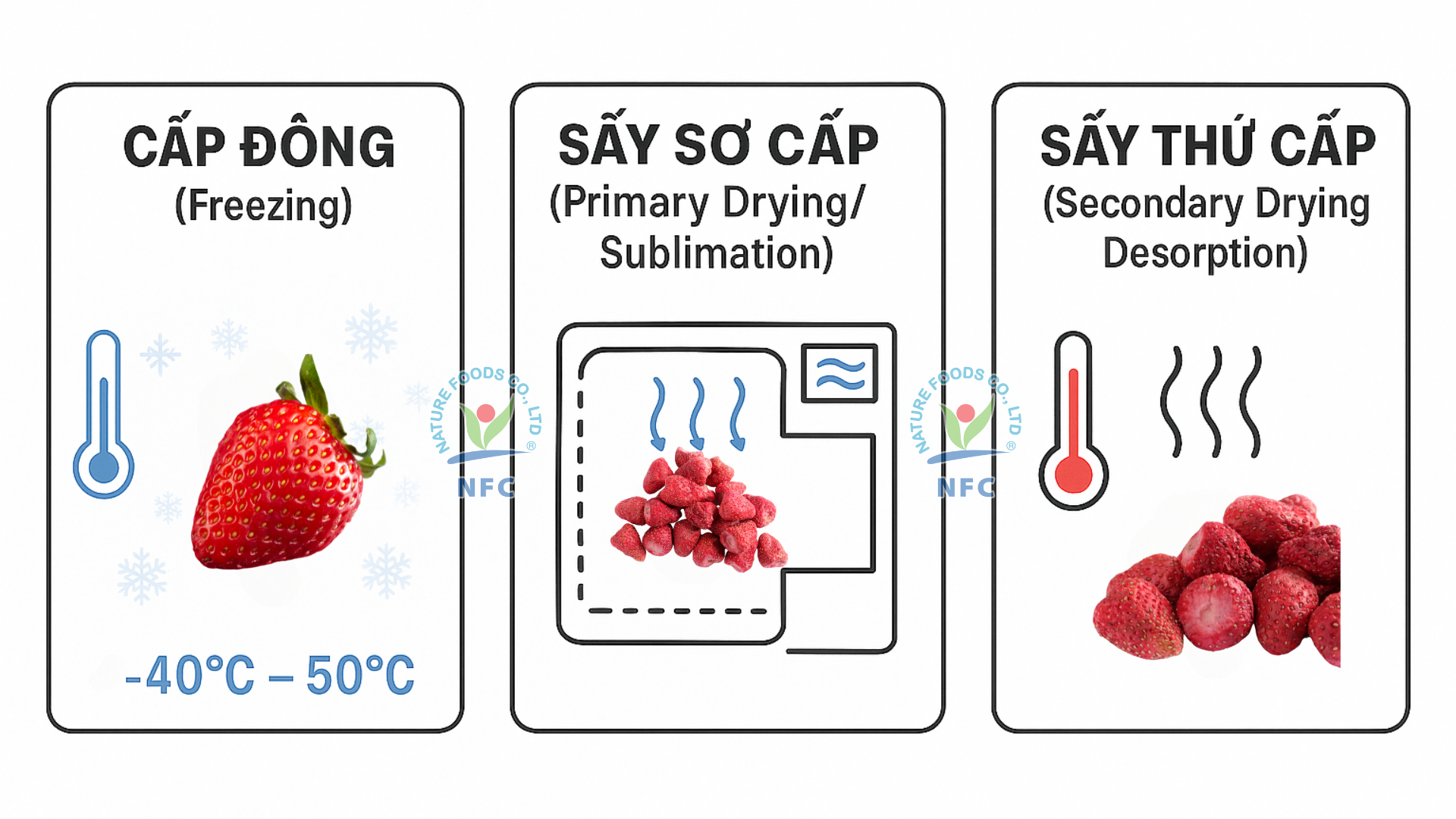
A standardized industrial freeze-drying process demands absolute technical precision and must systematically undergo three rigorous operational phases:
Stage 1 – Flash Freezing (Freezing Phase)
-
Food raw inputs are rapidly lowered into a deep sub-zero temperature range spanning $-30^\circ\text{C}$ to $-50^\circ\text{C}$.
-
This critical step completely “locks in” the active cellular matrix and native chemical nutrients.
-
The free moisture tightly bound within the raw materials solidifies into micro-sized ice crystals.
Stage 2 – Primary Drying (Sublimation Phase)
-
The tray lots are moved into a vacuum chamber where the internal air pressure is mechanically driven below the threshold of $133\text{ Pascal}$.
-
Radiant internal heating plates delicately supply regulated energy to drive the micro ice crystals to sublimate directly into water vapor.
-
This critical phase successfully extracts approximately 90% of the unbound moisture from the raw material.
Stage 3 – Secondary Drying (Desorption Phase)
-
The chamber plate temperature is incrementally raised to evaporate bound water molecules tightly trapped deep within internal cell matrices.
-
This final step forces the target residual moisture of the finished batch down to an ultra-low baseline of only 1% to 3%.
-
The complete high-capacity industrial drying cycle typically spans 30 to 36 hours, varying with cut dimensions and crop features.
Visual Comparison Matrix of Common Dehydration Methods
To accurately assist product development divisions and procurement departments in choosing the optimal processing framework matched to budget constraints and product positioning, below is a detailed technical comparison matrix:
| Evaluation Metric | Freeze-Drying Technology (FD) | Hot-Air Convection Drying (AD) | Cool Drying (Low Temperature) |
|---|---|---|---|
| Processing Temperature | Deep sub-zero range (-30°C to -50°C) | Elevated positive range (60°C – 85°C) | Low positive range (35°C – 55°C) |
| Residual Moisture | Ultra-low (1% – 3%) | Moderate (10% – 14%) | Low (5% – 10%) |
| Structure & Morphology | Preserves authentic 3D shape, porous honeycombed texturing, crispy | Severe tissue shrinkage, surface deformation, fibrous and hardened texture | Slightly shrunk cellular walls, tender/chewy or moderately firm texture |
| Nutritional Retention | Maximum preservation tracking 95% – 99% of native nutrients | Heavy deficit (40% – 60%) degraded under intense heat lines | Fairly good, safeguards around 70% – 80% of micronutrients |
| Rehydration Capability | Excellent, ultra-rapid water absorption back to fresh parameters | Very poor, remains fibrous and tough even after extended soaking | Moderate, demonstrates a slow moisture absorption curve |
| Storage Shelf Life | Highly extended (18 – 24 months) under ambient warehouse setups | Narrow (6 – 9 months), highly vulnerable to mold if humidified | Moderate window spanning 6 – 12 months |
6 Core Commercial Benefits of Freeze-Drying Technology
Flawless Preservation of Sensory Attributes (Color,真实 Aroma, Flavor)
By completely avoiding elevated processing temperatures, sensitive natural pigment molecules are insulated from structural breakdown or sugar caramelization. The complex authentic aroma canopy, consisting of dozens of heat-sensitive volatile organic aromatic elements, is preserved up to 97%, fully locking in original flavor profiles cleanly.
Maximized Nutritional Value Retention
Operating under sub-zero parameters devoid of intense heat, vital vitamins, delicate functional enzymes, plant proteins, and organic minerals are preserved from 95% to 99%. This positions freeze-dried ingredients as the premier choice for premium health and wellness-focused consumer brand architectures.
Ultra-Rapid Rehydration Dynamics (Rehydration Profile)
The microscopic honeycombed matrix left behind post-ice crystal sublimation behaves identically to an adaptive biological sponge. Upon simple contact with warm liquid, the material draws moisture ultra-rapidly, taking a mere 30 to 60 seconds to fully reclaim its soft texture, soft mouthfeel, and original freshness.
Highly Extended Shelf Life via Natural Stabilization
Dropping final moisture parameters below 3% safely pushes internal water activity ($a_w$) down to an absolute safe baseline of ($a_w < 0.3$). Within this dry threshold, foodborne pathogens, harmful bacteria, active yeasts, and destructive molds are completely isolated and unable to grow, enabling stable ambient warehousing for 18 to 24 months with zero added chemical preservatives.
Optimized Unit Mass and Streamlined Freight Overheads
Water accounts for approximately 75% to 92% of the initial mass of fresh agricultural crops. Following the deployment of freeze-drying technology, 1kg of fresh raw inputs yields an ultra-lightweight material output of only 120g to 180g. This physical compression slashes up to 70% to 80% of variable transport expenses and completely eliminates cold storage warehousing dependencies.
Accelerating Global Clean-Label Alignments
Verified freeze-dried inputs proudly possess an immaculate, transparent formulation: 100% natural raw material with zero added oils, sweeteners, texturants, or chemical compounds. This functions as an elite market passport enabling consumer brands to cleanly penetrate premium retail segments across North America, the EU, and Japan.
Multifaceted Applications Across the Food Sector
Freeze-drying technology is increasingly implemented across global food manufacturing due to its unrivaled capacity to anchor nutritional parameters, extend ambient storage lifespans, and safeguard organic flavor profiles – unlocking innovative pathways for deep agricultural refining and premium food manufacturing.
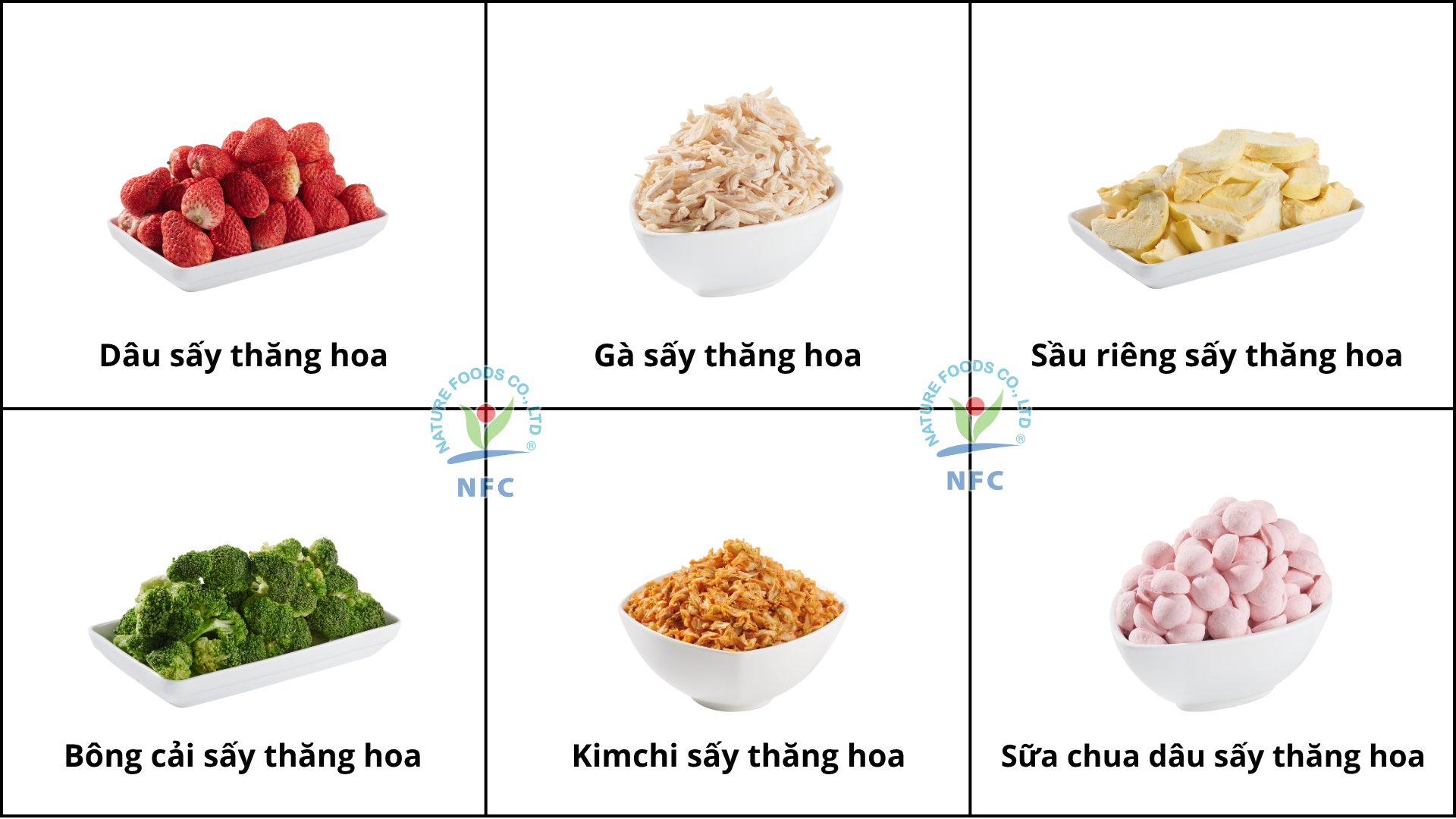
– Freeze-Dried Fruits and Vegetables: Strawberries, jackfruit, durian, red dragon fruit, and green vegetables perfectly preserve their vivid color, natural taste, and native properties. This allows high-value agricultural crops to be developed into premium, wholesome snacks. Freeze-drying technology is also heavily implemented to preserve premium functional materials like cordyceps or valuable gourmet mushrooms, acting as a stable raw choice inside value-added product lines.
– Instant and Convenience Foods: High-end freeze-dried instant coffee crystals, rapid porridge inclusions, instant soup cubes, and highly convenient meal formats engineered for aerospace programs and field logistics.
– Meats, Proteins, and Seafood: Shrimp, fish, lean pork, and beef chunks lock in natural tenderness and flavor, showing excellent rehydration profiles during end processing.
– Yogurt, Frozen Desserts, and Dairy Innovations: Creating highly unique, shelf-stable snack formats that fully safeguard active probiotic cultures.
– Botanicals, Floral Teas, and Nutraceuticals: Securing absolute protection over delicate bio-active compounds and volatile antioxidants natively present inside medicinal roots and floral tea inputs.
Read More: Principles of Freeze Drying
How Nature Foods (NFC) Strategically Deploys Freeze-Drying Technology in Large-Scale Production
Nature Foods (NFC) stands as an established industrial pioneer inside the Vietnamese dried food industry, aggressively integrating advanced dehydration technology into high-capacity manufacturing setups since inception.
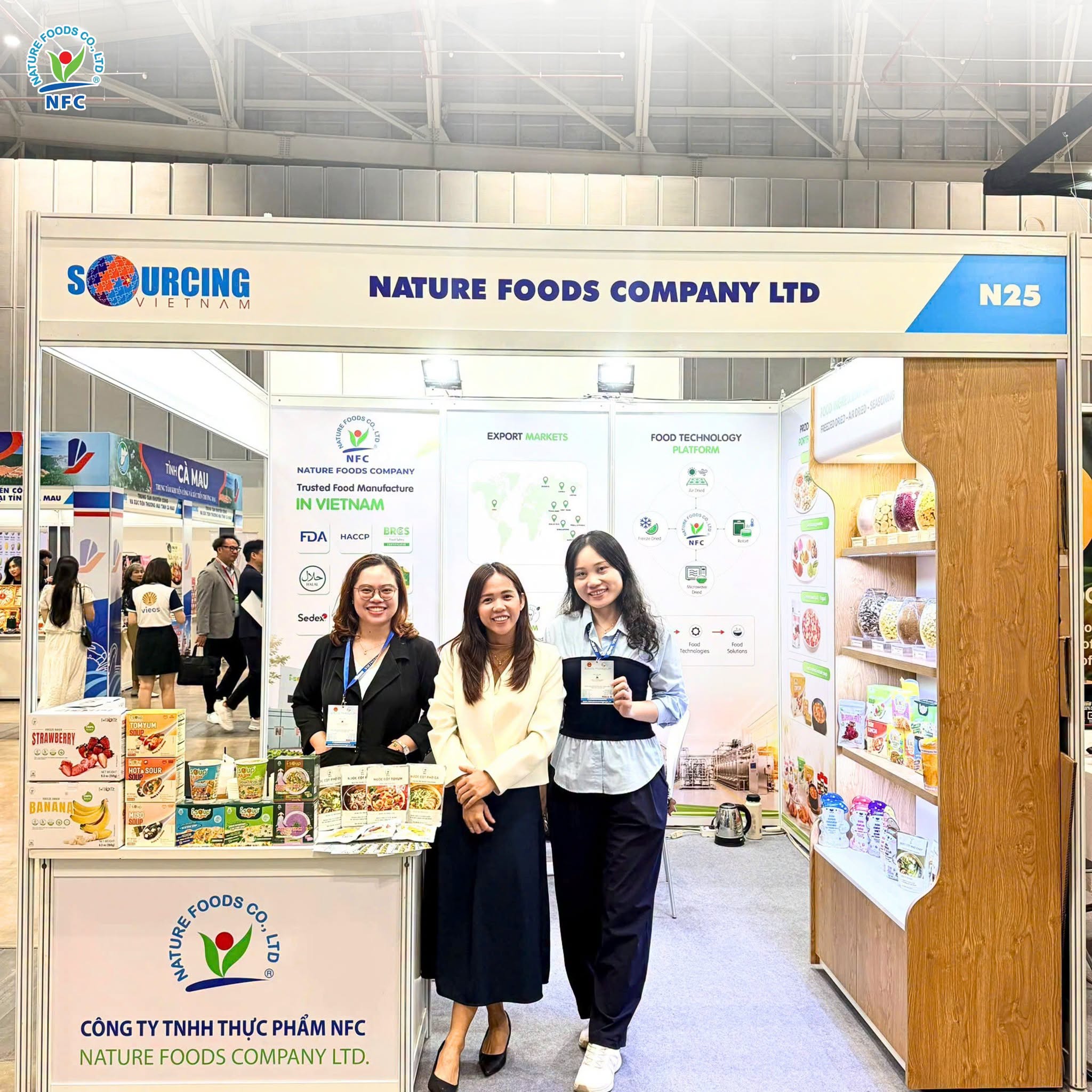
Particularly, Nature Foods Co., Ltd (NFC) leads the commercial deployment of vacuum freeze-drying solutions across Vietnam. Our state-of-the-art facility is located inside the primary Nhon Trach 1 Industrial Zone, Phuoc Thien, Nhon Trach District, Dong Nai Province. Operating a synchronized high-capacity fleet of 5 massive industrial freeze-drying (FD) setups, the factory floor confidently hits an annual output capability of approximately 4,000 tons of finished products, absorbing complex bulk B2B agreements smoothly.
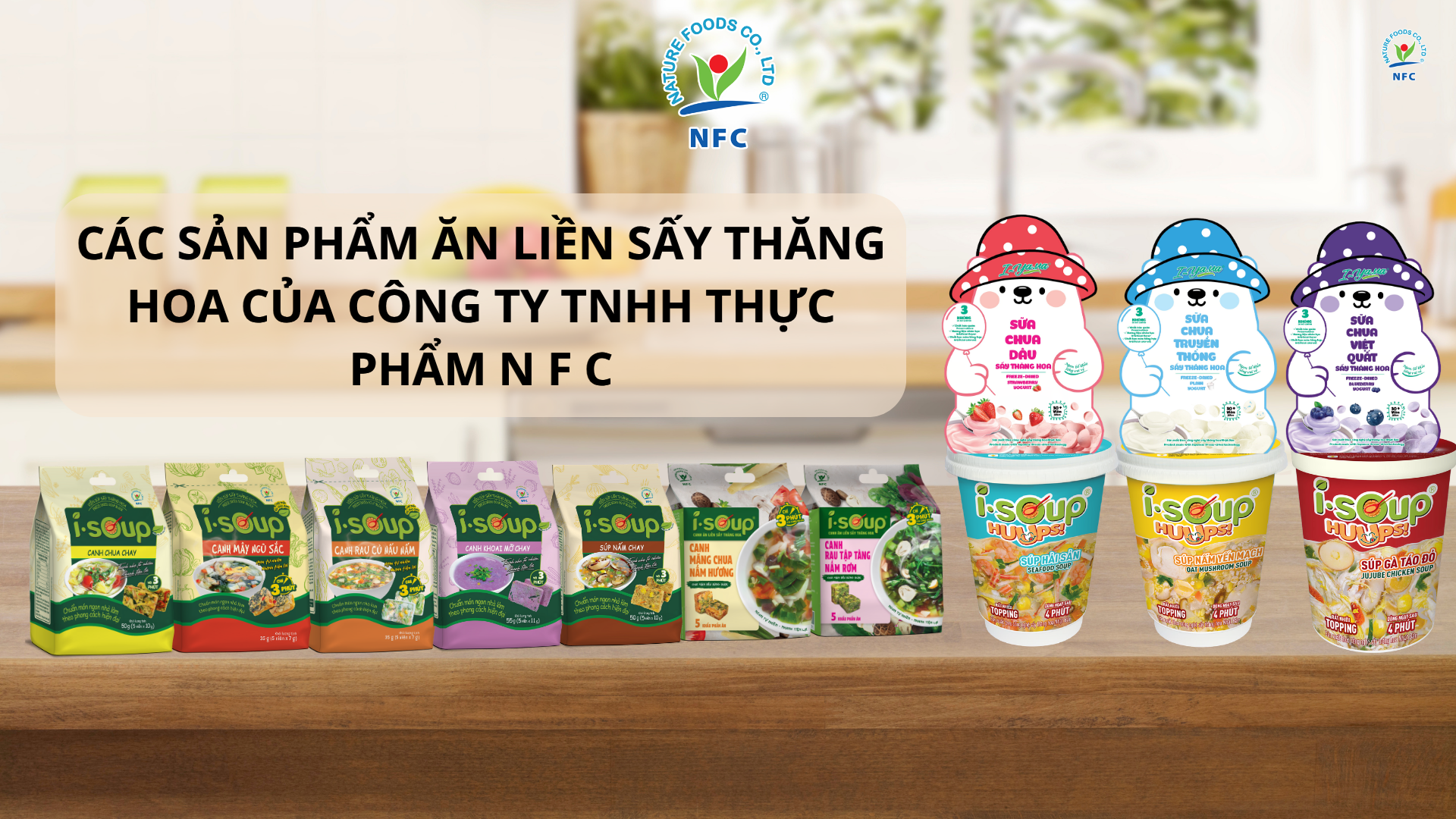
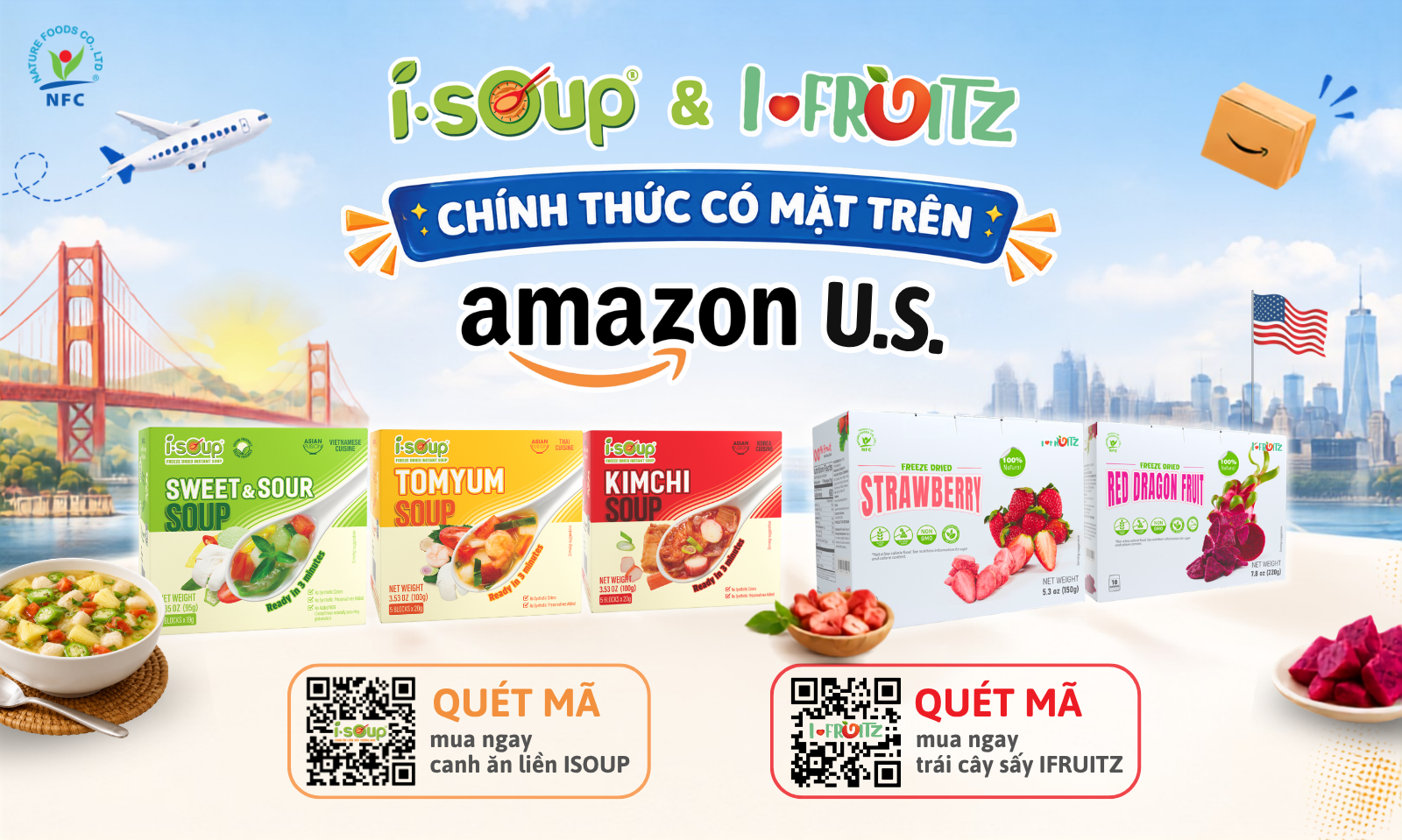
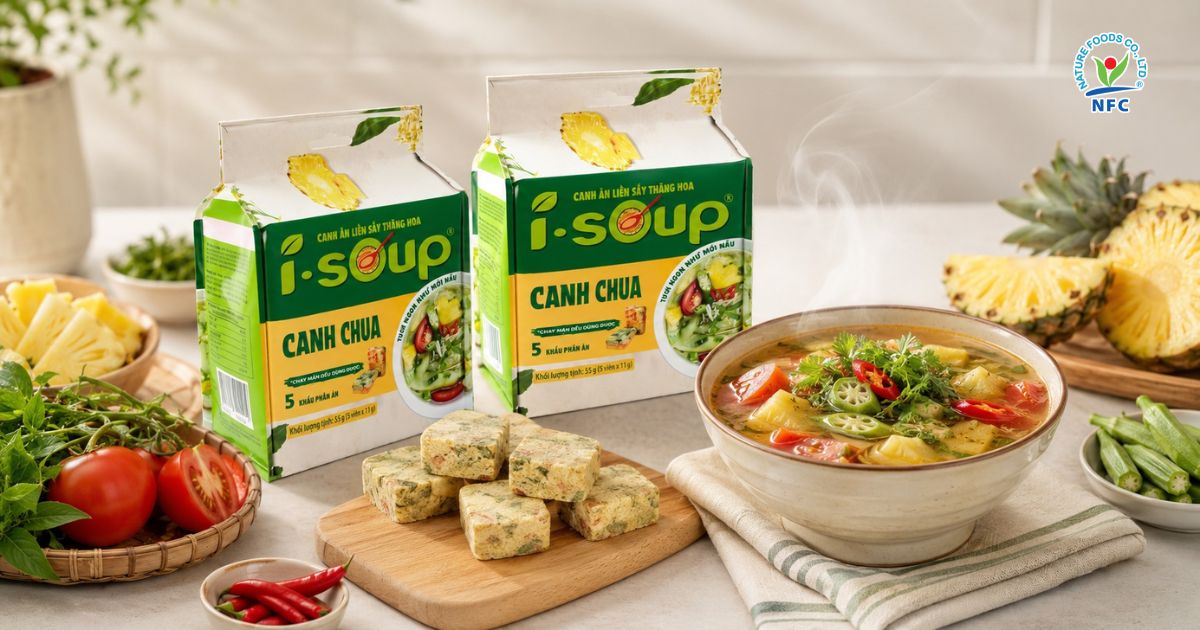
Leveraging our advanced freeze-drying setups, NFC successfully manufactures a range of market-winning retail lines and industrial ingredients. Landmark items include the breakthrough instant soup cube range I.SOUP, the active-culture snack range I.YAUA, and the nutritionally balanced meal solutions line I.SOUP HUUPS! – perfectly answering modern fast-paced consumer lifestyle trends while locking in natural nutrients completely. Specifically:
– I.SOUP Freeze-Dried Instant Soup Packets features a highly versatile menu of 14 separate local flavor profiles, dividing options into 7 vegetarian formulas and 7 savory mặn profiles. Preparation is exceptionally simple, requiring only hot water contact for 3 minutes to return the vegetable matrix into a freshly-cooked soup structure.
– I.SOUP HUUPS! Nutritious Instant Soups is an advanced ready-to-eat line featuring 6 tailored wellness recipes, spanning rich seafood chowders, traditional chicken with red jujubes broth, and Atlantic salmon formulas, explicitly highlighted by chunk-sized, authentic protein toppings. This delivers an instant nutritious solution designed to answer the lifestyle needs of busy modern shoppers.
– I.YAUA Freeze-Dried Probiotic Drops – Probiotic-dense freeze-dried yogurt drops serving as the ultimate modern wellness snack, combining delicious sensory texture with excellent digestive values.
Every single SKU is engineered by Nature Foods Co., Ltd with an unwavering focus on clean-label parameters, supplying highly convenient, safe, and natural solutions to domestic distributors and sophisticated cross-border import networks alike.
Frequently Asked Questions Regarding Freeze-Drying Technology (FAQ)
1. How does freeze-drying technology technically differ from cool-drying methods?
Cool Drying (Low Temperature): Utilizes dehumidified air circulation operating within low positive temperature bounds (averaging 35°C – 55°C) to slowly evaporate moisture from the raw crop surface. This process often forces minor tissue shrinkage and shorter storage lifetimes.
Freeze Drying (FD): Agricultural raw inputs undergo sudden blast freezing down to negative boundaries (-30°C to -50°C), subsequently undergoing vacuum sublimation where frozen ice transforms directly into gaseous vapor. Consequently, the final components flawlessly lock in their authentic 3D phom shape, a unique crispy porous structural profile, and far superior volatile aromatics and nutrient values compared to cool drying.
2. Why do freeze-dried ingredients achieve extreme shelf stability with zero added chemical preservatives?
Precise Moisture Control: The strict secondary desorption phase drives final residual water activity metrics down to a bone-dry 1% – 3% threshold.
Systematic Microbial Isolation: This optimized moisture profile pushes final water activity values deep within an absolute safe envelope ($a_w < 0.3$). Within this threshold, destructive foodborne pathogens (including Salmonella and E. coli), active yeasts, and molds are entirely isolated, completely lacking the biological matrix needed to propagate or metabolize. This enables seamless room-temperature warehousing for 18 to 24 months while maintaining a pure, safe, and wholesome ingredient profile.
3. Is it commercially viable to procure a small home unit to freeze-dry food items privately?
Technically: Yes, you can successfully freeze-dry small batches using miniature home-appliance mini FD units.
Economically: These home configurations carry steep upfront retail costs while delivering a highly narrow material throughput, paired with standard processing runtimes stretching across 30 to 40 hours that swiftly swell electricity bills. Consequently, it represents an inefficient path for commercial ventures or scaling retail initiatives. Collaborating with a high-capacity contract manufacturer like Nature Foods (NFC) is a far smarter path to maximize your working capital, de-risk operations, and enjoy bulk plant economies.
4. What are the best warehouse and counter handling practices for freeze-dried fruits post-opening?
Owning to their porous, honeycombed cellular structure, freeze-dried materials display rapid reverse-hygroscopic behavior, eagerly drawing ambient moisture from surrounding air upon open exposure.
For freeze-dried retail collections packed by NFC (such as our premium IFruitz line), pouches are systematically lined with a multi-layered aluminum protective barrier that blocks light and humidity, integrated with a secure zipper closure. Post-opening, cold storage is entirely unnecessary; simply seal the zipper mechanism tightly and store the pouch within a standard dry ambient room, safely isolated from highly humid home environments like kitchens or washrooms.
5. Does consuming freeze-dried durian trigger the same metabolic heat sensations as eating fresh durian?
Nutritional Blueprint: Vacuum freeze drying flawlessly protects 97% to 99% of raw material bio-chemistry, making the freeze-dried variant structurally identical to fresh orchards. Therefore, freeze-dried durian shares the exact organic markers found in fresh crops.
Dietary Guidelines: The localized thermal or “heating” sensations experienced post-ingestion stem directly from concentrated natural elements native to the fruit itself, such as tryptophan and metabolic lipids. Consumers (particularly diabetic individuals or teams managing caloric boundaries) should logically enjoy portion-controlled intakes averaging 20 to 30 grams per day, and always maintain adequate hydration to assist optimal metabolic digestion.