Fresh vegetables represent an absolute indispensable raw material component across the global food processing industry; however, their inherent biological characteristic of packing exceptionally high water volume makes them highly perishable, suffering rapid wilting and severe sensory alterations within a matter of days. The industrial implementation of advanced freeze-drying technology (Freeze Drying – FD) stands as the definitive strategic solution, empowering modern F&B corporate brands to completely safeguard native nutritional assets and original fruit identities while systematically eliminating multi-tiered variable risks related to cold chain logistics and warehouse overheads.
- Freeze-Dried Vegetables: The Strategic Blueprint for Nutritional Preservation and Global Supply Chain Optimization
- How Do Industrial Freeze-Dried Vegetables Systematically Optimize Corporate Operational Cost Architectures?
- Strict Evaluation Criteria for Auditing and Selecting Export-Grade Freeze-Dried Vegetable Supply Partners
- Conclusion
- Frequently Asked Questions About Freeze-Drying Vegetable Sourcing & Processing (FAQ)
Freeze-Dried Vegetables: The Strategic Blueprint for Nutritional Preservation and Global Supply Chain Optimization
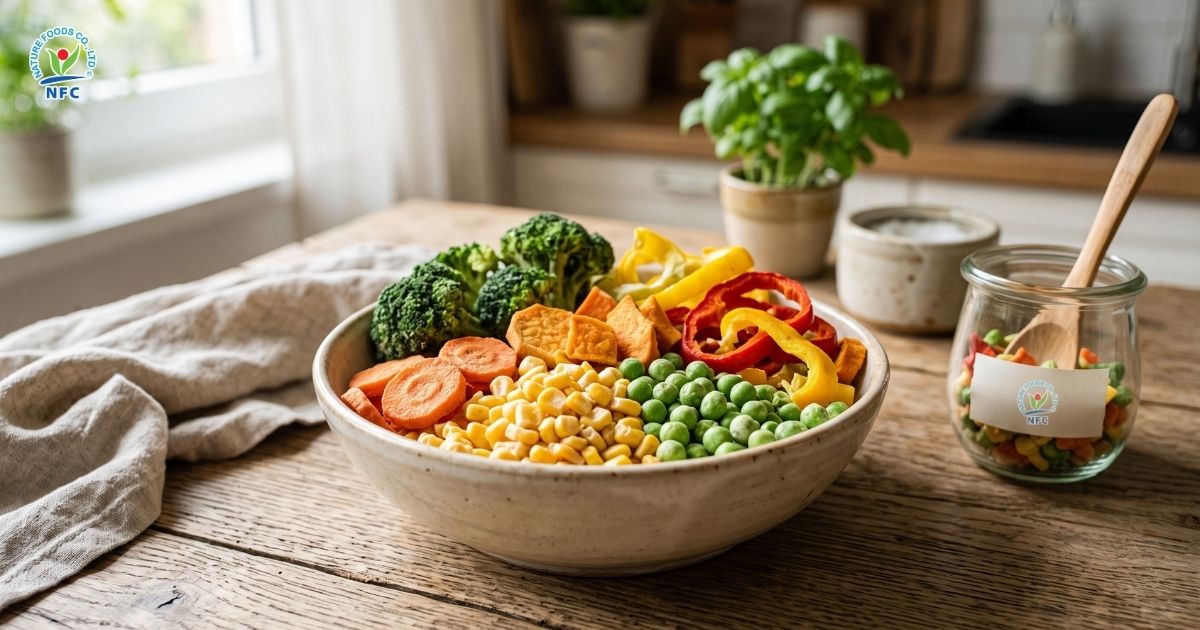
Fresh agricultural crops and vegetables have historically anchored the formulation pipelines of industrial food processors, culinary manufacturers, and fast-moving consumer goods (FMCG) conglomerates. Despite their fundamental importance, fresh produce is plagued by critical biological vulnerabilities, primarily driven by high moisture content. This underlying moisture triggers rapid cell wall degradation, post-harvest wilting, intense microbial contamination, and accelerated enzymatic browning within short periods if left uncooled. In the modern globalized marketplace, where food companies demand absolute lot uniformity and extensive room-temperature stability, raw agricultural outputs introduce severe operational liabilities. The commercial introduction of industrial freeze-dried vegetables (Freeze Drying – FD) directly addresses these vulnerabilities, offering a cutting-edge dehydration framework that re-engineers how agricultural raw materials are sourced, stored, and utilized.
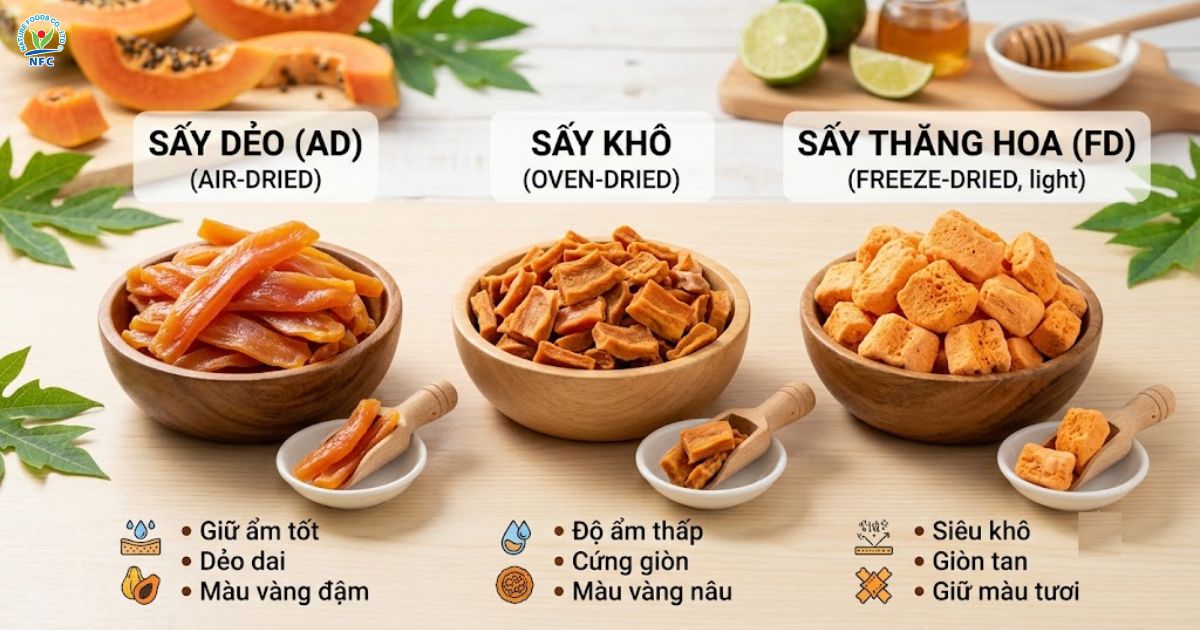
Unlike conventional thermal dehydration workflows—such as hot-air convection drying (Air Drying – AD), which exposes delicate crop structures to direct, intense heat over long cycles, causing severe cell collapse, surface hardening, shriveling, and dark discoloration—vacuum freeze-drying technology manipulates phase-change physics within sub-zero and deep vacuum parameters.
Raw vegetable inputs undergo flash blast freezing to solidify intracellular water molecules into rigid ice crystals. The frozen materials are then subjected to high-vacuum desorption, where atmospheric pressure is driven deep below the triple point of water. By applying gentle, strictly regulated radiant heat, these integrated ice crystals sublimate directly into gaseous vapor without passing through a liquid water state.
This absolute circumvention of liquid water ensures that the underlying biological 3D cellular framework remains insulated from capillary contraction forces, perfectly retaining the original shape, slice contour, and dimensional volume of the fresh material.
From a biochemical and nutritional standpoint, vacuum freeze-drying operates as an elite preservation matrix. Because the processing chamber remains completely devoid of high thermal stress and atmospheric oxygen, sensitive micronutrients, active plant enzymes, volatile aromatic essential oils, and native color pigments are protected from degradation.
Anthocyanins, carotenoids, and heat-vulnerable Vitamin C chains remain entirely intact at levels unmatched by any hot-air or cool-drying alternative. The definitive advantage of freeze-dried vegetable raw materials is their unrivaled rehydration kinetics. When introduced to warm or hot liquids during downstream food manufacturing or consumer preparation, the porous honeycomb matrix acts as an adaptive biological sponge.
The material absorbs fluid almost instantaneously, expanding uniformly within 30 to 60 seconds to reclaim the juicy tenderness, authentic mouthfeel, vibrant color depth, and fresh flavor profile characteristic of a newly harvested crop.
Boasting ultra-lightweight mass, long-term ambient storage capabilities, immaculate microbiological safety margins, and superior rehydration performance, freeze-dried vegetables are widely implemented across multiple food manufacturing sectors. They serve as the premier choice for product development divisions (R&D) and procurement managers looking to innovate convenience lines, automated quick-prep food mixtures, industrial dry seasoning matrices, instant noodle vegetable sachets, premium freeze-dried soup cubes, healthy baked veggie snacks, infant nutrition lines, and functional dietary supplements globally.
How Do Industrial Freeze-Dried Vegetables Systematically Optimize Corporate Operational Cost Architectures?
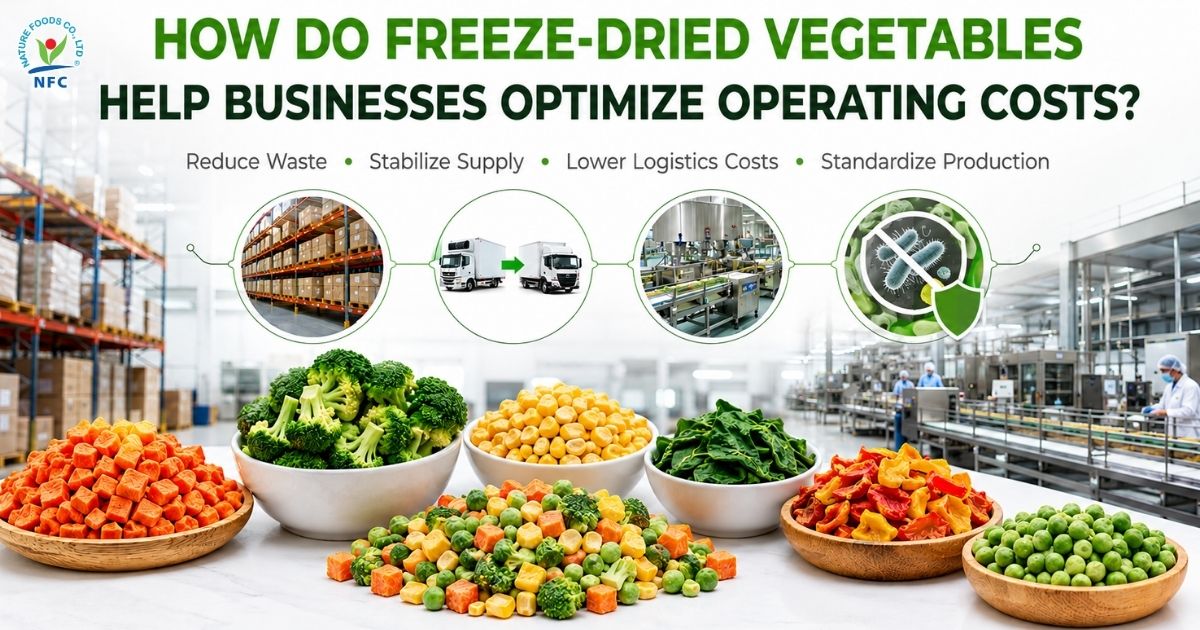
Eradicating Mechanical Loss and Microbiological Spoilage Metrics from Factory Floors
-
Post-harvest fresh vegetables and raw agricultural crops consistently expose food manufacturing enterprises to severe financial risks, facing massive mechanical loss metrics during manual handling, high risk of pathogen cross-contamination, and rapid sensory decay triggered by high internal water activity.
-
Traditional high-temperature hot-air drying loops, though presenting low upfront processing costs, directly break down cellular walls, drive off volatile aromas, trigger sugar caramelization, and tarnish the essential nutrient value of the material channel.
-
Advanced vacuum freeze-drying technology fundamentally closes this operational loophole by mechanically driving the final target residual moisture of the processed batch down to an ultra-low baseline of only 1% to 3%.
-
This deep moisture extraction strips away the biological fluid matrix required by destructive micro-organisms, offering absolute protection against spoilage.
-
The multi-stage drying sequence effectively locks the final water activity parameter ($a_w$) of the finished lots into an absolute safe envelope strictly below 0.3.
-
Within this bone-dry micro-environment, hazardous foodborne pathogens, enteric bacteria, active yeasts, and opportunistic molds are completely isolated, rendering them metabolically inert and incapable of propagation.
-
Consequently, finished ingredient lots can be safely warehoused for multi-quarter fiscal periods with zero quality depreciation, browning anomalies, or mold-related write-offs, allowing enterprises to protect their capital and drive inventory write-offs down to near-zero margins.
Anchoring Supply Chain Security and Fixing Cost of Goods Sold (COGS) Baselines
-
Open-market wholesale pricing metrics for fresh agricultural vegetables are notoriously unstable, fluctuating wildly due to macro-climatic disruptions, localized weather anomalies, crop crop diseases, and harvest seasonality shocks.
-
This extreme supply volatility introduces severe risk for corporate F&B purchasing departments, as sudden raw material cost surges compromise output retail pricing structures, complicate budgeting, and squeeze margins.
-
Because freeze-drying operates at a sub-zero thermal equilibrium, it preserves the vital nutritional profile of the crops while delivering a stable product life of 18 to 24 months completely free from chemical preservatives.
-
This extended room-temperature shelf stability allows procurement divisions to execute highly effective forward bulk-buying strategies, ordering massive capacity lots when crop yields hit their seasonal peaks and contract costs are fully optimized.
-
This operational insulation helps consumer food brands firmly fix their baseline Cost of Goods Sold (COGS) over lengthy accounting horizons, maintaining stable wholesale pricing structures to drive competitive advantage and anchor net operating profit margins against macroeconomic market shocks.
Trimming Logistics Freight Overheads and Eliminating Cold Storage Dependencies
-
Operating a continuous cold chain infrastructure (Cold Chain) for fresh agricultural vegetables introduces massive overhead liabilities, requiring corporate brands to run expensive cold storage facilities and refrigerated transit fleets around the clock.
-
Industrial freeze-dried vegetable inputs cleanly eliminate this logistical burden due to their distinct processing advantages of ultra-lightweight material mass and dense volumetric compactness, having stripped away 90% to 95% of internal water weight.
-
Following vacuum dehydration, 1kg of fresh raw inputs converts into an exceptionally light finished mass, systematically cutting down cross-border freight fees and long-haul transport overheads by 70% to 80%.
-
Logistics teams can confidently transport substantially higher material volumes inside standard shipping containers within a single shipping container run without deploying expensive climate-controlled freight assets, driving down per-unit transportation overheads profoundly.
-
From a warehousing standpoint, freeze-dried vegetable inventory requires zero capital-intensive cold storage infrastructure, needing only airtight containment protection.
-
Brands store raw materials within standard ambient dry warehouses managed under well-ventilated settings shielded from localized humidity and direct sunlight exposure.
-
This structural transition drops factory utility bills, optimizes central warehouse footprint utilization, and minimizes asset management complexity across the complete logistics ecosystem.
Standardizing Automated Manufacturing Flows and Ensuring Multi-Batch Quality Uniformity
-
Within high-throughput, automated food processing lines, achieving absolute consistency across raw material inputs is a critical parameter governing line efficiency, preventing equipment downtime, and protecting final product value.
-
The rigorous process controls executed during industrial freeze-drying shield the vegetable pieces from tissue distortion, ensuring they maintain their exact physical shapes and unique porous texturing without experiencing shriveling.
-
This exceptional dimensional uniformity ensures that automated multi-head weighers, robotic seasoning dispensers, and automated filling machinery run continuously without suffering mechanical blocks or line downtime.
-
Upon liquid contact, the honeycombed cellular walls act like a micro-sponge, allowing the dehydrated vegetables to absorb water rapidly and reclaim their tender, juicy, fresh-like traits within 30 to 60 seconds.
-
This operational reliability allows corporate brands to systematically minimize batch-to-batch variations in texture, flavor notes, and visual color profiles across separate factory runs, guaranteeing that every single output lot satisfies uniform target metrics perfectly.
Strict Evaluation Criteria for Auditing and Selecting Export-Grade Freeze-Dried Vegetable Supply Partners
When introducing processed agricultural lines into highly demanding international trading zones—such as North America, the European Union, Japan, and the Middle East—food enterprises must navigate complex technical barriers to trade. Forming an alliance with an accredited strategic contract manufacturer who possesses a verified, high-capacity industrial infrastructure is the single most critical factor dictating long-term commercial success:
High-Capacity Industrial Infrastructure Running on Advanced Technology
F&B enterprises must systematically de-risk their operations from supply chain gaps where active retail marketing campaigns drive heavy order surges that overwhelm incompetent manufacturing partners. Nature Foods Co., Ltd (NFC) operates as a premier industrial anchor and institutional supply partner within Vietnam’s food technology sector.
-
Our centralized manufacturing complex located inside Nhon Trach 1 Industrial Zone, Dong Nai, operates strictly under a single-direction linear workflow, completely separating raw sorting from final packaging cleanrooms to eliminate cross-contamination risks.
-
The plant floor houses a synchronized industrial fleet of 5 massive vacuum freeze-drying chambers, generating an annual manufacturing output capacity exceeding 4,000 tons of finished products, ensuring seamless volume fulfillment all year round.
Watertight Quality Accreditations Acting as Global Trade Passports
Holding an uncompromised regulatory portfolio is the primary prerequisite to legally position processed food items inside upscale retail segments and high-end international networks. Nature Foods validates its facility floor compliance through a comprehensive matrix of world-class safety certificates, including BRCGS, ISO 22000, HACCP, FDA (US Clearance), GLOBALG.A.P., HALAL, and SEDEX – SMETA ethical trade parameters. This flawless adherence to global safety engineering allows NFC to consistently clear complex unannounced Factory Audits, reinforcing our role as a trusted multi-year supplier for billion-dollar conglomerates like Unilever, Acecook, Ajinomoto, and Masan Consumer.
Watertight Raw Sourcing Traceability and Adaptive B2B Customization Models
Our fresh crop inputs are tightly managed through long-term contracted agricultural zone networks, enforcing rigid testing protocols to screen for heavy metals, microbial counts, and pesticide residues prior to processing.
Concurrently, NFC deploys highly flexible commercial service frameworks, offering turnkey OEM contract processing, ODM recipe formulation and test-batching, and international White Label setups. Whether your project requires uniform, shaped vegetable inclusions (such as scallions, diced sweet carrots, sweet corn kernels, or green peas) to supply instant noodle seasoning sachets, or demands fine-milled, 100% pure vegetable powders (such as centella powder or spinach powder) for industrial bakery and beverage formulations, our plant delivers exact mechanical cutting and particle sizing configurations configured to your precise requirements.
Conclusion
Integrating industrial freeze-dried vegetable components into modern product formulation pipelines has shifted from a novel alternative to an essential strategic mandate. This framework allows progressive F&B brands to stabilize cost architectures, secure continuous all-weather volume availability, and satisfy stringent cross-border customs filters cleanly. Although vacuum freeze-drying necessitates higher initial capital allocation compared to traditional hot-air dehydration, the long-term financial returns realized from eliminating cold storage bills, stripping out logistics weight overheads, and driving mechanical waste metrics down to absolute zero establish a solid foundation for sustainable brand growth.
To transform these operational goals into a practical reality, partnering with a contract manufacturer that operates with high industrial capacity, synchronized machinery lines, and an elite global compliance portfolio like Nature Foods (NFC) represents the definitive step. Backed by adaptive OEM/ODM white label customization models and a strict commitment to ensuring cross-batch lot uniformity, Nature Foods proudly operates as your premier launchpad, helping your brand accelerate global revenue growth within the F&B sector.
Frequently Asked Questions About Freeze-Drying Vegetable Sourcing & Processing (FAQ)
1. Which vegetable varieties are most commonly processed under industrial freeze-drying frameworks?
Virtually all agricultural crops can be freeze-dried efficiently if proper parameters are applied. At Nature Foods, our standard B2B ingredient catalog covers a highly diverse array, including:
Herbs & Alliums: Freeze-dried scallions (green onions), cilantro, culantro, dill, and sweet basil.
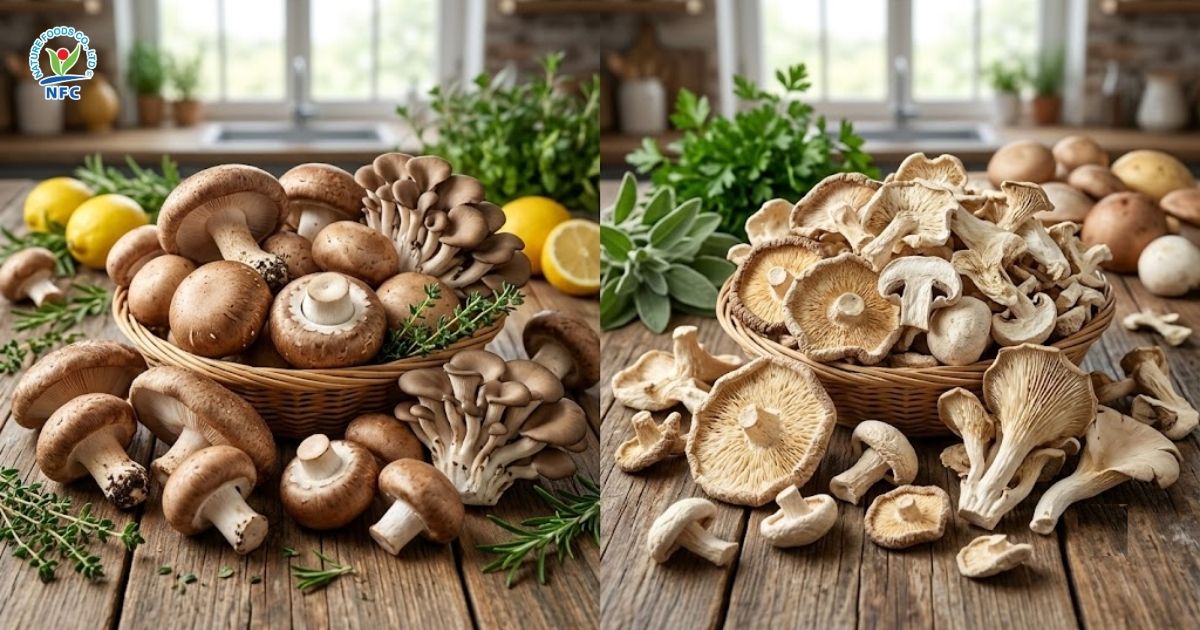
Shaped Vegetables: Sliced carrots, sweet corn kernels, green peas, shiitake mushrooms, and straw mushrooms.
Industrial Blends: Customized multi-vegetable dehydrated medleys specifically engineered to feed convenience seasoning sachet packaging lines.