Across food processing sectors utilizing vegetable ingredients, cabbage is a staple produce item; however, its high internal water content makes it highly susceptible to post-harvest wilting, posing severe long-term preservation challenges. To systematically overcome this operational bottleneck, industrial dehydrated cabbage manufacturing technologies have long been widely deployed by progressive F&B enterprises.
- Dehydration Technologies for Industrial Dehydrated Cabbage Production
- Dominant Industrial Dehydrated Cabbage Processing Technologies
- Key Commercial Benefits of Dehydrated Cabbage in the F&B Sector
- Key Criteria for Selecting an Industrial Dehydrated Cabbage Supplier
- Conclusion
- Frequently Asked Questions (FAQ)
Dehydration Technologies for Industrial Dehydrated Cabbage Production
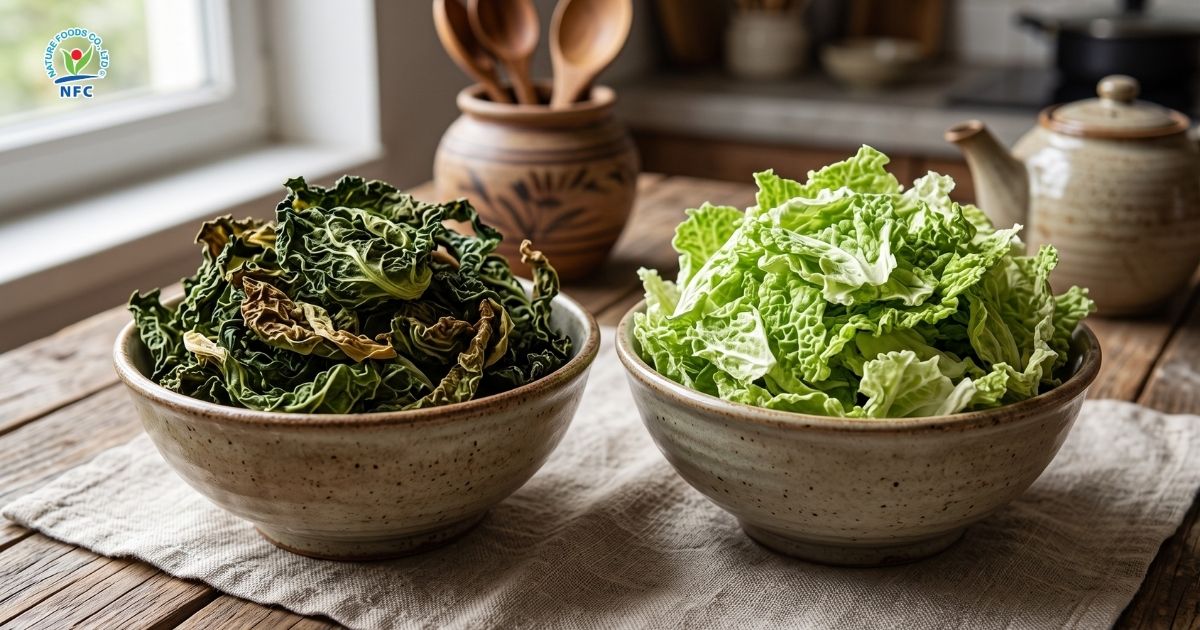
Fresh cabbage stands as an essential and widely utilized vegetable raw material across the food processing sector. However, due to its exceptionally high water content (reaching 90–92%), fresh cabbage is extremely vulnerable to wilting, physical bruising, microbial contamination, and rapid sensory decay shortly after harvest. This presents major operational barriers for processing plants regarding warehousing footprints, long-distance logistics, and seasonal Cost of Goods Sold (COGS) stabilization.
To extend commercial shelf stability while fully safeguarding native nutrients, natural vibrant coloration, and cellular structures, modern F&B enterprises are aggressively transitioning toward industrial dehydration technologies to manufacture standardized dehydrated cabbage ingredient lines.
Depending tightly on budget constraints, cost-structure optimization, and target retail market positioning (spanning mass-market convenience foods to high-end export items), enterprises can select the ideal dehydration pathway. Below is a detailed technical analysis of dominant cabbage drying technologies, highlighting why dehydrated cabbage operates as a cost-optimizing strategic asset for commercial brands.
Dominant Industrial Dehydrated Cabbage Processing Technologies
To transform fresh cabbage—a highly perishable crop with over 90% water content—into a shelf-stable dehydrated ingredient with an extended merchant life and uncompromised sensory parameters, modern food processing plants primarily deploy two core dehydration setups (AD & FD) alongside supportive microwave heating solutions (MD):
1. Hot-Air Convection Dehydration Technology (Air Drying – AD)
Hot-air convection drying technology (Air Drying – AD) represents the classic convection dehydration mechanism, deployed on the largest commercial scale across mass-market dehydrated vegetable manufacturing.
-
Technical Processing Principle: Fresh cabbage, after sorting, washing, and precision cutting into standardized geometries (flakes, slices, or cubes), undergoes an essential steam blanching phase. Blanching inactivates browning enzymes (such as polyphenol oxidase), fixing the natural green chlorophyll pigmentation.
Subsequently, the material enters continuous conveyor belts or recirculating drying tunnels. Heated air streams (typically calibrated between 55°C and 70°C) continuously pass through the vegetable layers, evaporating surface and intracellular moisture to pull final residual moisture down to a safe baseline of 8% – 10%.
-
Operational & Financial Advantages:
-
Low Infrastructure Capital Expenditure: Hot-air convection systems demand relatively economical setup, operational, and maintenance costs compared to high-tier dehydration alternatives.
-
High Production Yields: Continuous conveyor belt processing handles tens of tons of fresh produce daily, significantly streamlining unit Cost of Goods Sold (COGS).
-
-
Finished Product Attributes: Hot-air dried cabbage presents a deep green hue with subtle yellowish tones. Its low residual moisture resists microbial propagation and mold germination completely. Demonstrating moderate cell shrinkage and a pliable, chewy texture, it achieves an extended ambient shelf life of 12 to 18 months at room temperature.
-
Practical B2B Applications: Serves as a foundational ingredient anchor for mass-market convenience product lines:
-
Vegetable seasoning packets in instant noodles, instant pho, glass noodles, and rice vermicelli.
-
Dehydrated vegetable inclusions in instant porridge packs, dried soup formulations, and vegetable seasoning powders.
-
Blending ingredients for frozen food lines and industrial-scale seasoning marinades.
-
2. Vacuum Freeze-Dried Cabbage Technology (Freeze Drying – FD)
While hot-air convection (AD) optimizes cost efficiencies, vacuum freeze-drying technology (Freeze Drying – FD) represents the pinnacle of food preservation, safeguarding sensory attributes and biological value for processed cabbage.
- Physical Sublimation Principles: Distinct from thermal evaporation mechanics, vacuum freeze drying extracts water via ice crystal sublimation inside absolute vacuum environments across three strict stages:
-
Cryogenic Deep Freezing (Freezing): Fresh cabbage is rapidly brought down to temperatures between -30°C and -50°C to solidify all cell-bound liquid water into rigid ice crystals.
-
Primary Drying (Sublimation): Chamber pressure is pulled down into deep vacuums (below 611 Pa). Under this threshold, ice crystals inside the cabbage sublimate directly into gaseous vapor without melting into a liquid state.
-
Secondary Drying (Desorption): Radiant heat is delicately introduced to remove remaining bound water molecules, driving final residual moisture down to a record baseline of 1% – 3%.
-
-
Unrivaled Quality & Nutritional Retentions:
-
Preserving Cellular Frameworks & Color: Because water leaves from a solid ice phase, the fibrous frame of the cabbage leaves avoids capillary collapse. Freeze-dried cabbage retains an open, porous structure and a vibrant green color matching fresh produce.
-
Safeguarding 95% – 98% Bioactive Assets: Protected from high positive heat, heat-sensitive vitamins (Vitamin C, B1, Folate) and natural antioxidants (Glucosinolates) remain intact.
-
Ultra-Rapid Rehydration Kinetics: Owing to the porous honeycombed matrix left post-sublimation, freeze-dried cabbage leaves absorb water and rehydrate to tender freshness in just 10 – 30 seconds upon contact with hot liquids.
-
-
Practical B2B Applications: Vacuum freeze-dried cabbage serves as the premier choice for upscale convenience segments and strict export markets:
-
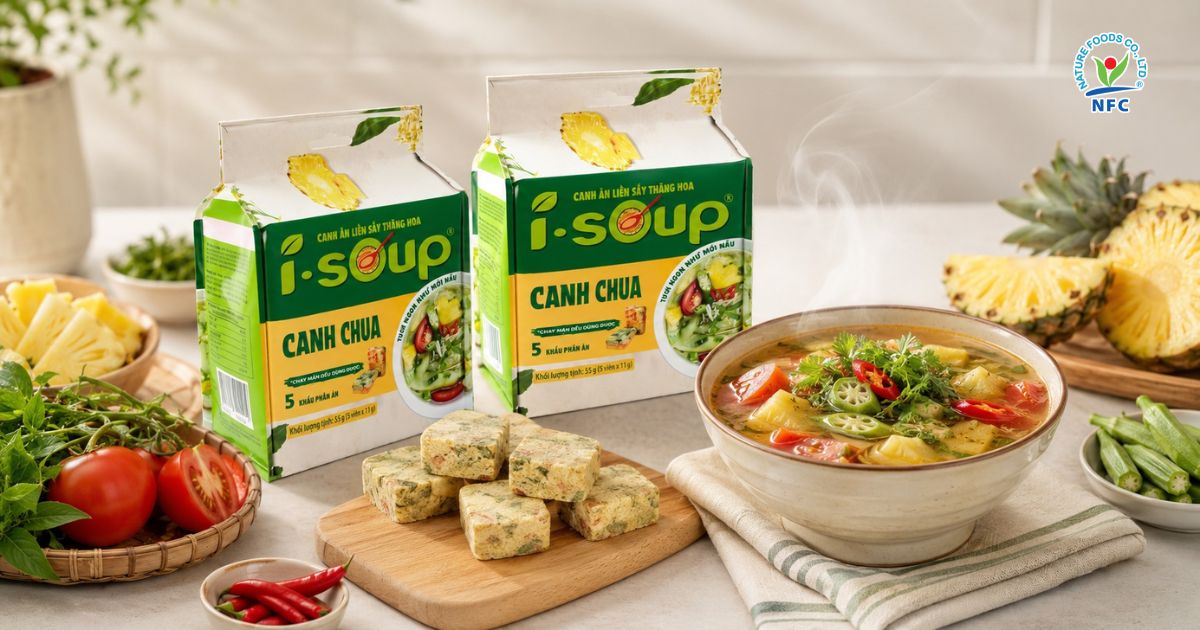
Premium vegetable soup sachets and ready-to-eat instant soup blocks (such as the I.Soup range).
-
Clean Label products (Clean Label), dietary food lines, and functional health formulations.
-
Export production clearing strict custom barriers across North America, Europe, Japan, and South Korea.
-
Surface toppings for gourmet Meal-kits and oil-free crispy vegetable snack lines.
-
Certain manufacturers also integrate Microwave Drying (MD) to compress processing runtimes or complement main dehydration channels. Nevertheless, AD and FD remain the two dominant industrial setups for cabbage processing due to their balanced performance across product quality, throughput capacity, and market demand.
Key Commercial Benefits of Dehydrated Cabbage in the F&B Sector
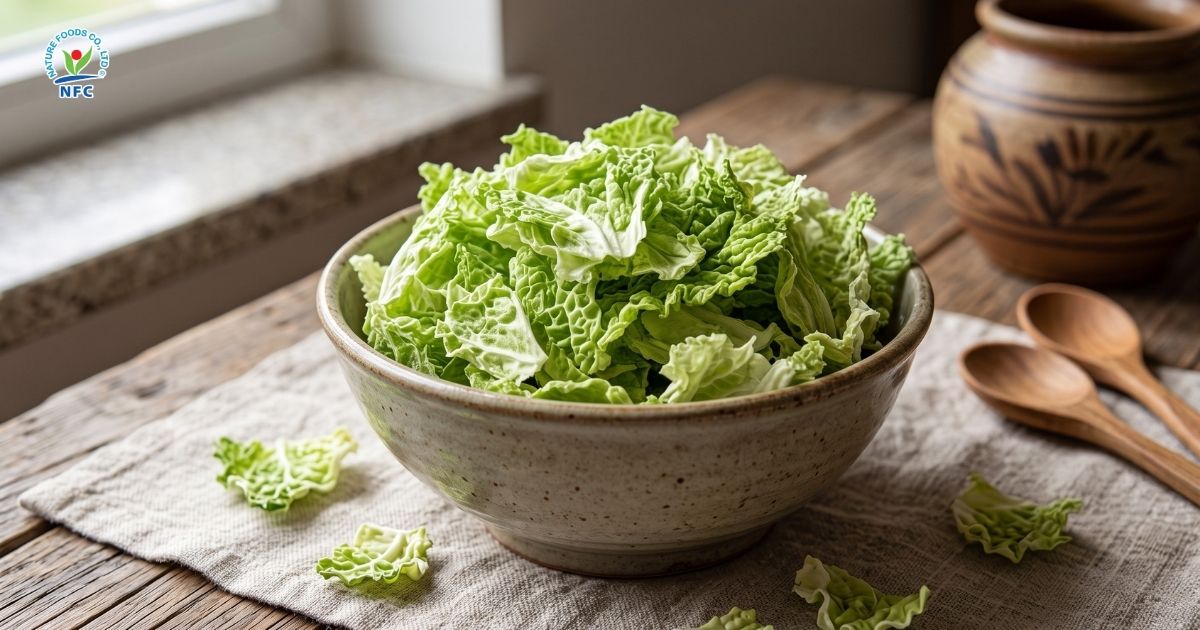
Extending Storage Lifespans Profoundly
Post-dehydration, processed cabbage can be safely warehoused from several months to up to two years under ambient conditions, fundamentally eradicating the wilting and spoilage risks typical of fresh produce. This stability trims logistics freight overheads, eliminates material loss, and gives procurement teams superior operational control over production schedules.
Convenience and Streamlined Processing SOPs
The raw material arrives fully pre-treated, washed, and cut to exact specifications. During downstream food assembly, plant operators avoid manual sorting, washing, or re-trimming, significantly compressing processing runtimes and reducing labor overheads.
Sourcing Continuity and Cost Stabilization
Open-market pricing for fresh agricultural crops fluctuates wildly due to weather anomalies and harvest seasonality. Maintaining shelf-stable dehydrated cabbage inventory enables F&B brands to lock in fixed Cost of Goods Sold (COGS) year-round, insulating business models against raw material price shocks.
Versatile Multi-Category Applications
Dehydrated cabbage integrates seamlessly into instant noodles, ready-to-eat soups, porridge bowls, seasoning matrices, meal kits, frozen prepared meals, and healthy veggie snacks. For applications demanding ultra-fast rehydration or uncompromised color and shape retention, freeze-dried cabbage offers the ultimate industrial solution.
Key Criteria for Selecting an Industrial Dehydrated Cabbage Supplier
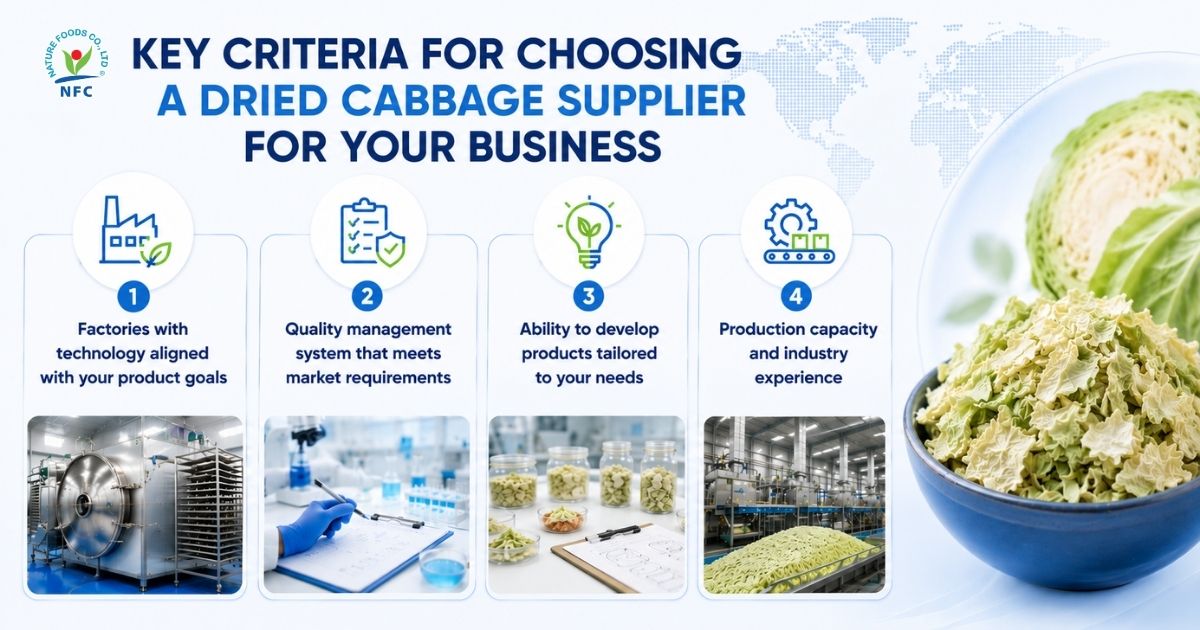
Dehydration Technology Matched to Product Objectives
Different product configurations demand specific processing setups. Depending on targeted unit economics, quality standards, and downstream applications, enterprises may choose hot-air dried cabbage (AD) for cost optimization or freeze-dried cabbage (FD) to maximize color, cellular shape, and rehydration kinetics.
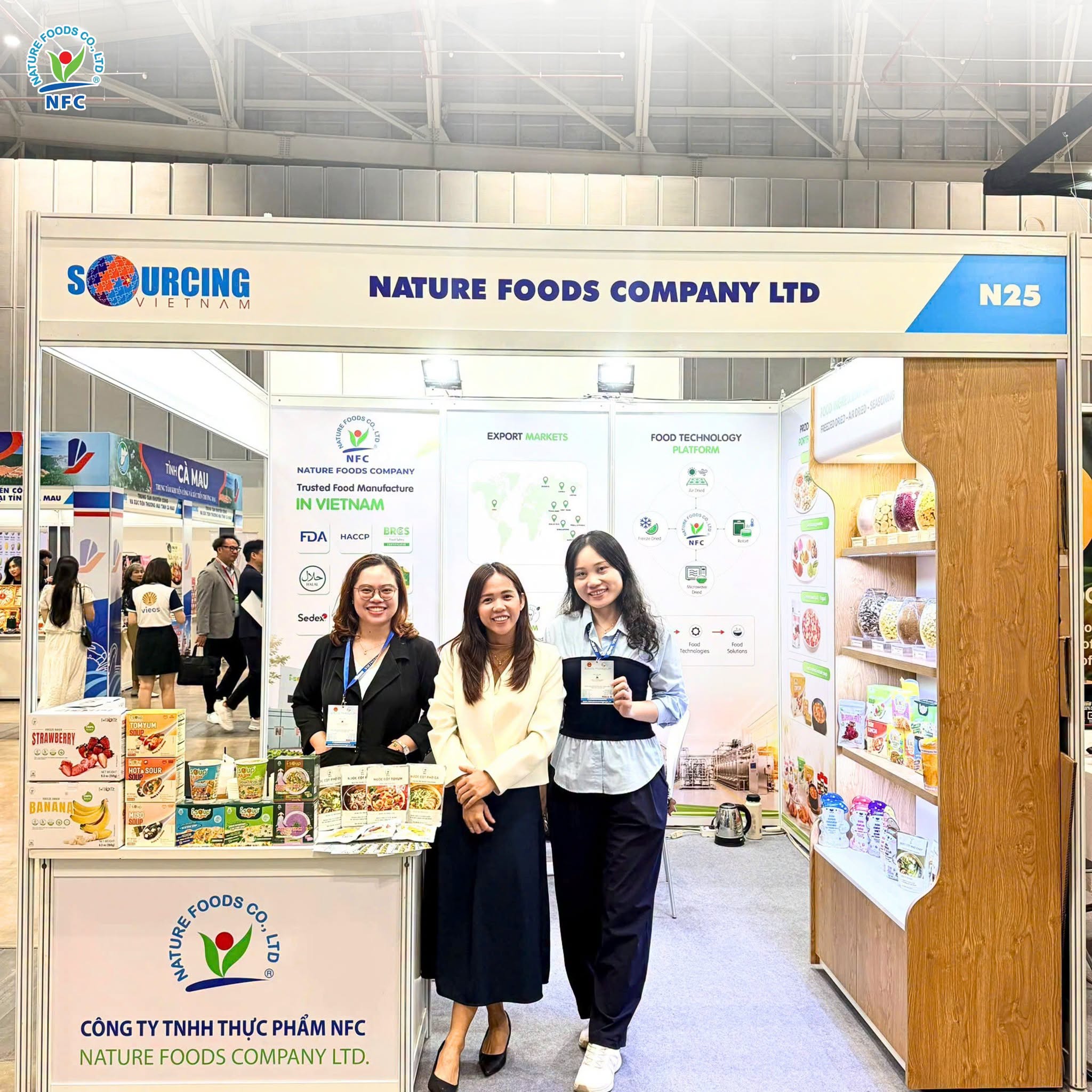
Nature Foods operates versatile industrial setups spanning Air Drying (AD), Freeze Drying (FD), and Microwave Drying (MD), empowering corporate clients to select the precise technology matching their specific product roadmap.
Rigorous Quality Management Aligned with Market Regulations
The quality of industrial dehydrated cabbage extends beyond visual sorting—it demands verification under standardized safety systems. Partnering with a manufacturer maintaining transparent quality controls minimizes production risks and ensures compliance across diverse markets.
Nature Foods operates under world-class quality assurance frameworks, holding credentials including BRCGS, ISO 22000, HACCP, FDA, HALAL, and GLOBALG.A.P. These certifications validate food safety, enable raw sourcing traceability, and support smooth distribution for domestic and international export channels.
Tailored Customization & OEM/ODM Capabilities
Each commercial buyer enforces unique raw material specifications regarding cut dimensions, residual moisture thresholds, packaging styles, or application requirements. The ability to customize inputs is a critical selection benchmark.
In addition to standard bulk supply, Nature Foods provides comprehensive OEM/ODM contract manufacturing—collaborating closely with clients during formula research, pilot sample testing, and specification locking prior to mass production.
High Production Capacity and Industry Experience
B2B agreements require suppliers to guarantee steady volume availability and strict delivery timelines over long horizons. Nature Foods manages a diverse portfolio of 300+ SKUs, an annual output capacity exceeding 3,000 tons of finished products, and a specialized workforce of over 400 floor professionals.
Having long served global giants including Unilever, Acecook, Ajinomoto, Masan Consumer, Kewpie, and Orion, alongside exporting to Japan, Australia, and Southeast Asia, Nature Foods delivers the verified scale and stability required for high-volume B2B supply chains.
Conclusion
As the global food manufacturing sector increasingly demands lot-to-lot consistency, operational cost optimization, and strict adherence to food safety standards, integrating dehydrated cabbage ingredients stands out as a highly effective commercial strategy for F&B brands.
Whether your corporate goal is optimizing Cost of Goods Sold (COGS) via hot-air dried cabbage (Air Drying – AD) for mass retail markets, or elevating a premium export line with vacuum freeze-dried cabbage (Freeze Drying – FD) that preserves natural color and cellular integrity, selecting the right contract processing partner is the decisive factor.
Why Partner with Nature Foods Co., Ltd (NFC)?
-
Comprehensive Infrastructure: Operating synchronized hot-air (AD) and freeze-drying (FD) lines capable of delivering custom flakes, precision slices, cubical dicing, and 100% pure fine powders.
-
Verified Export-Grade Compliance: Facilities fully certified across elite international standards: BRCGS, ISO 22000, HACCP, FDA, HALAL, GLOBALG.A.P., and SEDEX – SMETA.
-
Mass Industrial Capacity: High-volume processing complex in Nhon Trach 1 Industrial Zone (Dong Nai) yielding over 3,000 tons of finished products annually, backed by 23+ years of deep processing experience and trusted by multi-billion-dollar corporations including Unilever, Acecook, Ajinomoto, Masan Consumer, Kewpie, Orion…
-
Turnkey Tailored OEM/ODM Services: Supporting R&D sample pilot runs, precise moisture and sizing adjustments, and specialized high-barrier protective packaging setups tailored to private corporate specifications.
Frequently Asked Questions (FAQ)
1. Does dehydrated cabbage retain its natural color and nutritional profile compared to fresh cabbage?
Nutrient and color retention parameters depend on the specific dehydration methodology deployed:
- Vacuum Freeze Drying (FD): Preserves 95% – 98% of native vitamins (notably heat-vulnerable Vitamin C and B1), minerals, and dietary fibers. Cabbage leaves maintain their original cellular shape, porous matrix, and vibrant fresh green color.
- Hot-Air Convection Drying (AD): Fully retains structural dietary fiber and core minerals. However, elevated thermal processing (55°C – 70°C) results in a partial loss of heat-sensitive vitamins and shifts leaf coloration toward a deeper green-yellow tone.
2. How do the rehydration kinetics of freeze-dried (FD) vs. hot-air dried (AD) cabbage compare when introduced to liquid?
- Freeze-Dried Cabbage (FD): Thanks to the open honeycomb cell voids left post-sublimation, leaves absorb liquid rapidly, rehydrating in just 10 – 30 seconds upon contact with warm water or broth to reclaim a crisp, tender texture matching freshly picked produce.
- Hot-Air Dried Cabbage (AD): Cell walls undergo mild thermal shrinkage, requiring 1 – 3 minutes in hot liquid to achieve full moisture absorption. Post-rehydration, the texture exhibits a pliable chew, making it ideal for instant noodle garnishes and packaged porridges.
3. What is the usable shelf life of dehydrated cabbage, and what warehouse conditions apply?
- Merchant Shelf Life: 12 to 24 months under standard ambient room temperature storage.
- Storage Conditions: Operating under ultra-low water activity ($a_w < 0.3$), dehydrated cabbage halts bacterial and mold growth completely. Enterprises eliminate cold chain storage liabilities, requiring placement inside standard dry, well-ventilated warehouses using high-barrier aluminum packaging to block ambient humidity migration.
4. Can Nature Foods adjust particle cut dimensions and residual moisture targets to custom corporate R&D specs?
Yes, absolutely. Nature Foods provides full OEM/ODM customization tailored to exact factory standard operating procedures (SOPs):
- Cutting Formats: Flexible customization spanning fine flakes (1–3mm), medium flakes (5–10mm), large flakes (15–20mm), cubical dicing, or 100% pure fine-milled powders.
- Moisture Indices: Precision thermal calibration to achieve target residual moisture (1%–3% for FD; 8%–10% for AD), ensuring seamless integration into client formulas.
5. Do dehydrated cabbage ingredients from Nature Foods fulfill export parameters for US, EU, and Japanese custom entry?
6. Should enterprises select hot-air dried (AD) or freeze-dried (FD) cabbage to optimize unit COGS?
Selection relies on targeted retail market positioning:
- Select Hot-Air Drying (AD): Ideal when the primary objective is minimizing unit input cost for mass-market consumer lines (e.g., standard instant noodle vegetable sachets, packaged porridges, seasoning powders).
- Select Freeze Drying (FD): Recommended for Premium categories, Clean Label offerings, gourmet instant soup blocks, or export-grade product lines demanding pristine visual aesthetics and maximum nutrient retention.
7. What is the standard B2B cooperation process for R&D sampling and contract processing at Nature Foods?
B2B partnerships at Nature Foods follow a structured 4-step workflow:
- 1. Requirement Intake: Documenting technology preferences (AD/FD), cut dimensions, moisture targets, packaging styles, and end-use applications.
- 2. Lab Sample Development (R&D): NFC’s R&D laboratories execute trial dehydration runs and dispatch free sample lots for partner sensory and rehydration evaluation.
- 3. Specification Refinement: Fine-tuning specs based on feedback from client procurement and R&D teams.
- 4. Commercial Mass Production: Finalizing the B2B contract, locking in Minimum Order Quantity (MOQ) parameters, and executing industrial-scale production.