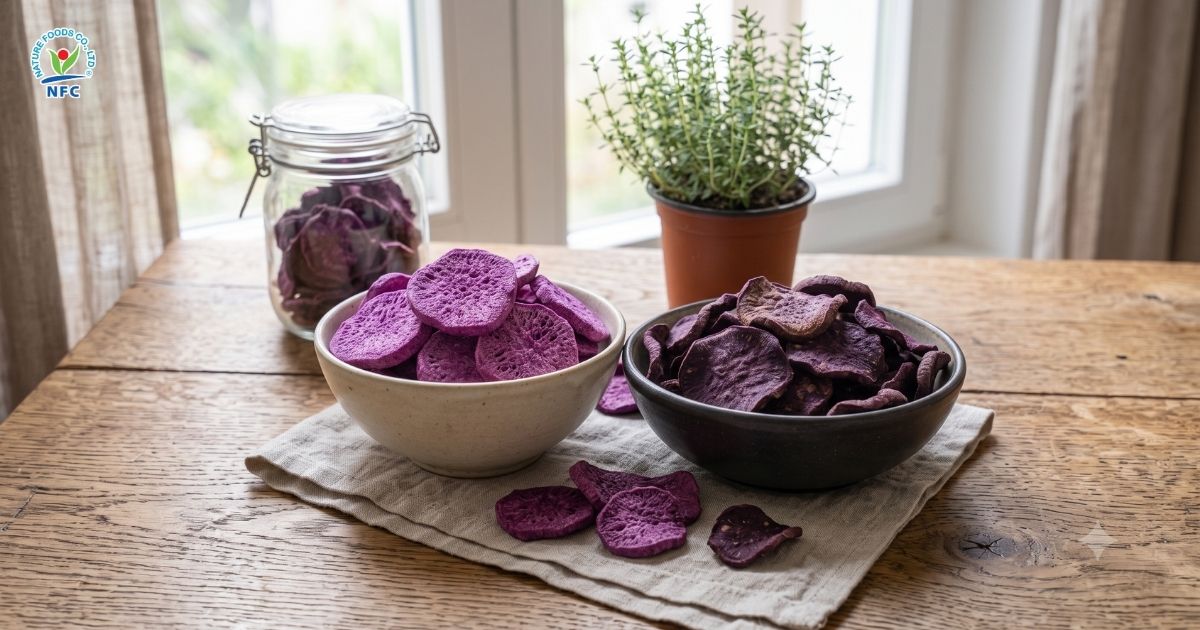
Fresh carrots represent a familiar and indispensable root vegetable raw material across the food processing sector, highly valued for their vibrant visual appeal and rich Beta-carotene (Pro-vitamin A) concentration. However, in their raw state, fresh carrots carry an exceptionally high water content (accounting for over 88% – 90%), rendering them highly susceptible to post-harvest wilting, rapid decay, enzymatic browning, and swift physical weight loss shortly after harvest.
For industrial F&B processing plants requiring continuous line operations or long-haul export schedules, maintaining a stable fresh produce supply year-round presents a persistent operational cost challenge. That is precisely why dehydrated carrots (Hot-Air Dried AD and Vacuum Freeze-Dried FD) have evolved into a strategic raw material solution prioritized by leading global food brands.
- How Do Dehydrated Carrots Resolve Sourcing Liabilities for Food Enterprises?
- Dominant Dehydrated Carrot Formats in the Food Processing Sector
- Standard Specifications & Industrial Applications of Dehydrated Carrots
- Key Evaluation Criteria for Selecting a B2B Dehydrated Carrot Partner
- Frequently Asked Questions (FAQ)
How Do Dehydrated Carrots Resolve Sourcing Liabilities for Food Enterprises?
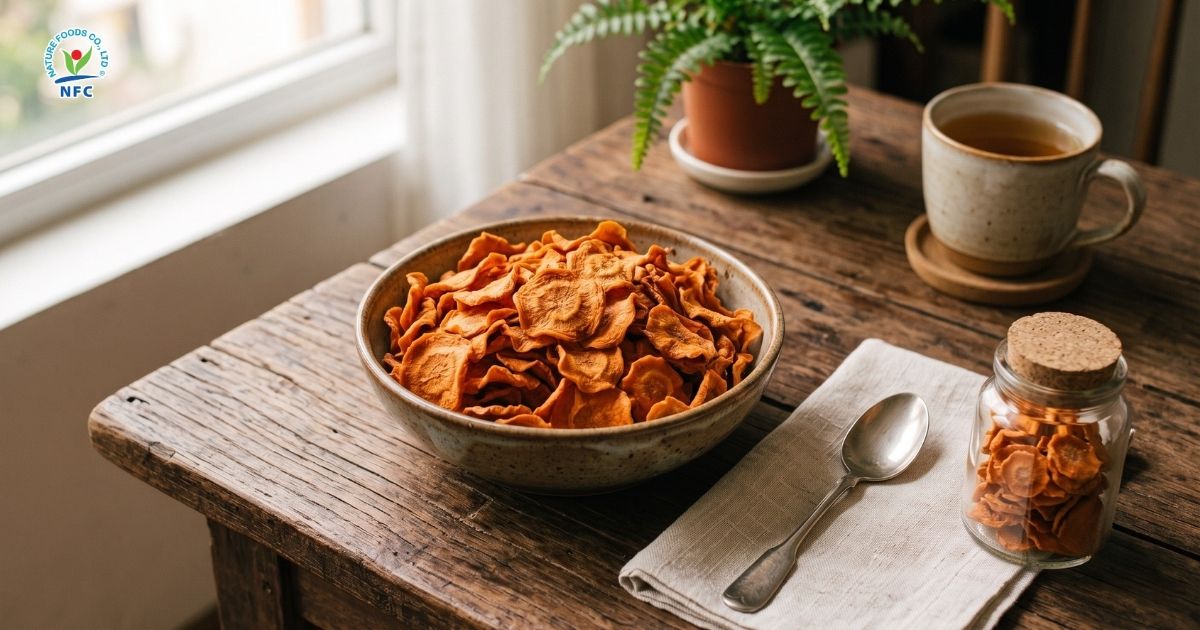
Transitioning from perishable fresh produce to industrial dehydrated carrots delivers distinct operational advantages for food manufacturers:
-
Logistics & Warehousing Cost Optimization: By extracting 85% to 95% of unbound water mass, the finished product weight drops dramatically. Enterprises reduce long-haul freight expenses by 70% to 80% while completely eliminating the continuous utility burdens of running cold chain infrastructure.
-
Driving Water Activity into Absolute Safe Envelopes: The sealed dehydration cycle drives internal water activity down ($a_w < 0.3$). Within this threshold, foodborne bacteria, yeasts, and molds are metabolically isolated, extending ingredient shelf life to 12 to 24 months under ambient dry warehousing without chemical preservatives.
-
Stabilizing Cost of Goods Sold (COGS) Year-Round: Fresh carrot market prices fluctuate heavily according to weather anomalies and harvest seasonality. Warehousing dehydrated carrot inventory allows procurement divisions to fix baseline input costs, protecting profit margins and securing supply continuity.
-
Immaculate Batch-to-Batch Uniformity: Automated monitoring of moisture levels, cut sizing, and color profiles ensures high ingredient standardization. This consistency enables automated multi-head blending equipment to operate smoothly without mechanical jams or line downtime.
Dominant Dehydrated Carrot Formats in the Food Processing Sector
Not all processed carrot ingredients share identical technical attributes. Depending on the dehydration mechanism, different processed carrot formats exhibit variations in cell structure, crispness, rehydration kinetics, and manufacturing cost profiles.
Hot-Air Convection Dried Carrots (Air Drying – AD)
This convection mechanism continuously circulates heated positive air streams through dehydration tunnels to evaporate surface and intracellular free water. Processing temperatures typically range from 60°C to 80°C over a 6 to 8-hour cycle, depending on cut dimensions.
Due to prolonged thermal exposure, the cellular tissue undergoes volume contraction (shrinkage). Concurrently, mild caramelization of natural sugars shifts the final coloration to a slightly deeper orange-yellow tone compared to fresh carrots.
Vacuum Freeze-Dried Carrots (Freeze Drying – FD)
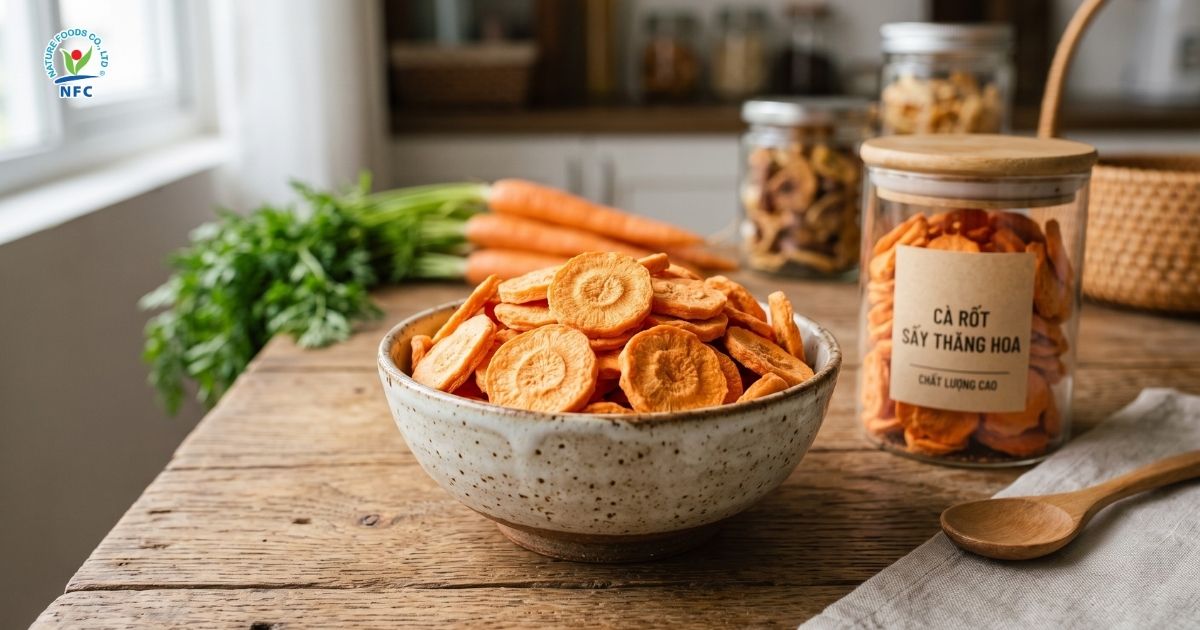
This advanced technology operates on direct ice-to-vapor phase-change mechanics (sublimating frozen water directly into gas within a high-vacuum chamber). The closed loop comprises three strict stages:
- Cryogenic Deep Blast Freezing
- Primary Drying (reducing chamber pressure to deep vacuum thresholds for sublimation)
- Secondary Drying (incrementally elevating radiant heat to desorb remaining bound moisture)
Carrots undergo cryogenic flash freezing between -30°C and -40°C inside absolute vacuum fields, yielding an ultra-low residual moisture baseline of 1% to 5%.
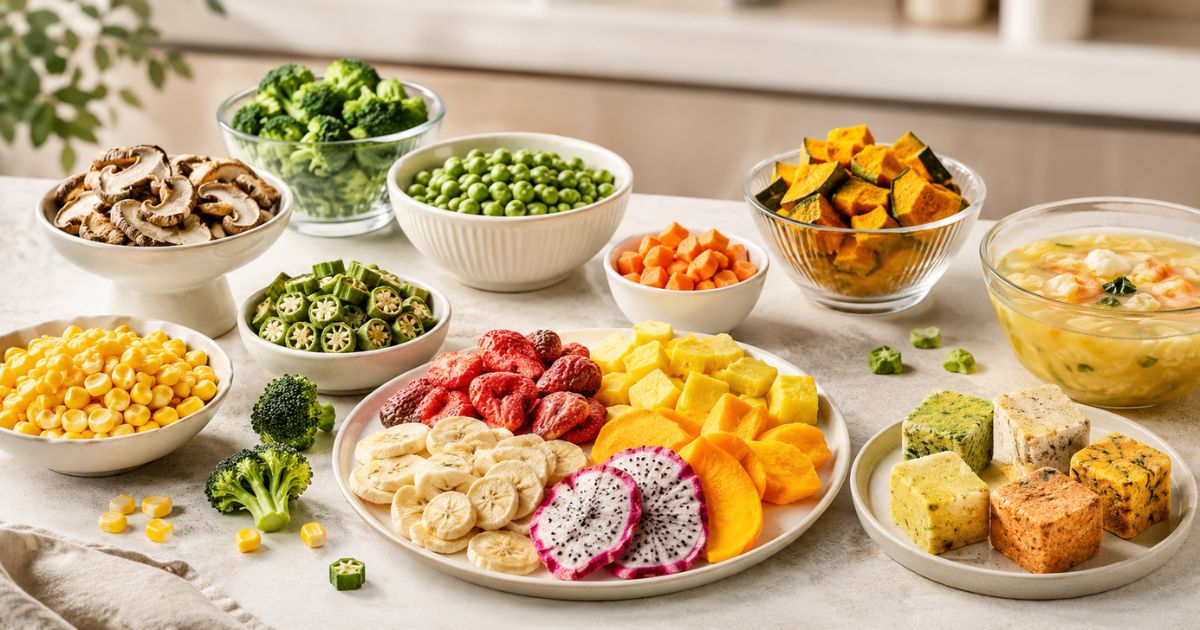
Because moisture is sublimated directly from solid ice, the 3D cell wall matrix remains structurally intact without shrinking. The microscopic voids left post-sublimation act as capillaries, endowing freeze-dried carrots with ultra-rapid rehydration kinetics upon contact with liquid.
Crispy Vacuum-Fried Carrot Chips
To achieve a rigid, crunchy texture, carrots can be processed via negative-pressure vacuum frying or combined microwave setups depending on target consumer preferences. These methods aim to reduce water volume while delivering an appealing crunch and bright visual presentation.
Comparative Analysis of Dehydrated Carrot Technologies
| Evaluation Metric | Hot-Air Dried Carrots (AD) | Freeze-Dried Carrots (FD) | Vacuum-Fried Carrots |
| Processing Temp | High positive thermal bounds (60°C – 80°C) | Deep sub-zero (-30°C to -50°C) | Moderate positive spectrum |
| Residual Moisture | 8% – 10% | 1% – 3% | 2% – 5% |
| Shape & Color | Mild cell contraction, deeper hue | Pristine 3D shape, vivid orange | Retains shape, bright visual appeal |
| Nutrient Retention | 60% – 70% | 95% – 98% | 70% – 80% |
| Rehydration Speed | 1 – 3 minutes (boiling liquid) | 10 – 30 seconds | Direct ready-to-eat format |
| Target Retail Tier | Mass-market food lines | Premium & Clean Label categories | Convenience snack items |
| Unit COGS Index | Highly Cost-Optimized | Higher (Premium Quality) | Moderate Cost Profile |
For applications requiring rapid fluid absorption upon preparation or large-scale industrial blending, food manufacturers typically select hot-air dried or vacuum freeze-dried carrot specifications.
Standard Specifications & Industrial Applications of Dehydrated Carrots
To feed diverse food processing lines, dehydrated carrots are manufactured across standardized particle sizes and formats:
-
Diced Carrot Cubes (Diced – 3x3mm, 5x5mm, 10x10mm): The most widespread specification for instant noodle vegetable sachets, packaged porridges, ready-to-eat soup mixes, instant pho, vermicelli, and convenience meal kits.
-
Carrot Slices & Shredded Threads (Sliced / Shredded): Widely used across frozen prepared meals, steamed bun fillings, spring roll manufacturing, canned goods, and ready-to-cook food preparations.
-
100% Pure Dehydrated Carrot Powder (Carrot Powder): Used as a natural food colorant, seasoning mix component, baby food ingredient, functional dietary supplement base, and healthy beverage formulation input.
-
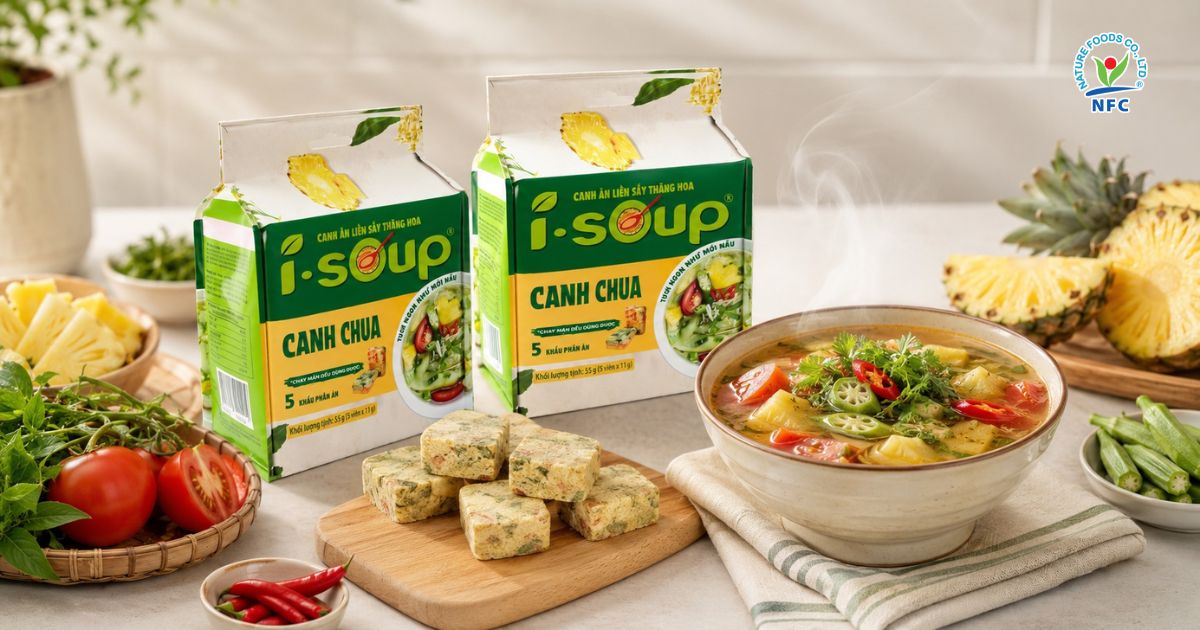
Structured FD Carrot Blocks (FD Carrot Block): Premium functional inclusions in gourmet instant soup blocks (such as the I.Soup range) and export-grade meal formulations.
Key Evaluation Criteria for Selecting a B2B Dehydrated Carrot Partner
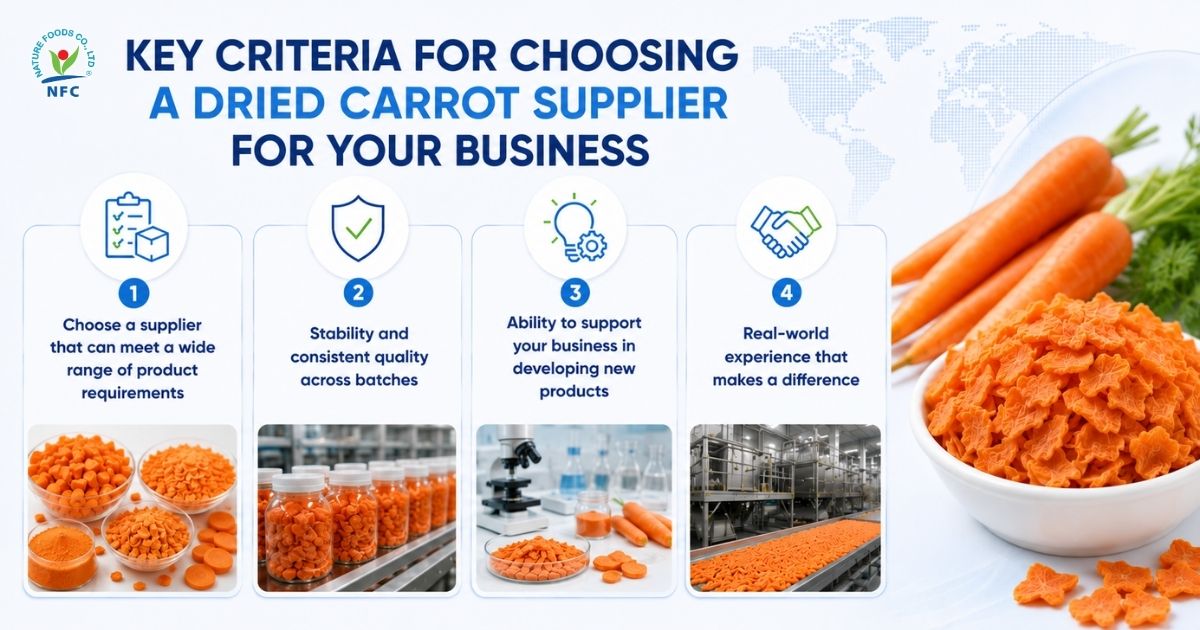
While sourcing dehydrated carrots is straightforward, securing an accredited partner capable of supporting long-term commercial growth requires evaluating criteria past basic price sheets.
Technology Diversity Matched to Product Targets
Different product categories enforce specific technical parameters. While mass-market lines prioritize low unit COGS, premium wellness offerings demand vibrant natural color retention, porous texturing, and rapid rehydration.
Rather than offering a single fixed process, Nature Foods operates synchronized Air Drying (AD), Freeze Drying (FD), and Microwave Drying (MD) lines—empowering corporate buyers to select the exact specification matched to their project roadmap.
Multi-Batch Consistency and Quality Oversight
Securing a single compliant trial batch is insufficient; continuous lot-to-lot uniformity in color, particle sizing, water activity, and microbiological safety is critical to keep automated factory lines running without interruptions.
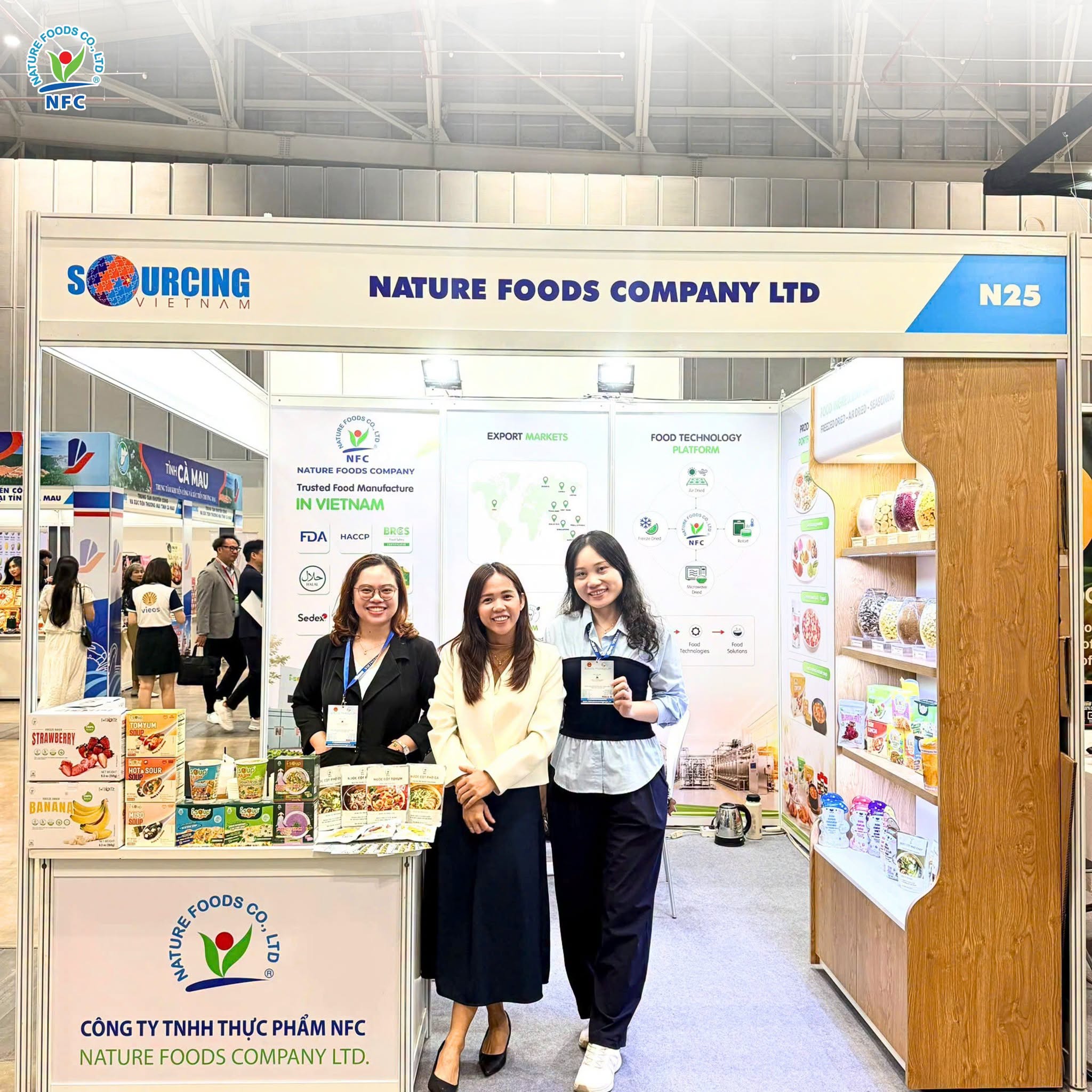
Nature Foods operates under audited quality control frameworks including BRCGS, ISO 22000, HACCP, FDA, HALAL, GLOBALG.A.P., and SEDEX – SMETA—guaranteeing rigorous safety oversight and seamless domestic and export compliance.
End-to-End R&D and Customization Capabilities
Corporate clients frequently require customized cutting dimensions, specific residual moisture targets, or specialized barrier packaging layouts tailored to individual factory SOPs.
Operating under flexible OEM/ODM contract models, Nature Foods steps beside brand managers from lab-scale sample prototyping down to full-scale commercial manufacturing, compressing time-to-market significantly.
Proven Industrial Scale and Strategic Market Tenure
A reliable contract processor must demonstrate verified facility capacity to absorb unexpected volume surges during peak retail sales seasons smoothly.
Managing a versatile catalog of 300+ SKUs, an annual factory capacity exceeding 3,000 tons of finished products, and a specialized workforce of over 400 floor professionals, Nature Foods effortlessly fulfills high-volume B2B orders.
Furthermore, our long-standing role supplying multi-national conglomerates including Unilever, Acecook, Ajinomoto, and Masan Consumer, alongside exporting to Japan, Australia, and Southeast Asia, provides the operational foundation required by global corporate buyers.
Conclusion:
Selecting the optimal dehydration technology and contract processing partner for dehydrated carrots does far more than safeguard sensory quality—it serves as a critical strategic link that optimizes operational costs and protects long-term net profit margins.
Backed by advanced multi-technology infrastructure (AD, FD, MD), elite global compliance credentials, and 23+ years of specialized B2B manufacturing tenure, Nature Foods (NFC) stands ready to partner with your enterprise to elevate product line performance.
Connect with Nature Foods today to request specialized technical consultations, volume wholesale quotations, and complimentary R&D sample lots.
Frequently Asked Questions (FAQ)
1. Should our enterprise select hot-air dried (AD) or freeze-dried (FD) carrots for our product line?
Selection relies entirely on targeted unit economics and retail category positioning:
- Select Hot-Air Drying (AD): Ideal when the primary objective is minimizing input COGS for mass-market consumer offerings (e.g., standard instant noodle vegetable sachets, packaged porridges, powdered seasonings).
- Select Freeze Drying (FD): Recommended for Premium categories, Clean Label formulations, dietary health foods, gourmet instant soup blocks (like the I.Soup range), or export-grade products demanding pristine orange coloration, crisp porous texturing, and ultra-fast rehydration kinetics.
2. Does freeze-dried carrot (FD) preserve native Beta-carotene (Pro-vitamin A) and visual coloration compared to fresh produce?
3. How do the rehydration kinetics of freeze-dried (FD) vs. hot-air dried (AD) carrots compare upon liquid contact?
Rehydration performance differs significantly between the two processing technologies:
- Freeze-Dried Carrots (FD): Thanks to the open honeycomb cell voids left post-sublimation, pieces absorb liquid rapidly, rehydrating to tender freshness in just 10 – 30 seconds upon contact with warm liquid or broth.
- Hot-Air Dried Carrots (AD): Cell walls experience mild thermal shrinkage, requiring 1 – 3 minutes in boiling water to achieve complete hydration and tender texture.
4. Can Nature Foods customize particle cut dimensions and residual moisture targets to private corporate R&D specs?
Yes, fully. Nature Foods provides tailored OEM/ODM contract manufacturing aligned with client factory standard operating procedures (SOPs):
- Cutting Formats: Custom dicing (3x3mm, 5x5mm, 10x10mm), slices, shredded threads, fine flakes, or 100% pure fine-milled carrot powders.
- Residual Moisture Control: Precision thermal calibration targeting 1% – 3% for FD and 8% – 10% for AD, ensuring seamless compatibility with automated packaging equipment.
5. What is the merchant shelf life of dehydrated carrots, and what B2B packaging rules apply?
- Shelf Life: Dehydrated carrots comfortably maintain a commercial shelf life of 12 to 24 months under standard ambient room temperature storage, entirely eliminating cold room utility bills.
- Moisture Barrier Packaging: Due to their hygroscopic nature, finished lots at Nature Foods are hermetically sealed inside specialized multi-layer aluminum foil packaging engineered to block UV light, ambient humidity migration, and atmospheric oxidation.
6. Do dehydrated carrot ingredients from Nature Foods fulfill export parameters for US, European, or Japanese custom entry?
7. What is the Minimum Order Quantity (MOQ) requirement for wholesale supply or contract processing at Nature Foods?
8. What is the standard B2B cooperation process for R&D sampling and contract processing at Nature Foods?
B2B partnerships follow a transparent 4-step workflow:
- 1. Specification Intake: Documenting technology choices (AD/FD), cut dimensions, moisture targets, packaging styles, and end-use applications.
- 2. Lab Sample Development (R&D): NFC’s laboratory team executes sample dehydration and dispatches complimentary test lots for partner sensory and rehydration evaluation.
- 3. Specification Locking: Fine-tuning specs based on feedback from client R&D and procurement divisions to lock in wholesale quotations.
- 4. Commercial Mass Manufacturing: Signing B2B contracts, locking MOQ parameters, and launching continuous industrial mass production.