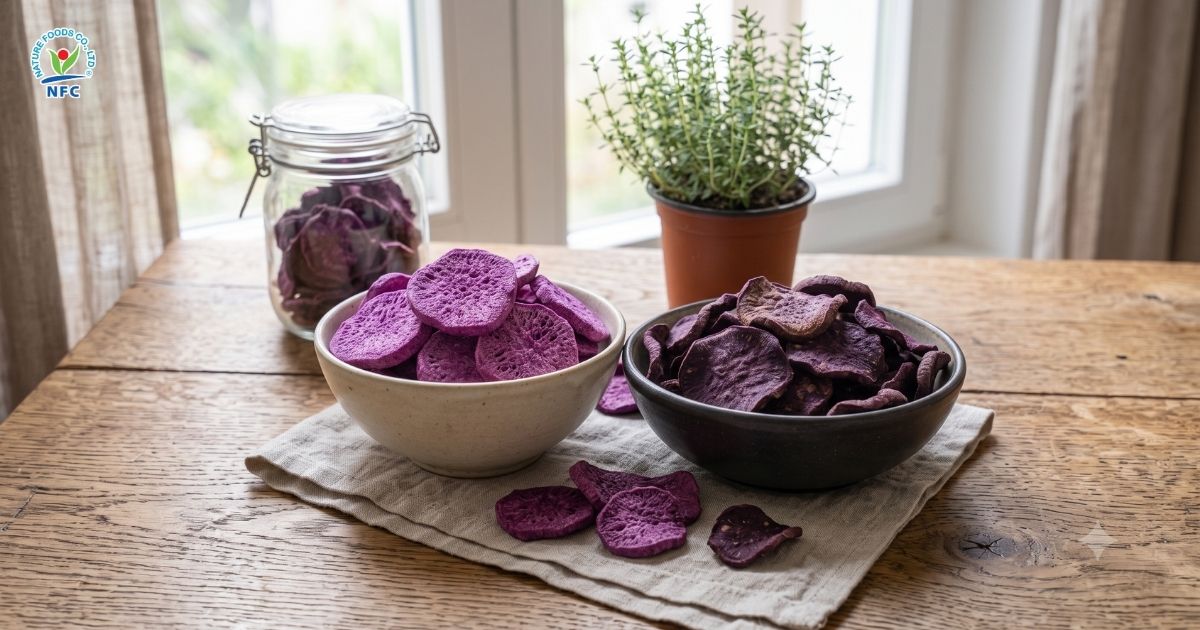
Currently on the market, dominant pumpkin dehydration technologies include hot-air convection drying (AD), cool drying, and vacuum freeze drying (FD). Selecting the optimal dehydration technique depends entirely on the strategic objectives of each individual project. Food enterprises must carefully balance between a cost-optimized option suitable for high-volume commercial manufacturing with standard output quality, or an advanced preservation solution that retains sensory value and biological nutrition at the highest level accompanied by higher operational expenditures.
Dehydrated Pumpkin – A High-Potential Raw Material for Processed Food Sectors
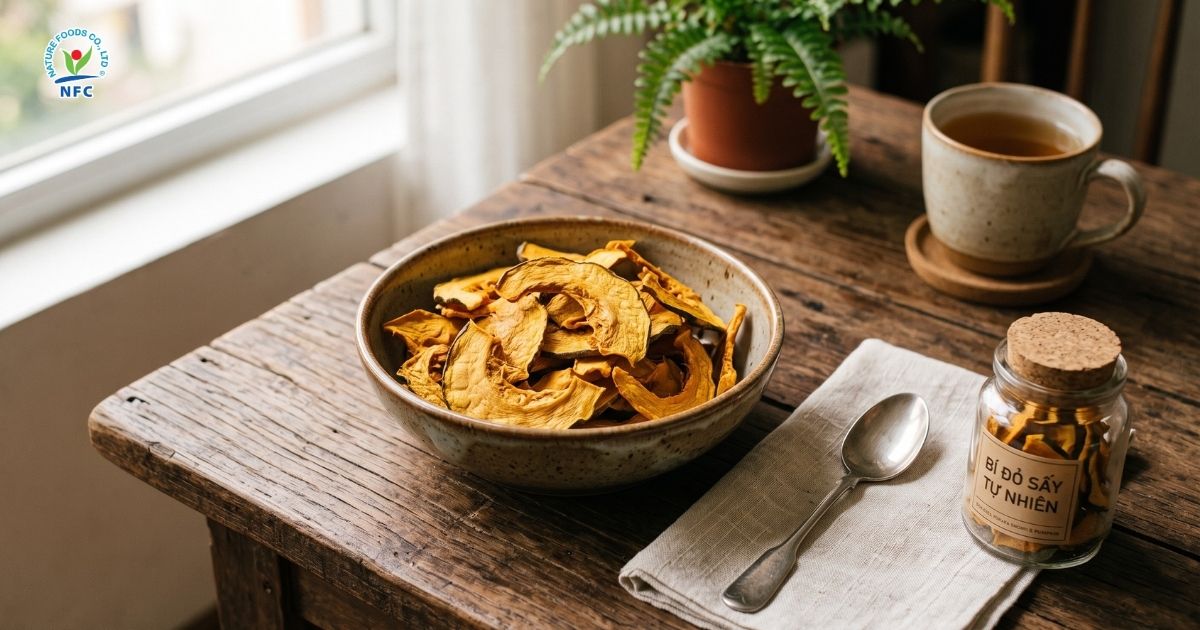
Pumpkin stands out as one of the few root vegetables possessing exceptional multi-category application versatility across the global F&B industry. Thanks to its rich, naturally sweet and nutty flavor paired with a striking visual hue, this raw input is present across virtually every product line: from savory dishes and confectionery baking to ready-to-eat snack formats. Moving past sensory appeal, pumpkin represents a nutritional goldmine packed with rich beta-carotene (Pro-vitamin A) concentrations, dietary fibers, and essential vitamin complexes. This makes dehydrated pumpkin a strategic building block for both convenience lines and wellness-focused functional foods.
Economic Equations and Operational Liabilities of Raw Fresh Pumpkin at Industrial Scale
Although fresh pumpkin is well-known for its natural long-term shelf stability when stored whole at room temperature, introducing raw fresh crops into large-scale industrial manufacturing pipelines exposes food processors to severe financial and logistical bottlenecks:
-
High Logistics & Warehousing Overhead (Volume & Transport Liabilities): Raw fresh pumpkin contains approximately 88%–92% water weight. This means enterprises absorb heavy freight fees, manual handling costs, and warehouse footprint expenditures primarily to transport and store liquid water. Furthermore, irregular fruit shapes waste substantial pallet and container space.
-
Heavy Material Waste & Inflated Pre-treatment Costs: Industrial peeling, coring, deseeding, and sorting out bruised sections generate significant raw crop waste (averaging 20%–30% yield loss). This inflates factory floor labor overhead, requires dedicated peeling equipment, and incurs organic waste disposal fees.
-
Quality Consistency & Bioactive Preservation Challenges: Achieving multi-batch lot uniformity regarding residual moisture and color profiles across mass automated production lines—while preventing thermal breakdown of heat-sensitive micronutrients—presents a complex R&D challenge.
Dehydrated Pumpkin: The Optimized Raw Material Solution for F&B Enterprises
To eliminate hidden supply chain overheads, industrial dehydrated pumpkin has emerged as an ideal alternative, helping food brands optimize Cost of Goods Sold (COGS) and standardize plant manufacturing:
-
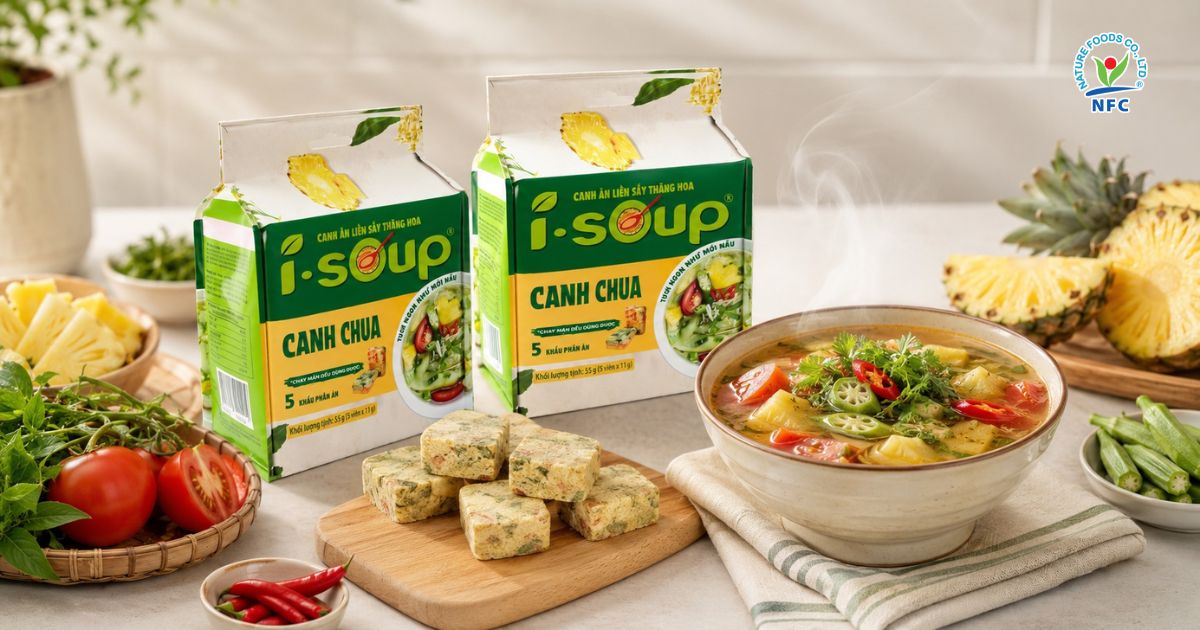
In Convenience Food Processing: Dehydrated pumpkin functions as a foundational component in instant soups, porridge packs, instant noodles, and gourmet meal kits, delivering a rich sweet-savory flavor and vibrant golden-orange color post-rehydration.
-
In Bakery & Cereal Manufacturing: Dehydrated pumpkin (available in slices, diced cubes, or fine powder) integrates seamlessly into cookies, baked pastries, granola, and breakfast cereals—enhancing visual appeal, nutritional value, and flavor diversity.
-
Versatile Multi-Sector Applications: Dehydrated pumpkin is widely used in crispy vegetable snacks, Clean Label formulations, baby weaning foods, dehydrated vegetable medleys, or fine-milled into 100% pure pumpkin powder as a natural base for seasonings and beverages.
How Does Dehydration Technology Preserve the Value of Pumpkin?
The striking golden-orange color, natural sweet savory flavor, and rich beta-carotene profile represent the core value of pumpkin. However, retaining these qualities post-dehydration depends heavily on the chosen technology setup. Depending on the processing path, finished product quality exhibits clear variations in both sensory metrics and capital investment economics.
Hot-Air Convection Drying (Air Drying – AD) – High-Volume Production & Cost Optimization
Hot-air convection drying (Air Drying – AD) is a classical moisture separation technology utilizing continuous circulating heated positive air currents. The primary advantage of this mechanism lies in its high output yield, simplified plant operation, and significantly lower hardware capital expenditure (CapEx).
Technically, air-dried pumpkin exhibits moderate cell contraction (shrinkage) and a slightly darker surface tone driven by mild Maillard reactions and natural sugar caramelization under heat. Rehydration kinetics (re-absorbing liquid) typically require 3 to 5 minutes in boiling water.
With low unit costs and abundant supply availability, hot-air dried pumpkin represents the go-to solution for mass-market food items produced at high volumes, such as instant noodle vegetable packets, packaged porridges, value snacks, or bulk vegetable mixes.
Vacuum Freeze Drying (Freeze Drying – FD) – Preserving 3D Structure & Native Nutrition
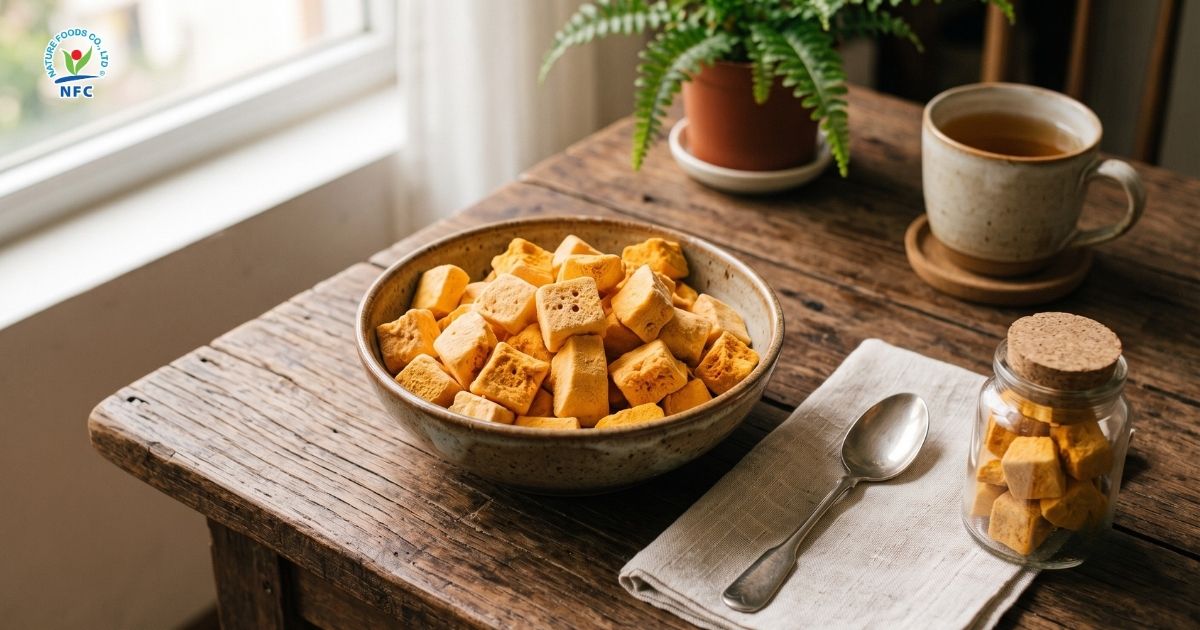
Conversely, vacuum freeze-drying (Freeze Drying – FD) flash-freezes pumpkin at deep sub-zero temperatures (-30°C to -40°C), followed by sublimating solid ice crystals directly into gaseous vapor inside an absolute vacuum chamber.
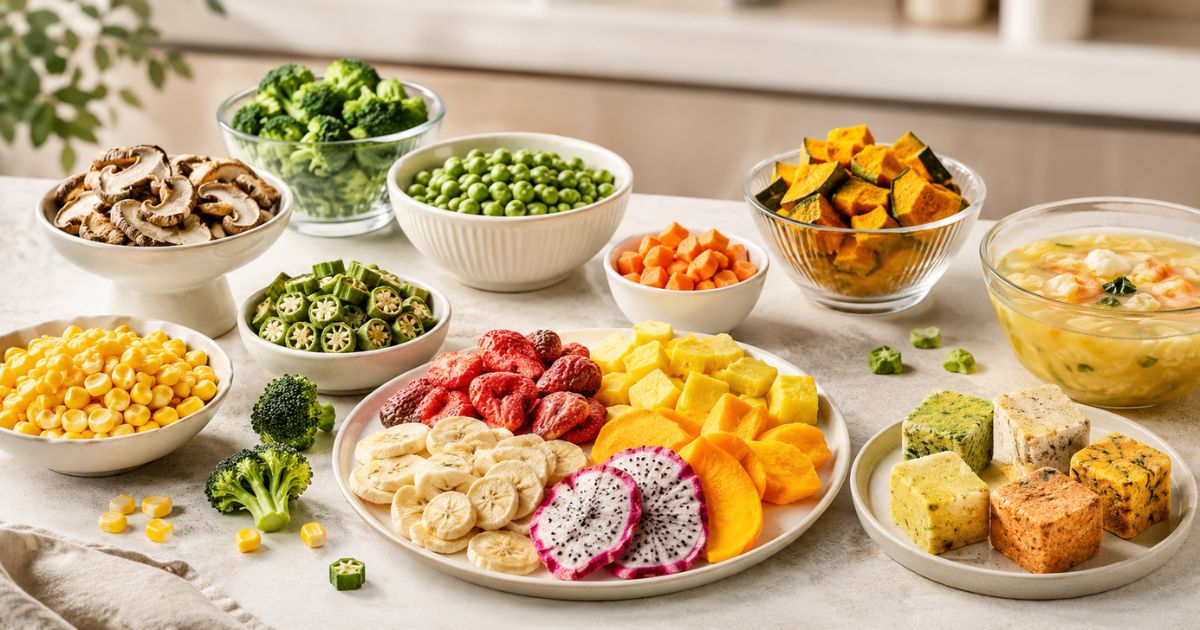
Insulated from high thermal degradation, the 3D cellular framework of freeze-dried pumpkin remains uncollapsed, avoiding shrinkage or shape distortion. The pieces retain a bright golden-orange color matching freshly sliced produce, a light porous crispness, and ultra-rapid rehydration within 1 to 2 minutes upon liquid contact.
Crucially, sub-zero vacuum processing preserves 90% to 95% of native nutritional value. Heat-vulnerable micro-nutrients like Beta-carotene, Vitamin C, and Vitamin E remain intact. This positions freeze-dried pumpkin to excel across premium market tiers, such as gourmet instant soup blocks, ready-to-cook meal kits, and organic infant weaning powders (Clean Label).
Comparative Technical Matrix: Air-Dried (AD) vs. Freeze-Dried (FD) Pumpkin
| Evaluation Metric | Hot-Air Dried Pumpkin (Air Drying – AD) | Freeze-Dried Pumpkin (Freeze Drying – FD) |
| Dehydration Mechanism | Convection evaporation via heated circulating air streams | Direct ice-to-vapor sublimation inside absolute vacuum |
| Cell Structure & Morphology | Cellular shrinkage, surface contraction, slightly hardened & darkened | Retains original 3D volume, light & porous, zero shrinkage |
| Color Saturation & Flavor Profile | Deeper orange hue, concentrated caramelized sweet-savory flavor | Vivid natural golden-orange color, authentic sweet-savory notes |
| Rehydration Kinetics | Moderate (3 to 5 minutes in hot liquid) | Ultra-rapid (complete rehydration in 1 to 2 minutes) |
| Nutritional Retention | Preserves 60% – 70% (partial loss of heat-vulnerable vitamins) | Preserves 90% – 95% (safeguards Beta-carotene, Vitamin C, E) |
| Residual Moisture Target | Typically 5% – 8% | Ultra-low baseline of 1% – 3% |
| Market Positioning & COGS | Cost-optimized input COGS for mass-market offerings | Higher input cost, positions in Premium & Clean Label lines |
When Should Food Brands Invest in Freeze-Dried Pumpkin Ingredients?
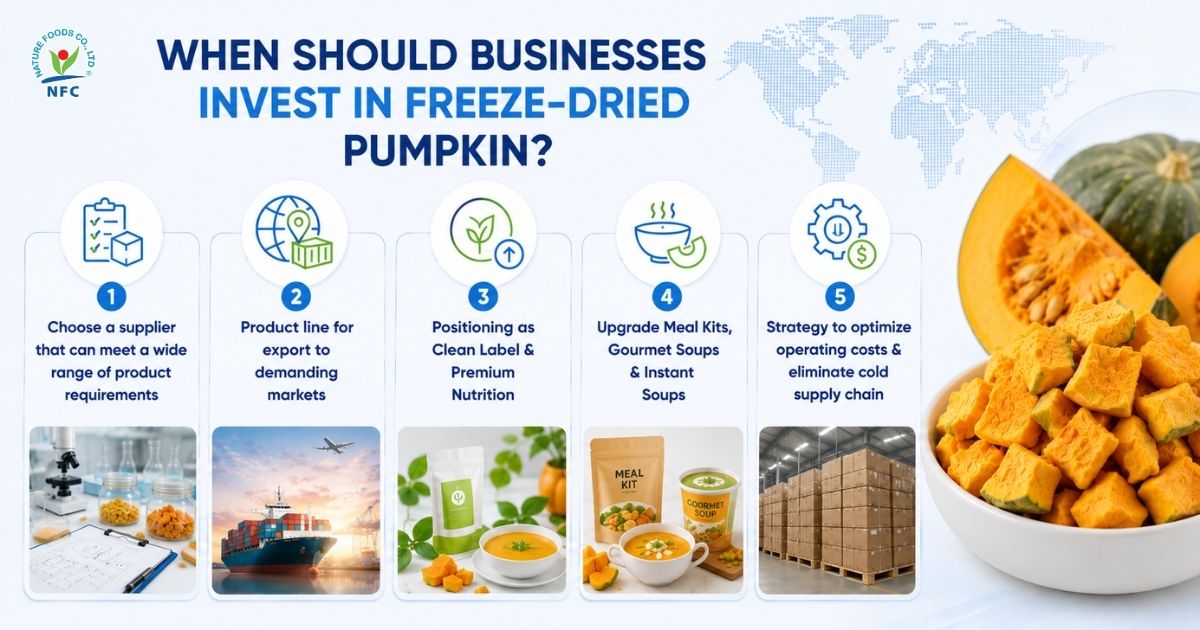
While vacuum freeze-drying technology delivers superior sensory attributes, it requires higher processing equipment investment and unit Cost of Goods Sold (COGS) compared to standard thermal drying. Therefore, food companies should carefully align technology selection with product positioning and overall financial targets.
If your project targets the strategic application categories outlined below, freeze-dried pumpkin operates as the ultimate differentiator:
Export Product Lines Targeting Demanding Global Markets
Major import economies—including the US, Europe, Japan, South Korea, and Australia—enforce strict technical barriers to trade. Finished items must clear rigorous microbial standards, contain zero chemical additives, and maintain vivid natural colors and rich biological value. Vacuum freeze-dried pumpkin effortlessly clears these stringent analytical customs checks.
Positioning Clean Label & Premium Functional Nutrition
Modern consumers willingly absorb premium pricing for transparent “Clean Label” offerings—100% natural composition, zero artificial preservatives, zero synthetic dyes, and fully preserved Beta-carotene, Vitamin C, and minerals. Freeze-dried pumpkin allows brands to confidently declare authentic nutritional value on front-of-pack labels.
Infant Weaning Foods & Next-Gen Healthy Snacks
Thanks to its open honeycomb cellular matrix, freeze-dried pumpkin dissolves smoothly upon saliva contact. This trait provides an enjoyable, melt-in-the-mouth crunch for lifestyle health snacks while ensuring complete swallowing safety for infants during weaning phases (eliminating choking hazards).
Upgrading Gourmet Meal Kits & Instant Soups
Inside gourmet meal kits or premium instant soup blocks, diced freeze-dried pumpkin delivers ultra-rapid rehydration within 1–2 minutes. Upon hot water contact, the pieces instantly absorb liquid, reclaiming their sharp 3D diced shape, bright orange color, and fresh velvety texture.
Operational Cost Optimization & Eliminating Cold Chain Overhead
Transitioning from fresh or frozen (IQF) pumpkin to freeze-dried ingredients permanently eliminates cold storage logistics and refrigerated freight overheads. Finished lots are stored effortlessly under ambient room temperatures with a 18 to 24-month shelf life, driving spoilage write-offs down to near-zero margins.
Key Parameters for Auditing a Freeze-Dried Pumpkin Contract Manufacturer
Translating an R&D formula into mass commercial production demands partnering with an accredited OEM/ODM contract manufacturer equipped with standardized facility scale. When auditing a contract processing plant for freeze-dried pumpkin, evaluate these core criteria:
Proven Process Controls and Multi-Technology Capabilities
Depending on sensory parameters, target unit COGS, or final applications, brands may require flexibility across Air Drying (AD), Freeze Drying (FD), or combined Microwave Drying (MD). A manufacturer operating versatile processing technology supplies objective, comprehensive guidance to optimize production costs.
-
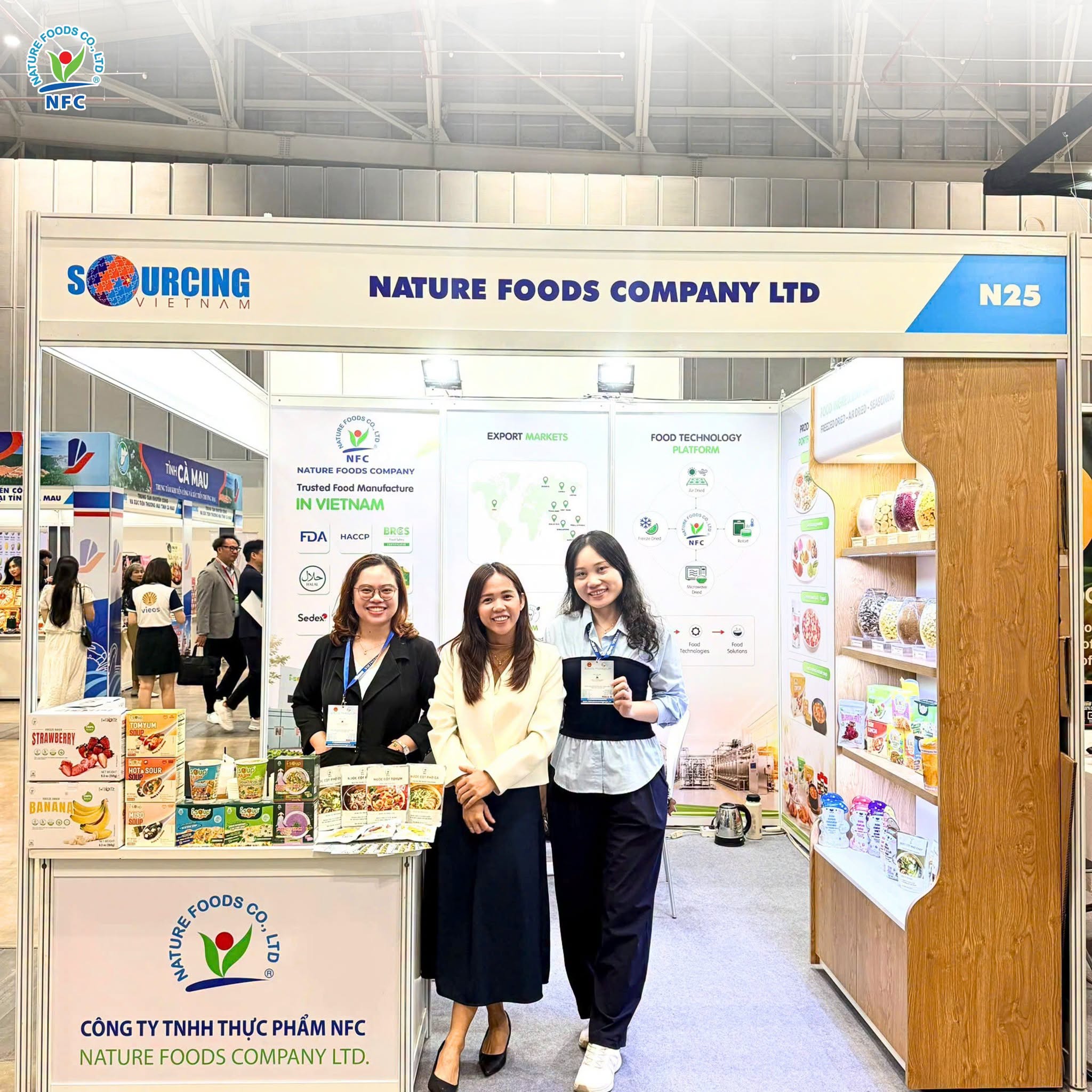
Nature Foods (NFC) Infrastructure: Operating since 2002 with over 20 years of specialized experience supplying dried food ingredients to the Japanese market and global F&B conglomerates, NFC maintains complete Air Drying (AD), Freeze Drying (FD), and microwave drying facilities. NFC’s engineering teams guide partners through process standardization tailored to specific market specifications.
Flexible Sizing and Formatting Customization
Different F&B applications demand precise raw material specifications:
-
Instant soup and meal kit manufacturers require diced pumpkin cubes (Diced) in standardized dimensions (5x5mm, 10x10mm).
-
Snack and cereal brands demand thin slices or flakes (Sliced/Flakes) that preserve shape to maximize bite feel.
-
Confectionery, instant beverage, and seasoning sectors require 100% pure fine pumpkin powder (Pumpkin Powder) featuring high solubility.
-
Nature Foods (NFC) Customization Support: Operating under turnkey OEM/ODM/White Label frameworks, NFC supports clients from lab-scale sample prototyping down to commercial mass production. Brands can customize cut dimensions, target residual moisture (1–3%), flavor blending, and high-barrier industrial aluminum packaging.
Verified Global Quality Accreditations for Domestic & Export Channels
When distributing processed pumpkin products through major hypermarket chains or exporting internationally, the contract manufacturer’s food safety credentials represent an absolute prerequisite for clearing Factory Audits.
-
Nature Foods (NFC) Accreditations: Located inside Nhon Trach 1 Industrial Zone (Dong Nai) with an annual capacity clearing 3,000 to 4,000 tons of finished products, NFC operates under world-class quality systems: BRCGS, ISO 22000, HACCP, FDA (US Customs Clearance), HALAL, GLOBALG.A.P., and SEDEX – SMETA. These credentials serve as a global passport ensuring smooth customs entry worldwide.
Conclusion
Transitioning from raw fresh pumpkin to dehydrated pumpkin ingredients represents far more than a basic preservation solution—it operates as a strategic initiative to optimize logistics overheads, eliminate raw material waste, and elevate sensory value across processed food lines. Depending on product positioning—whether cost-optimized mass-market items or premium wellness offerings—enterprises can flexibly select between Air Drying (AD) and Vacuum Freeze Drying (FD).
Managing a diverse production catalog of 300+ SKUs, an annual factory capacity exceeding 3,000–4,000 tons, and multi-decade tenure servicing global F&B conglomerates, Nature Foods (NFC) stands as your trusted strategic B2B contract manufacturing partner.
Frequently Asked Questions Regarding Dehydrated Pumpkin (FAQ)
1. Can Nature Foods develop proprietary dehydrated pumpkin formulas tailored to private specifications?
2. What is the Minimum Order Quantity (MOQ) for dehydrated pumpkin at Nature Foods?
3. Does Nature Foods provide complete turnkey OEM/ODM contract manufacturing?
4. Does freeze-dried pumpkin at Nature Foods contain added sugar, colors, or preservatives?
5. What is the standard B2B cooperation process for requesting R&D samples and placing orders at Nature Foods?
B2B partnerships follow a transparent 4-step workflow:
- 1. Specification Intake: Documenting technical parameters (AD/FD technology choices, cut dimensions, moisture targets, packaging styles, end applications).
- 2. Lab Sample Development (R&D): NFC’s R&D laboratory executes trial runs and dispatches complimentary sample lots for partner sensory and rehydration evaluation.
- 3. Specification Locking: Fine-tuning specs based on client feedback, locking wholesale quotations, and finalizing contracts.
- 4. Commercial Production & Delivery: Executing automated mass production under BRCGS standards, performing analytical quality checks, and delivering on schedule.