Modern consumer dietary patterns and food purchasing behaviors have undergone a profound, irreversible transformation across global markets. Today’s fast-paced urban demographic demands the rapid preparation and unmatched convenience of ready-to-eat (RTE) meals, yet increasingly rejects ultra-processed foods laden with synthetic chemical preservatives, artificial colorings, excessive sodium, and heat-degraded ingredients. Commercial food enterprises, brand owners, and hospitality operators face a critical strategic challenge: developing shelf-stable convenience foods that deliver the instant speed required by modern lifestyles while preserving the authentic sensory, textural, and nutritional profile of a freshly simmered, home-cooked meal. Vacuum freeze-dried instant soup blocks (Freeze-Dried Soups) have emerged as a groundbreaking, high-margin product category capable of capturing this booming health, wellness, and convenience-driven consumer demand.
- Key Functional & Sensory Advantages of Freeze-Dried Instant Soups
- Strategic Supply Chain Economics & Total Cost of Ownership (TCO) Optimization
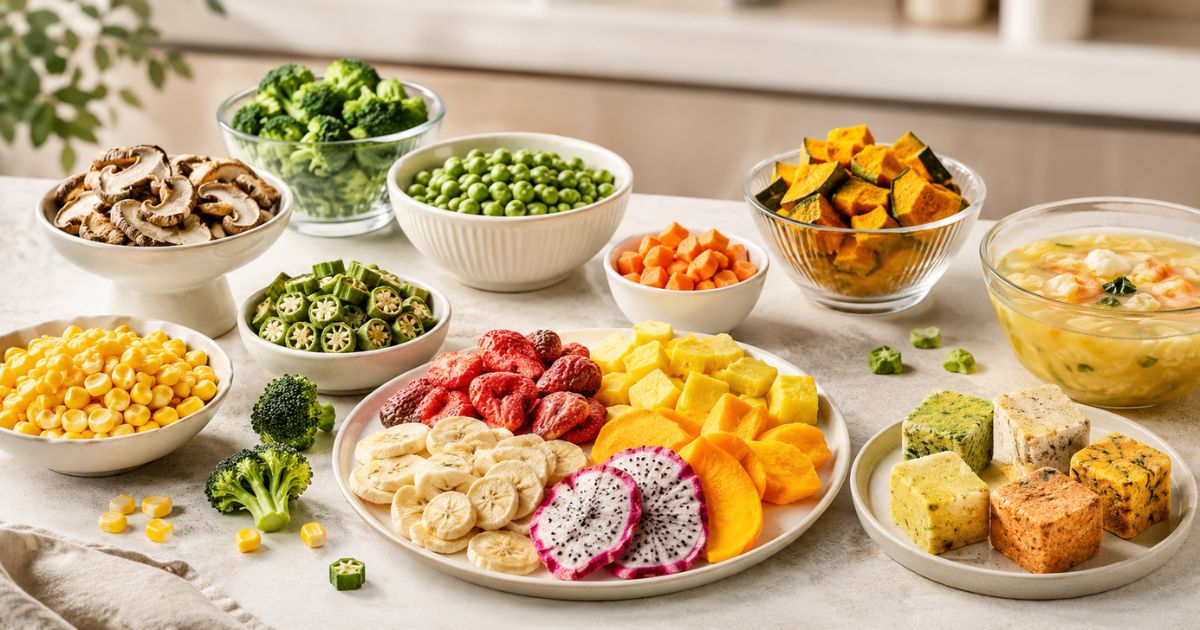
- Dominant Commercial Product Categories & Formulation Portfolio
- Key Technical Criteria for Auditing an OEM/ODM Freeze-Dried Soup Contract Manufacturer
- Frequently Asked Questions Regarding Freeze-Dried Instant Soups (FAQ)
The Physical & Thermodynamic Mechanics of Vacuum Freeze-Drying Technology in Soup Manufacturing
Unlike conventional hot-air convective dehydration (Air Drying – AD) or spray drying—which apply high thermal energy to evaporate liquid water, causing severe cellular shrinkage, sugar caramelization, protein denaturation, and loss of volatile aroma compounds—vacuum freeze-drying (Freeze Drying – FD / Lyophilization) operates on direct ice-to-vapor phase-change physics. By bypassing the liquid water state entirely under deep sub-zero temperatures and high-vacuum thermodynamic conditions, moisture is extracted from complex multi-ingredient soup matrices without capillary force collapse or structural distortion:
-
1. Cryogenic Blast-Freezing Phase (Freezing Stage): After fresh culinary preparation, slow simmering, and precise volumetric portioning into individual block molds, the liquid soup undergoes rapid cryogenic blast freezing at deep sub-zero temperatures between -30°C and -50°C. This rapid thermal drop forces both the seasoned broth liquid and the water within solid tissue cells (meat fibers, seafood, leafy greens, root vegetables, and mushrooms) to solidify into microscopic ice crystals. Rapid crystal formation prevents the growth of large, jagged ice structures, anchoring delicate cellular scaffolds, natural color pigments, and volatile flavor molecules in place.
-
2. Primary Vacuum Sublimation Phase (Primary Drying): The frozen solid soup blocks are loaded into sealed vacuum drying chambers where industrial pumping systems lower atmospheric pressure below water’s triple point. Radiant heating plates provide calibrated latent heat of sublimation. Under deep negative pressure, embedded microscopic ice crystals sublimate directly from solid ice into gaseous water vapor without passing through a liquid water phase. The liberated water vapor is drawn off and captured on cryogenic condenser coils (-50°C to -80°C), removing approximately 90% to 92% of unbound free water while maintaining a frozen product core.
-
3. Secondary Structural Desorption Phase (Secondary Drying): To extract the final 8% to 10% of chemically bound moisture trapped deep within cellular boundaries and protein-solute matrices, chamber pressure is driven to maximum vacuum while shelf temperatures are gradually elevated (kept strictly between 25°C and 40°C to avoid thermal browning). This step desorbs bound water molecules, reducing final residual moisture below 3.0% and driving water activity aw below 0.30. As ice crystals disappear via sublimation, they leave behind an open, interconnected 3D micro-porous capillary matrix mirroring the original volume. When boiling water is added by the end-user, water rushes into these microscopic capillary channels via surface tension, instantly rehydrating the soup block to its original, freshly cooked sensory state within 60 to 180 seconds.
Technical Comparison: Freeze-Dried Soups vs. Conventional Dehydration Methods
| Evaluation Parameter | Freeze-Dried Instant Soup Blocks (FD) | Hot-Air Convective Dried Soup (AD) | Traditional Dried Vegetable & Powder Sachets |
| Thermal Processing Envelope |
Cryogenic sub-zero (-30°C to -50°C) with vacuum sublimation |
Continuous positive hot air (60°C to 85°C) | High-temperature thermal baking or flash frying |
| Ingredient Morphology & Cell Structure |
Preserves original 3D volume, intact whole pieces, crisp greens, tender meat fibers |
Severe cellular collapse, volumetric shrinkage, case-hardened and tough textures |
Fragmented, shriveled, brittle flakes prone to pulverization |
| Nutrient & Bioactive Retention |
Preserves 95% to 99% of native vitamins, active enzymes, and minerals |
40% to 60% loss of thermolabile vitamins (Vitamin C, Folate, B-complex) |
Heavy degradation of heat-sensitive micro-nutrients |
| Rehydration Kinetics & Speed |
Instant capillary rehydration (1 to 3 minutes) restoring fresh-cooked texture |
Slow (5 to 10 minutes), retaining a chewy, fibrous, or tough bite | Incomplete hydration, floats on surface without softening |
| Visual Coloration & Broth Clarity |
Vibrant natural chlorophyll green, clear broth, authentic aromatic bouquet |
Darkened/brownish tones (Maillard reaction), cooked or stale aroma |
Dull coloration, relies heavily on artificial flavorings and dyes |
| Residual Moisture & Water Activity |
Moisture < 3.0%, water activity aw < 0.30$ |
Moisture 8.0% to 12.0%, water activity aw > 0.55$ |
Moisture 6.0% to 10.0%, susceptible to moisture caking |
| Chemical Preservatives & Clean Label |
100% Clean Label, zero added preservatives, non-fried, zero trans fats |
Often requires anti-caking agents and antioxidants |
Heavily reliant on maltodextrin, MSG, and synthetic preservatives |
Key Functional & Sensory Advantages of Freeze-Dried Instant Soups
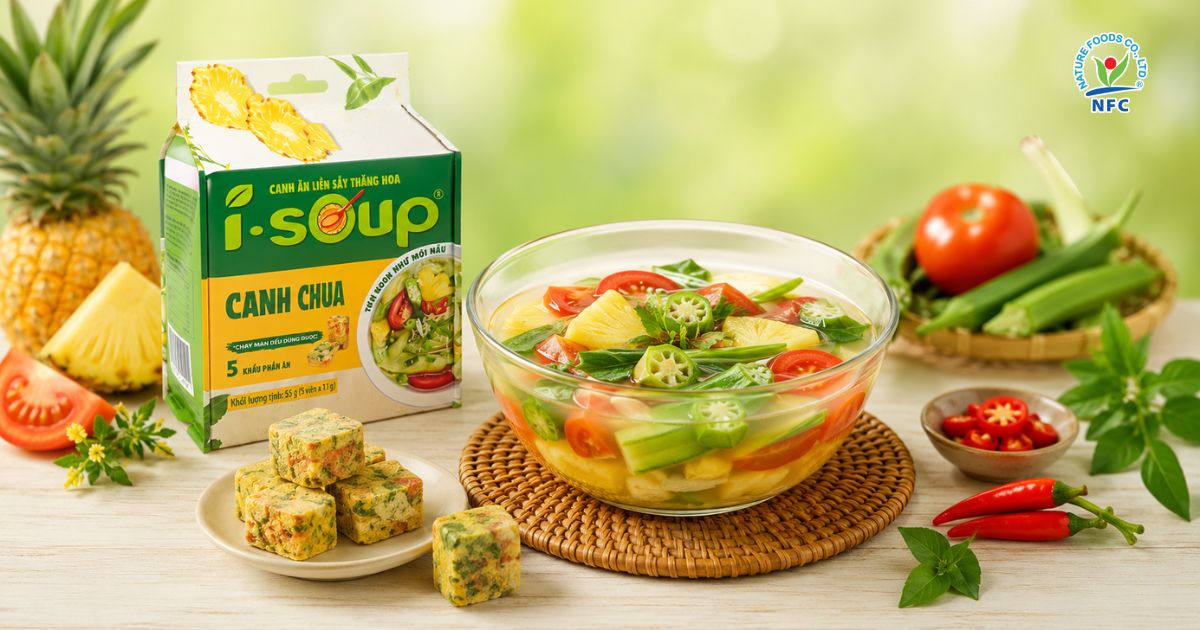
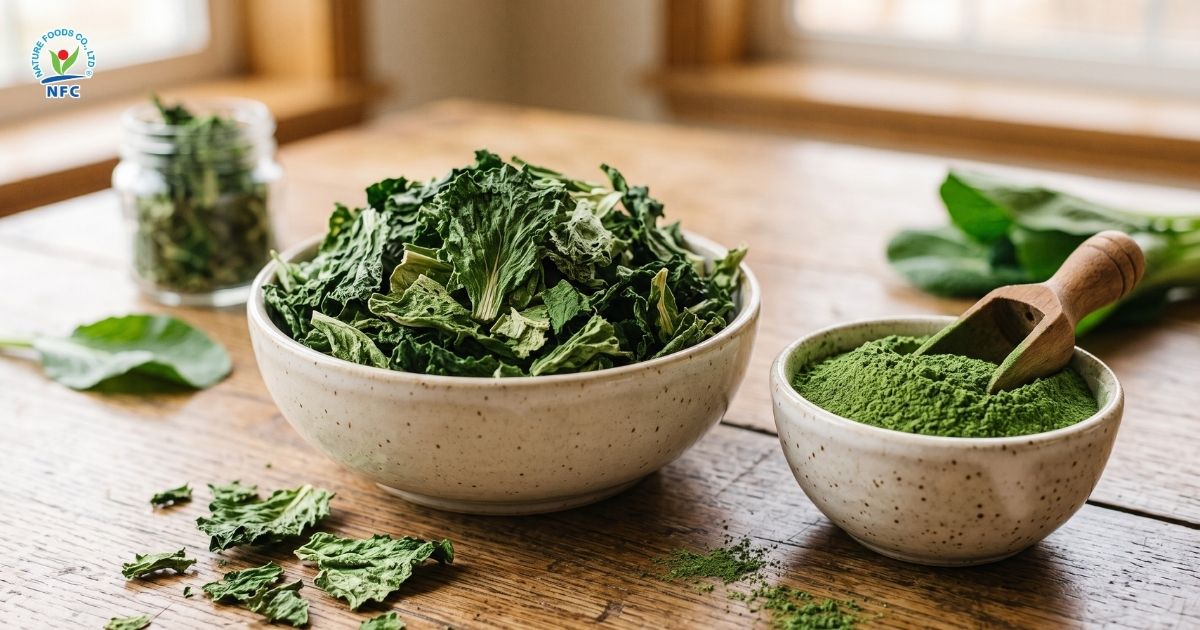
1. Near-Total Restoration of Fresh Visual Color, Texture & Authentic Broth Aroma: Because the soup matrix is never subjected to high-temperature thermal stress during water removal, natural plant chlorophylls, anthocyanins, and carotenoids do not undergo thermal degradation or Maillard browning. The structural integrity of each inclusion is preserved: delicate leafy greens (such as katuk, watercress, and mustard greens) rehydrate with their original vibrant green hue and crisp bite; cooked meat pieces, shrimp, and poultry retain tender, juicy fibrous structures; mushrooms stay plump and elastic; and the broth reconstitutes with complete clarity, natural viscosity, and rich, slow-simmered aroma.
2. Multi-Year Ambient Shelf Stability Without Chemical Preservatives: Industrial vacuum freeze drying drives finished residual moisture down to 1.0%–3.0%, pulling water activity below 0.3. Within this bone-dry thermodynamic boundary, free water is unavailable to support microbial proliferation, fungal germination, or enzymatic breakdown. When sealed in high-barrier aluminum foil laminate packaging (Alu/PET/PE) paired with nitrogen gas flushing, freeze-dried soups achieve an extended commercial shelf life of 12 to 24 months at ambient room temperature without requiring refrigeration or chemical preservatives (such as sodium benzoate, potassium sorbate, or sulfur dioxide).
3. Ultimate Convenience & Versatile Consumer Usage Occasions:
-
Frictionless Preparation Under 3 Minutes: Eliminates the prep time, vegetable cleaning, broth simmering, and kitchen cleanup associated with traditional cooking. Consumers open the sachet, place the soup block in a bowl or mug, pour 150ml to 200ml of boiling water, stir gently, and enjoy a complete, nutritious soup within 1 to 3 minutes.
-
Broad Lifestyle & Dietary Occasions: Due to its lightweight, compact, non-spill solid format, freeze-dried soup blocks serve a wide variety of consumer segments—including corporate office workers seeking quick healthy lunches, students, solo diners, health-conscious fitness enthusiasts, emergency disaster pantry reserves, and outdoor recreationists (backpacking, trekking, and international travel).
Strategic Supply Chain Economics & Total Cost of Ownership (TCO) Optimization
For commercial food processing companies, convenience meal manufacturers, supermarket private labels, and food service operators, transitioning from wet retorted soups or frozen prepared meals to vacuum freeze-dried instant soup blocks provides transformational operational and economic moats:
-
1. Total Elimination of Cold-Chain Logistics Liabilities (Zero Cold-Chain OpEx): Traditional fresh or frozen meal preparations require continuous sub-zero refrigeration (-18°C) or chilled cold chains (2°C to 8°C) across storage, transport, and retail display. Freeze-dried soup blocks store stably under ambient room temperatures, completely eliminating cold storage utility electricity bills, specialized refrigerated transport fleets, and risk of perishable temperature abuse during transit.
-
2. Trimming Long-Haul Freight Costs by 70% to 80%: Liquid soups consist of 85% to 92% water weight. Extracting moisture via sublimation reduces the net shipping weight of finished soup blocks by 4 to 5 times while retaining structural integrity. This drastic mass reduction optimizes container payload economics, maximizes warehouse vertical pallet density, and lowers variable freight costs per serving for cross-border export distribution to North America, Europe, Japan, South Korea, and Australia.
-
3. Sourcing Stability & Raw Material Cost of Goods Sold (COGS) Hedging: Agricultural vegetable and livestock prices fluctuate heavily based on weather events and seasonal harvest cycles. Long shelf life enables food brands to execute large-scale bulk procurement programs during peak harvest seasons at optimal raw material pricing, process the soups into shelf-stable dry blocks, and ensure year-round finished product supply at fixed input costs.
- 4. Zero Organic Pre-Treatment Waste on Factory Floors (100% Yield Efficiency): Sourcing pre-portioned, standardized freeze-dried soup blocks allows food brands, institutional kitchens, and meal-kit packagers to eliminate manual trimming, sorting, simmering, and organic waste disposal costs at their own facilities.
Dominant Commercial Product Categories & Formulation Portfolio
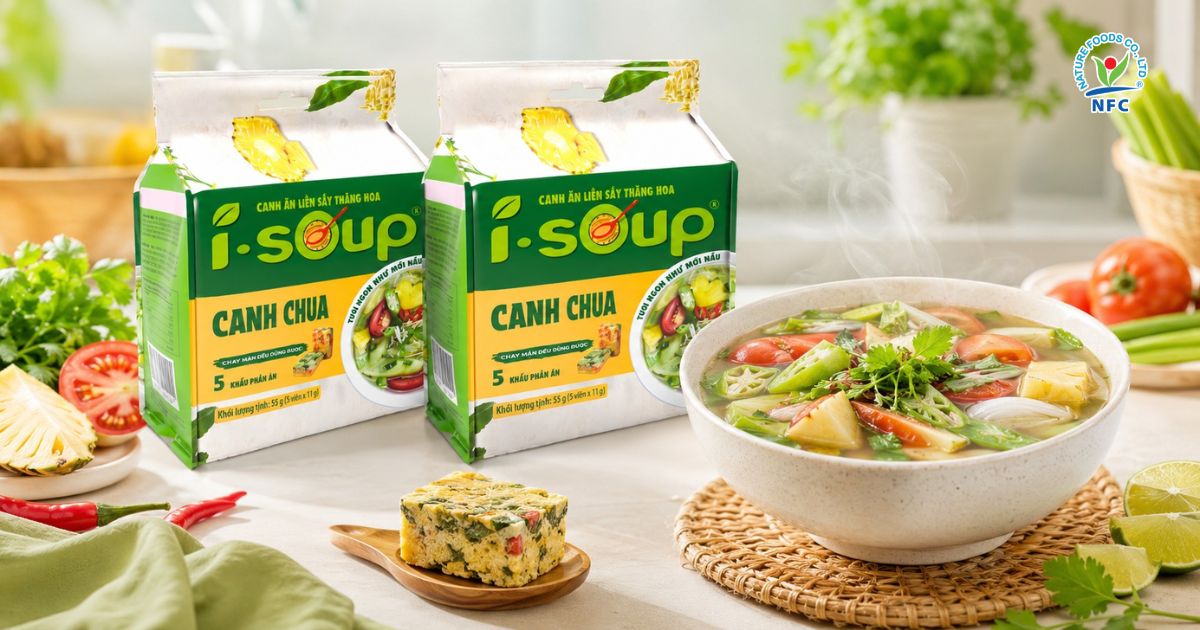
1. Traditional Vietnamese Heritage Broths & Home-Style Soups: Reconstituting instantly upon boiling water contact, these traditional recipes deliver vibrant leafy greens, tender minced meats, and authentic bone-simmered broth flavors. Signature commercial formulations from Nature Foods’ ISOUP brand and OEM portfolios include:
-
Pickled Mustard Greens Soup with Pork (Canh Cải Chua Nấu Thịt): Delivering balanced tartness from naturally fermented mustard greens paired with tender pork slices and savory broth.
-
Chicken Sour Leaf Creepers Soup (Canh Gà Lá Giang): Authentic Central/Southern Vietnamese specialty balancing citrusy-sour wild lá giang leaves with tender shredded chicken and aromatic herbs.
-
Chicken Kimchi Soup (Canh Kim Chi Thịt Gà): Harmonizing spicy-tangy fermented kimchi cabbage, tender chicken pieces, and scallions in a warming savory broth.
-
Sour Bamboo Shoots with Shiitake Soup (Canh Măng Chua Nấm Hương): Featuring crisp fermented bamboo shoots, plump shiitake mushrooms, ripe tomatoes, and culantro herbs.
-
Katuk Soup with Minced Pork (Canh Rau Ngót Thịt Bằm): A classic Vietnamese comfort staple delivering tender katuk leaves, sweet minced pork, and clear bone broth.
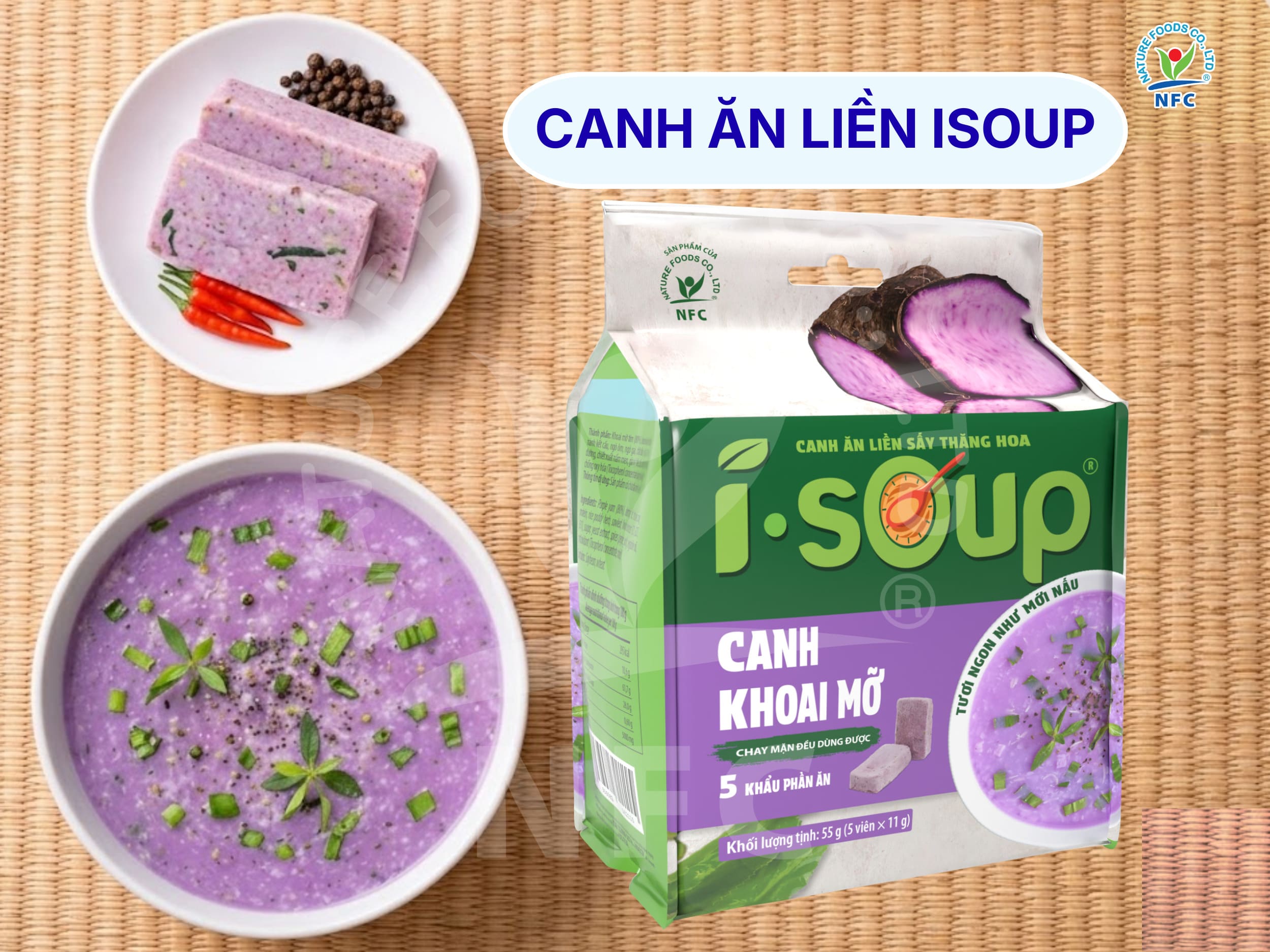
- Purple Yam Soup (Canh Khoai Mỡ): A traditional Southern recipe featuring smooth purple yam puree, rice paddy herbs, and minced shrimp or pork.
- Traditional Sweet & Sour Soup (Canh Chua): Southern Vietnamese classic combining okra, pineapple chunks, tomatoes, bean sprouts, and aromatic rice paddy herbs in a sweet-sour tamarind broth.
2. Gourmet Multi-Component Functional Cup Soups: In addition to traditional broths, modern consumer demand has driven the growth of rich, multi-component functional soups that blend lean proteins, whole grains, and restorative botanicals into satisfying meal replacements. Exemplified by Nature Foods’ ISOUP HUUPS! line, these products combine:
-
Freeze-Dried Chicken, Red Jujube & Lotus Seed Soup (Súp Gà Táo Đỏ Hạt Sen): Formulated with tender shredded chicken breast, whole red jujubes, nutty lotus seeds, goji berries, and egg drops for restorative wellness.
-
Freeze-Dried Seafood & Sweet Corn Soup (Súp Hải Sản): Packed with real whole shrimp, crab stick slices, shiitake mushrooms, sweet corn kernels, and egg swirls in a velvety broth.
-
Snow Fungus, Cordyceps & Hair Moss Soup (Súp Nấm Tuyết Tóc Tiên): A vegetarian gourmet formulation delivering complex textural contrast from snow fungus and edible hair moss in a nutrient-dense broth.
-
Mushroom Oatmeal & Salmon Soup (Súp Cá Hồi / Nấm Yến Mạch): Blending rolled oats with Atlantic salmon chunks or shiitake mushrooms, providing sustained energy, dietary fiber, and lean protein for active lifestyles.
3. Proprietary Custom Formulations (OEM/ODM/Private Label): Many global FMCG corporations, supermarket chains, and airline catering operators partner with contract manufacturers to develop proprietary freeze-dried soup blocks tailored to specific regional taste profiles, dietary frameworks (Gluten-Free, Low-Sodium, Vegan, High-Protein), and packaging formats.
Key Technical Criteria for Auditing an OEM/ODM Freeze-Dried Soup Contract Manufacturer
-
1. Proven Technical Mastery in Complex Multi-Phase Food Matrices: Formulated soup blocks contain disparate raw ingredients with vastly different water contents, eutectic freezing points, and tissue densities (dense meat proteins, delicate leafy greens, fibrous root vegetables, and seasoned starch-thickened broths). The contract processor must possess deep food engineering expertise to calibrate multi-stage freezing and sublimation curves, preventing defects like hollow cores, sticky un-sublimated centers, or scorched leaf margins.
-
2. Advanced Industrial Vacuum Infrastructure & Cleanroom Controls: Contract facilities must operate large-scale vacuum freeze-drying chambers with automated temperature-pressure regulation, coupled with primary packaging cleanrooms operating under strictly dehumidified environments ($RH < 40\%$) to prevent moisture re-absorption during automated packaging.
-
3. End-to-End Culinary R&D & Flavor Science Capabilities: The manufacturing partner must maintain an in-house food science R&D laboratory to assist brand owners with recipe scaling, culinary seasoning balance, sodium optimization, Clean Label ingredient sourcing, rehydration testing, and pilot sample prototyping.
-
4. Audited International Food Safety Certifications: To clear regulatory audits and export customs, the manufacturing plant must operate under strict, audited food safety quality management systems: BRCGS (Global Standard for Food Safety), ISO 22000, HACCP, US FDA valid facility registration, HALAL, GLOBALG.A.P., and SEDEX – SMETA social compliance.
In Vietnam, Nature Foods Co., Ltd (NFC) operates as a leading industrial manufacturing and contract processing partner with an extensive processing portfolio of over 300 SKUs, an annual factory capacity exceeding 3,000 to 4,000 metric tons of finished products, and a specialized workforce of over 400 professionals. Nature Foods provides full turnkey OEM/ODM/White Label support—from farm-gate agricultural sourcing and laboratory recipe prototyping to automated commercial freeze drying and export barrier packaging.
Frequently Asked Questions Regarding Freeze-Dried Instant Soups (FAQ)
1. Can food enterprises develop custom freeze-dried instant soup formulations tailored to proprietary brand specifications?
2. Does Nature Foods provide laboratory test samples (R&D Samples) before committing to commercial contracts?
3. What is the typical lead time required to develop and commercially manufacture a freeze-dried soup order?
4. What is the Minimum Order Quantity (MOQ) requirement for custom contract processing of freeze-dried soup blocks?
5. Do whole meat pieces, seafood, and vegetables retain their authentic texture and crispness post-rehydration?
6. What is the commercial shelf life of freeze-dried instant soup blocks, and what storage conditions apply?
7. Does Nature Foods’ facility hold international certifications to support export clearance into the US, EU, and Japan?
8. What packaging format options are supported for commercial freeze-dried instant soup products?
- Convenient Retail Formats: Individual single-serve aluminum barrier sachets (with tear notches), multi-pack outer paper boxes (e.g., 5 to 6 servings per box), stand-up zipper pouches, or convenient single-serve paper/PP instant soup cups complete with foldable spoons.
- Industrial Bulk Ingredients: Bulk packaging utilizing heavy-duty polyethylene-lined corrugated cartons (with food-grade inner barrier liners) designed for instant noodle manufacturers, meal-kit assemblers, and food service ingredient distribution.
The global convenience food sector continues to expand rapidly, but modern consumer evaluation criteria have grown far more sophisticated. Beyond rapid preparation speed, today’s consumers demand transparent Clean Label ingredient origins, uncompromised nutritional integrity, and authentic restaurant-quality sensory experiences. Freeze-dried instant soup blocks represent the ideal technological convergence answering this market demand, providing food brands with a powerful, high-margin product category capable of capturing domestic and international retail market share.
If your enterprise is planning to develop, manufacture, or scale proprietary freeze-dried instant soup lines, connect with Nature Foods today to request complimentary R&D trial samples, technical formulation consultations, and volume wholesale manufacturing proposals.