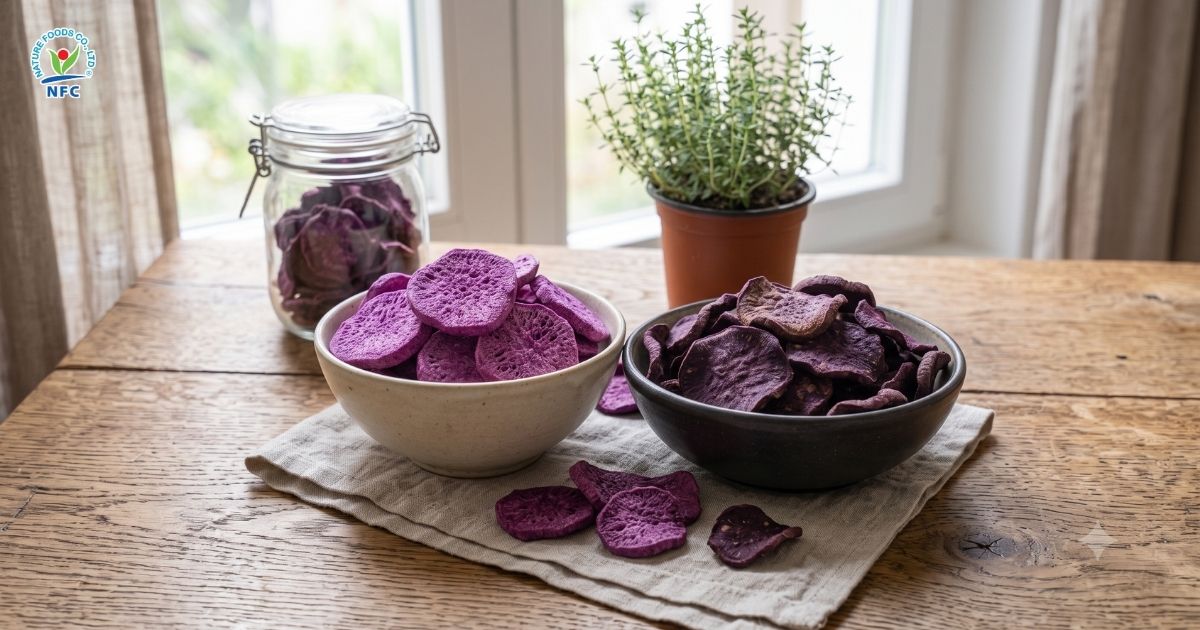
Dried sweet potato is no longer an unfamiliar snack item, but how to elevate this agricultural produce into a highly competitive product on modern supermarket shelves represents a completely different operational matrix. From hot-air convection drying (AD) and vacuum frying (VF) to vacuum freeze drying (FD), each specific processing methodology directly dictates the final mechanical structure, color saturation, and complete sensory value of the finished lot.
- Industrial Processing Methodologies for Dehydrated Sweet Potato Ingredients
- Why Has Dehydrated Sweet Potato Evolved into a High-Potential Moat for Modern Food Brands?
- Technical Verification Parameters for Selecting a High-Volume Freeze-Dried Sweet Potato Sourcing Partner
- Frequently Asked Questions Regarding Freeze-Drying Sweet Potato Processing (FAQ)
Industrial Processing Methodologies for Dehydrated Sweet Potato Ingredients
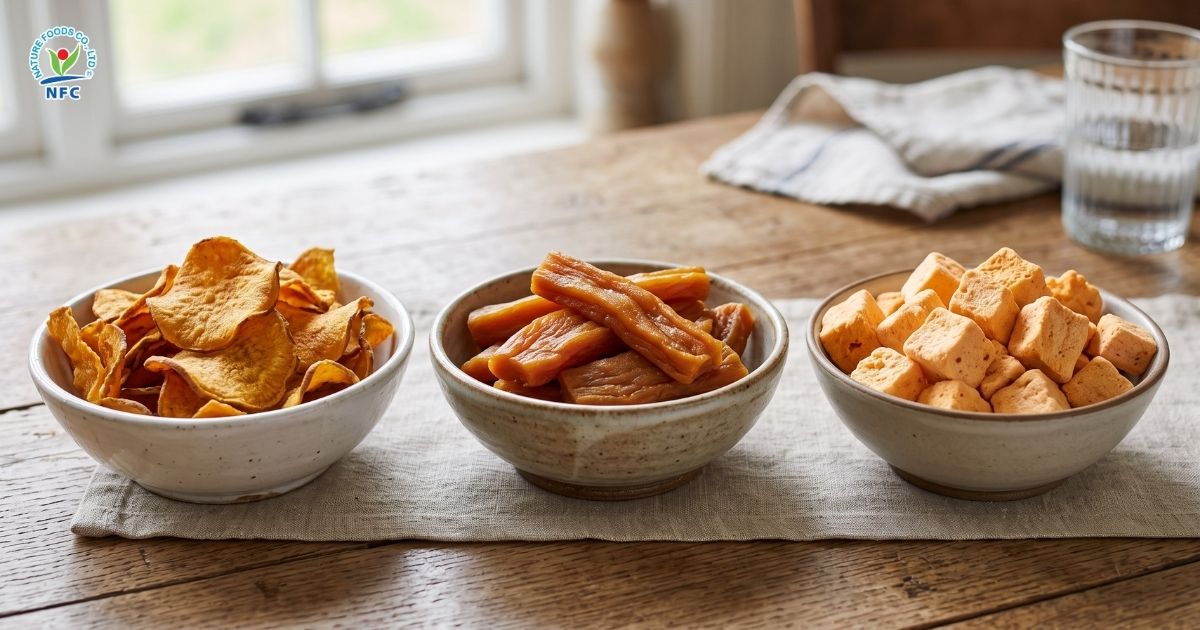
In the context of a global food and beverage (F&B) sector shifting dynamically toward rigorous wellness baselines, dehydrated sweet potato has emerged as a premium, nutrient-dense raw crop material carrying immense commercial valuation. However, to seamlessly fulfill the versatile technical criteria of the global B2B marketplace—spanning immediate ready-to-eat snacks, fine-milled industrial base powders, and advanced quick-prep soup inclusions—selecting the precise dehydration technology path operates as an essential strategic mandate governing final market success.
Below is an authoritative, technical analysis of modern industrial sweet potato drying setups, equipping purchasing managers and product development teams with a complete blueprint to maximize product catalog development.
Hot-Air Convection Dehydration Technology (Air Drying – AD)
Standard hot-air convection drying (Air Drying – AD) represents the longest-running and most widespread agricultural dehydration framework deployed across large-scale factory floors, primarily driven by minimized up-front equipment capital expenditure (CapEx).
-
Technical Processing Principle: This mechanical setup continuously drives hot air streams through hermetic drying tunnels operating at an elevated positive thermal range, typically calibrated between 60°C and 85°C, applying thermal stress to force unbound water molecules out of the sweet potato slices into the exhaust channels.
-
Finished Lot Characteristics: Hot-air dried sweet potato components lock in a moderate residual moisture baseline ranging between 10% and 14%. This liquid presence forces noticeble tissue shrinkage, structural contraction, and surface hardening, rendering the final texture dense, tough, and fibrous. Exposed to prolonged intense heat, natural crop sugars easily undergo dark caramelization, altering natural colors and fracturing approximately 40% to 60% of heat-sensitive chemical nutrients and active vitamins.
-
Downstream Applications & B2B Constraints: This methodology is strategically chosen when manufacturing teams must prioritize massive biomass throughput for low-end retail channels, or secure cheap raw material pre-forms designed to undergo deeper industrial grinding where cost-containment is the single absolute metric. Calibrated hot-air systems can successfully yield classical soft-chewy sweet potato lines if temperature curves are closely managed; however, the ingredient fails to preserve pristine visual brightness and remains highly vulnerable to mold degradation if water activity thresholds fluctuate.
Cool-Drying Technology (HPD) & Vacuum Frying Pipelines (VF)
To overcome the color browning and nutrient deficits typical of convection heat, advanced low-temperature cool-drying and vacuum frying frameworks have been deployed to serve mid-to-high market demographics.
-
Heat Pump Cool-Drying (Heat Pump Drying – HPD): Runs within controlled positive thermal bounds from 35°C to 55°C, utilizing ultra-dehumidified desiccant air to gradually pull moisture out of the vegetable slices. This functions as a rapidly growing technology for manufacturing elite soft-dried sweet potato lines. This framework perfectly anchors authentic bright orange or deep purple carotene hues, yielding a naturally jammy chew completely protected from surface calcification. The trade-offs include extended floor runtime durations and minor physical shape shriveling.
-
Vacuum Frying Systems (Vacuum Frying – VF): Deploys food-grade oil as a highly effective thermal carrier inside hermetically sealed vacuum chambers managed around 80°C to 100°C. Because negative pressure drops internal boiling thresholds, moisture within the sweet potato cell structure flashes off instantly, creating a uniquely crispy, rigid crunchy profile. This mechanical configuration drives 90% of commercial “crispy sweet potato chip” snack sticks distributed globally today. However, due to complete oil submersion, the final material retains localized fat coordinates (typically under 5%), meaning it cannot satisfy strict “Zero-Oil” or pristine “Organic” ingredient specifications enforced by top-tier wellness brands.
Vacuum Freeze-Dried Sweet Potato (Freeze Drying – FD) – The Definitive Solution for Premium B2B Portfolios
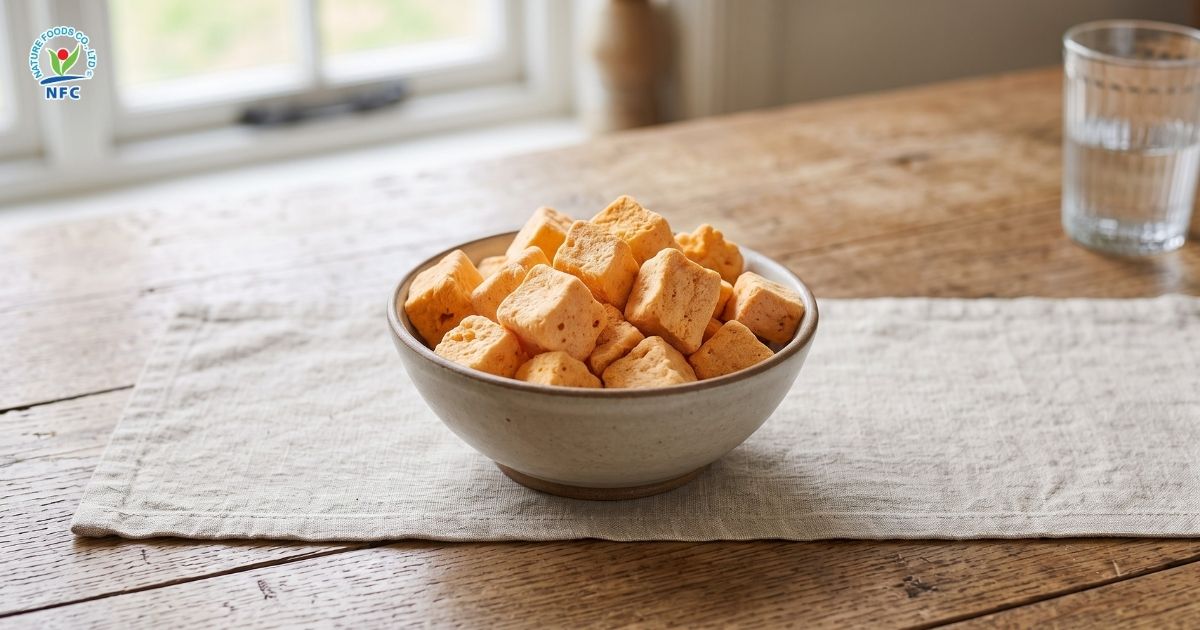
More than a basic moisture elimination process, industrial freeze drying operates as an uncompromised “global passport” allowing processed agricultural products to smoothly clear complex cross-border trade controls while satisfying international “Clean Label” consumer waves completely.
-
Advanced Phase-Change Physics: The defining principle governing freeze-drying technology is forcing internal water molecules to convert directly from solid ice into gaseous vapor, completely avoiding liquid water state intervals. This sophisticated technical sequence is meticulously executed across three industrial cleanroom stages:
-
Cryogenic Flash Freezing: Shape-selected sweet potato slices pass through flash-freezing tunnels where they hit sudden sub-zero spikes ranging from -30°C to -50°C. This rapid freezing instantly locks active cell structures, encapsulates native macro-nutrients, and turns all unbound liquid into microscopic ice crystal networks.
-
Primary Drying (Sublimation Phase): The batch lot enters an hermetically sealed vacuum chamber where atmospheric pressure is pulled down deep below the critical threshold of 133 Pascal. Internal heating plates delicately introduce precise radiant energy, causing ice crystals to sublimate directly into vapor, extracting roughly 90% of baseline water content safely.
-
Secondary Drying (Desorption Phase): Plate temperatures are incrementally stepped up to evaporate bound water molecules trapped deep within internal starch complexes, bringing final residual moisture content down to an ultra-dry index of 1% to 3%.
-
-
Flawless 3D Cellular Preservation: Operating inside this sub-zero range paired with absolute vacuum fields, the biological matrix of the sweet potato tissue remains insulated from capillary collapse forces. The final product perfectly retains its authentic fresh dimensional volume, slice contours, and shape silhouettes without showing shriveling or surface contraction.
-
Accelerating R&D Innovation: For industrial product development departments (R&D), freeze-dried sweet potato functions as a highly adaptive, high-performance base material. Food brands can easily manufacture ultra-fine pure sweet potato base powders engineered to clear export compliance filters (supplying baking networks, infant dairy formulas, and beverage formulation houses) or utilize clean diced sweet potato fractions inside automated instant soup mixing loops, leveraging superior rehydration kinetics that absorb liquids completely in just 30 to 60 seconds upon hot water contact.
Technical Performance and Comparison Matrix for Sweet Potato Processing
To accurately assist corporate procurement administrators and business managers in selecting the optimal dehydration pipeline matched to specific budget structures and product lines, below is a detailed comparative technical grid:
| Evaluation Indicators | Freeze-Drying Technology (FD) | Heat Pump Cool-Drying (HPD) | Vacuum Frying (VF) | Hot-Air Convection (AD) |
| Processing Temperature |
Deep sub-zero bounds (-30°C to -50°C) |
Low positive spectrum (35°C to 55°C) |
High positive spectrum (>80°C) |
High positive spectrum (60°C to 85°C) |
| Residual Moisture |
Ultra-low limits (1% – 3%) |
Low parameters (5% – 10%) |
Ultra-low limits (1% – 3%) |
Moderate index (10% – 14%) |
| Localized Fat Content |
100% Oil-Free, zero additives |
Oil-free, cane sugar optional |
Retains fat coordinates (under 5%) due to deep submersion |
Oil-free, commonly infused with sugar |
| Cell Structure & Morphology |
Pristine 3D geometry, porous grid, crispy melt |
Minor cell shrinkage, soft pliable chew or firm core |
Rigid crunchy but highly brittle, prone to breaking |
Severe contraction, hardened surface, fibrous lines |
| Nutrient Preservation |
Maximum retention spanning 95% – 99% of native assets |
Highly secure, preserves around 70% – 80% of nutrients |
Heavy deficit across heat-sensitive vitamins |
Intense loss (40% – 60%) driven by extreme heat |
| Rehydration Kinetics |
Excellent, ultra-rapid fluid absorption back to fresh parameters |
Moderate, exhibits a slow moisture absorption curve |
Completely incapable of cellular rehydration |
Very poor, remains fibrous and tough even after long soaking |
| Ambient Storage Lifespan |
Highly extended, spanning 18 – 24 months at room temp |
Standard window from 6 to 12 months |
Narrow (3 – 6 months), prone to oxidative oil rancidity |
Narrow (6 – 9 months), highly vulnerable to mold |
| Target Retail Segment |
Premium tiers, Cross-border Export, High-end functional R&D material |
Mid-to-high tiers, specialized organic baby food blends |
Mass-distributed, lower-tier commercial confectionery snacks |
Value-focused entries, massive cheap industrial volume runs |
Why Has Dehydrated Sweet Potato Evolved into a High-Potential Moat for Modern Food Brands?
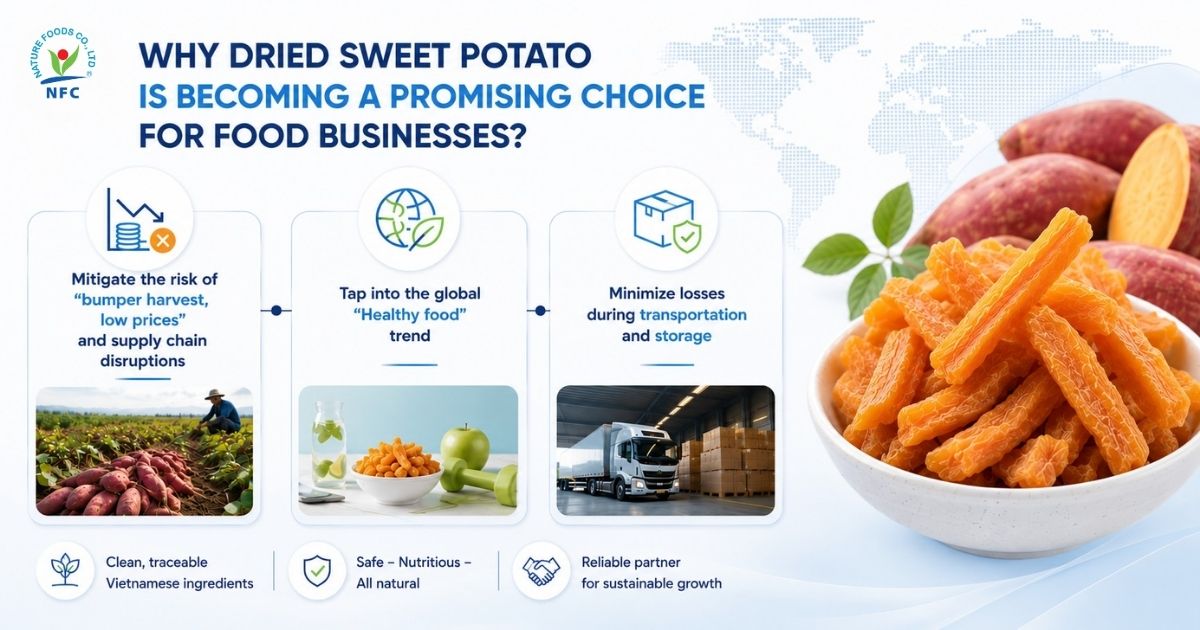
The escalating global wave toward conscious consumption and clean formulations is forcing modern food brands to continuously restructure their product portfolios. Within this context, processed sweet potato ingredients have taken center stage over recent fiscal cycles. Far past a simple, appealing snack format, dehydrated sweet potato delivers robust commercial moats that enable enterprises to significantly optimize operating expenditures while multiplying revenue tracks.
Mitigating Agricultural Market Volatility and Supply Chain Gaps
Vietnam’s raw fresh sweet potato output hits massive annual volumes, yet faces critical vulnerabilities, including harvest seasonality shocks and short post-harvest lifespans. Transitioning toward advanced drying workflows delivers immediate structural moats for industrial buyers:
- Securing Sourcing Continuity: Corporate brands completely insulate their processing schedules from macro-climatic weather disruptions or localized crop diseases.
- Fixing Cost Baselines: Maintaining an ingredient channel that locks in extended room-temperature shelf stability empowers procurement offices to confidently buy massive capacity lots when supply curves peak, protecting multi-quarter Cost of Goods Sold (COGS) configurations against open-market inflation.
Capturing the Global Health & Wellness Marketplace
Modern consumer demographics—spanning Gen Z urban shoppers, corporate office professionals, and wellness-focused parents—are systematically filtering out legacy snacks packed with trans fats, hydrogenated oils, or excessive artificial flavor enhancers. They display intense brand loyalty to pure formulations aligned with Clean Label parameters, minimalist ingredient declarations, and total sensory integrity.
Processed sweet potato configurations (specifically oil-free freeze-dried slices, pure soft-dried lines, and non-fried crispy bars) perfectly satisfy these modern consumer expectations. Deploying these high-value lines allows private label brands to effortlessly clear strict vendor compliance filters for multi-national hypermarket chains, convenience retail networks, and boutique organic grocery stores.
Slashing Logistical Freight Overheads and Warehouse Asset Costs
Transporting fresh agricultural crops consistently exposes logistics teams to high mechanical losses due to crushing, post-harvest skin decay, and biological spoilage. Processed sweet potato inventory permanently dissolves these overhead variables. Stripping out up to 90% of internal water weight drives down total lot mass dramatically, slashing long-haul transport and shipping freight expenses calculated by weight.
Furthermore, enterprises completely bypass the massive capital utility expenditures of running continuous cold chain fleets or cold storage warehouse footprints. Dehydrated lots hitting standardized moisture metrics require mere placement within standard ambient dry warehouses, safely protecting a 6 to 12-month commercial life with zero asset depreciation.
Technical Verification Parameters for Selecting a High-Volume Freeze-Dried Sweet Potato Sourcing Partner
Although vacuum freeze drying generates unparalleled commercial positioning, the up-front capital layout and continuous utility running costs of an industrial-scale vacuum processing system remain immense. Consequently, the most effective strategy to optimize capital velocity for modern trading groups is establishing an alliance with accredited B2B OEM/ODM contract manufacturers who possess high-volume facility boundaries and extensive market tenure.
Industrial Facility Scale Built to Absorb Massive B2B Orders
When auditing high-volume freeze-dried ingredient channels, procurement offices must prioritize manufacturers operating vast industrial scales and highly synchronized linear workflows to guarantee absolute batch-to-batch uniformity.
Operating state-of-the-art modern manufacturing complexes inside the premier Nhon Trach 1 Industrial Zone, Dong Nai, Nature Foods (NFC) stands out as an established industry pioneer, driving an annual factory output capacity exceeding 3,000 tons of finished products across a versatile portfolio of over 300 premium dried items. NFC comfortably absorbs heavy industrial contracts, running steady floor schedules to support domestic distributors and global cross-border brands alike.
Global Quality Accreditations and Watertight Compliance PASSports
To empower freeze-dried product lines to seamlessly clear strict quarantine barriers and technical filters inside elite economies—such as North America, Japan, and the European Union—the contract processing facility must be audited under the highest international safety matrices.
NFC’s cleanroom production sequences are strictly monitored from the farm gate using contracted agricultural zones conforming to GLOBALG.A.P. standards, fully validated by the world’s most trusted global quality assurance benchmarks: BRCGS, ISO 22000, HACCP, FDA (US Customs Clearance), HALAL, and exhaustive ethical trade transparency audits compiled under SEDEX – SMETA.
Turner Adaptive OEM/ODM White Label Frameworks
For progressive consumer brands looking to aggressively scale their catalog depth while keeping capital profiles insulated from heavy equipment liabilities, a manufacturer’s adaptive food engineering and product development capacity operates as a primary prerequisite:
-
Turnkey OEM Support: NFC flawlessly manages physical manufacturing, automated cutting layouts (slices, bars, cubical dicing, ultra-fine powders), and tailored packaging architectures configured exactly to your private technical sheets and product parameters.
-
Turnkey ODM Support: Our expert in-house R&D food laboratories and scientific divisions directly step beside your brand managers to test-batch, refine sensory benchmarks, and engineer proprietary formulas optimized for advanced vacuum sublimation performance.
A Proven Operational Track Record Vetted by Multinational Consumer Giants
Maintaining active, multi-year alliances with the absolute dominant titans of the global food market stands as the most accurate measurement tracking the integrity of a B2B supplier. Nature Foods proudly operates as a long-term strategic vendor, consistently clearing rigorous unannounced Factory Audits to feed the ingredient pipelines of multi-billion-dollar conglomerates including: Unilever, Acecook, Ajinomoto, Masan Consumer, KFC, Orion, Mondelēz International, Vedan, Kewpie…
Frequently Asked Questions Regarding Freeze-Drying Sweet Potato Processing (FAQ)
1. Does Nature Foods’ freeze-dried sweet potato powder flawlessly protect authentic coloration and active organic compounds?
Yes, near-absolutely. The high-capacity freeze-drying lines running inside Nature Foods’ complexes (NFC) leverage sudden cryogenic flash blast freezing (strictly dropping from -30°C to -50°C) to immediately solidify intracellular water coordinates bound within fresh crops. Because the process avoids liquid phase conversions and remains completely insulated from high positive heat convection lines, fragile heat-sensitive assets—encompassing rich Beta-carotene (in yellow gold varieties), active Anthocyanins (in premium purple sweet potatoes), Vitamin C, Vitamin B complexes, and critical soluble dietary fibers—are flawlessly preserved at a 95% to 99% baseline.Our automated high-vacuum pressure systems systematically filter out atmospheric oxygen during the cycle, ensuring that post-milling, the ultra-fine sweet potato powder retains vivid, striking color performance and rich authentic sweetness without necessitating any added synthetic coloring agents, artificial stabilizers, or chemical flavors.
2. Can commercial food entities order tailored diced geometries or custom cutting specifications to supply premium seasoning sachets inside instant soup or porridge lines?
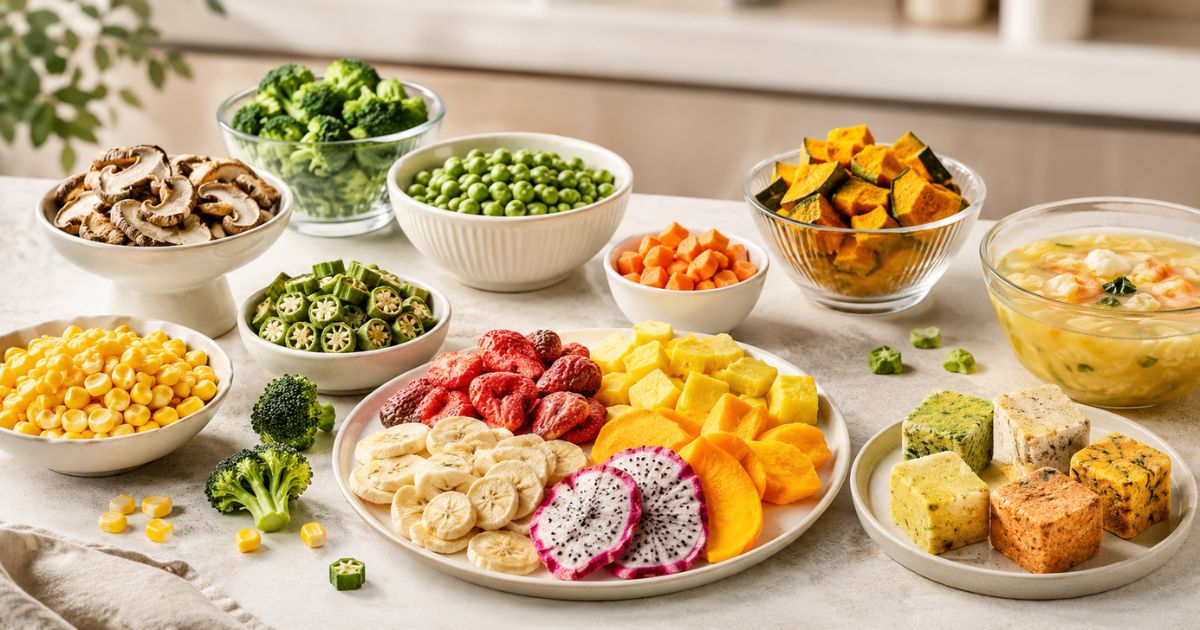
Yes, completely. NFC operates modern mechanical pre-treatment cleanrooms, enabling our engineering teams to cut, trim, and format sweet potato structures to match your R&D divisions’ exact SOP metrics (encompassing thin round slices, functional snack sticks, precision cubical dicing ranging between 3mm and 10mm, threads, or pure base powders).Thanks to advanced sublimation phase changes, the ice crystals leave behind an intricate network of interconnected micro-pores across the cellular layers. Upon storefront preparation or industrial liquid mixing, this porous profile acts identically to an adaptive biological sponge, absorbing hot water near-instantly to complete full rehydration within a brief 30 to 60-second window. The vegetable block uniformly reclaims its native juicy tenderness, fresh velvety bite, and authentic texture, acting as a premier functional inclusion for luxury instant soup bowls, nutritious cereals, and elite quick-prep formulas.
3. Given that vacuum freeze-drying demands higher upfront operational expenditures than hot air or vacuum frying, how does Nature Foods help enterprises resolve this financial equation?
- Slashing Logistics Freight Overheads by 80%: Extracting all unbound fluid mass reduces the final lot weight to a bare minimum (finished lot weight averages only 15% to 20% of initial fresh crop mass), profoundly trimming variable long-haul shipping and maritime container fees.
- Eliminating Cold Chain Storage Liabilities entirely: Hitting a bone-dry 1% to 3% residual moisture index enables stable ambient warehousing at standard room temperatures, entirely removing the massive electricity and asset management burdens of running capital-intensive cold storage networks.
- Securing Premium Brand Pricing Power: Fulfilling strict “Clean Label” and “Zero-Oil” baselines empowers private brands to confidently enter elite retail tiers, commanding storefront pricing structures 3 to 4 times higher than hot-air convection dehydrated items, capturing exceptional gross profit margins.
- Plant Scale Leveraging via NFC Infrastructure: Running high-capacity automated facility lines inside Nhon Trach 1 Industrial Zone with an annual dry inventory capacity clearing 3,000 tons allows NFC to significantly compress variable electrical and machinery depreciation overheads per gram, supplying the most competitive factory wholesale contract pricing in the market for our B2B partners.
4. Do freeze-dried sweet potato ingredients packed by NFC require added processing oils, cane sugars, or synthetic compounds to retain crispness over long storage windows?
We strictly guarantee that our freeze-dried sweet potato lots carry zero added oils, zero sugars, and zero chemical preservatives. This immaculate purity represents the core asset helping our B2B partners dominate global Clean Label alignments:
Mechanical Crunch Performance: The delightful, instant melt-in-the-mouth crispness is generated completely by the physical honeycombed structural network left post-sublimation. It requires zero oil submersion to solidify textures, distinct from vacuum-fried alternatives. The resulting ingredient is certified 100% Oil-Free (Zero-Oil), matching strict cardiovascular health architectures.
Natural Stabilization: Internal water activity ($a_w$) metrics are precision-monitored strictly below a 0.3 safety envelope, entering an absolute stabilization zone. Within this bone-dry threshold, foodborne pathogens, harmful molds, and active enzymatic spoiling tracks are entirely isolated and metabolically inert. Consequently, finished lots secure an extended shelf life of 18 to 24 months completely independent of added preservative chemicals.
5. Are freeze-dried sweet potato batches manufactured across NFC cleanrooms certified to pass technical filters inside demanding import zones like the US, EU, and Japan?
Yes, uncompromised. Housing over 23 years of specialized tenure supplying pristine agricultural dry ingredients to the Japanese market and global consumer brands, NFC’s industrial complexes are engineered and run to satisfy the most rigorous food safety frameworks globally.The complete floor sequence—from raw input vetting backed by contracted crops tracing under GLOBALG.A.P. down to vacuum sublimation and high-barrier nitrogen-flushed packaging cleanrooms—is fully certified under elite international umbrellas: BRCGS (Global Standard for Food Safety), ISO 22000, HACCP, FDA (US Food and Drug Administration valid facility registration), HALAL, and corporate social accountability frameworks via SEDEX – SMETA. NFC’s QA teams systematically provide exhaustive technical validation dossiers (encompassing comprehensive COAs, microbiological limits, heavy metal verifications, and pesticide screenings) to support your customs clearance and product filing tracks promptly.
6. Does Nature Foods provide pilot sample testing (Sample Testing) for brands developing custom, proprietary freeze-dried sweet potato formulations?
Yes, fully. At NFC, we recognize that individual commercial food brands enforce specific technical targets tracking visual appearance, crispness parameters, thickness profiles, precise mechanical cuts, or customized seasoning mix metrics. Therefore, our veteran R&D food engineering divisions step tightly beside your product managers right from concept ideation.Nature Foods operates dedicated in-house product laboratories (Lab facilities) and high-precision mini freeze-drying setups explicitly built to execute low-volume trial runs (Pilot Runs). This allows both teams to meticulously analyze, validate, and optimize processing parameters (fine-tuning flash freezing velocities, vacuum thresholds, and secondary desorption heat curves) until hitting your exact target quality before deploying full-scale commercial mass production.
7. How are high-volume B2B freeze-dried orders packaged at the NFC facility to completely shield inventory from reverse-hygroscopic moisture migration?
Due to their uniquely porous cell walls, freeze-dried agricultural ingredients carry high hygroscopic traits, eagerly pulling ambient moisture from surrounding air upon open exposure. To guarantee absolute batch protection throughout long-haul marine shipping transits and warehousing, NFC operates a closed industrial containment sequence:
High-Barrier Material Specs: Lots are packed purely inside heavy industrial multi-layered aluminum foil bags (Alu/PE/PET matrix) delivering maximum air cản, total moisture barriers, and complete insulation against UV light transmission.
Cleanroom Packaging Engineering: Sealing is executed exclusively within relative-humidity controlled cleanrooms. Pouches undergo strict absolute vacuum extraction or automated nitrogen gas backfilling (nitrogen flushing) prior to thermal impulse sealing. This process removes all internal atmospheric oxygen, eliminating the risk of natural lipid oxidation within the sweet potato starches and securely safeguarding a 24-month usable ambient life. NFC agilely supports both bulk raw material shipping runs inside heavy cardboard boxes with industrial liners (bulk packaging) and finalized retail zipper pouches engineered to mirror your custom branding designs perfectly (OEM/ODM portfolios).