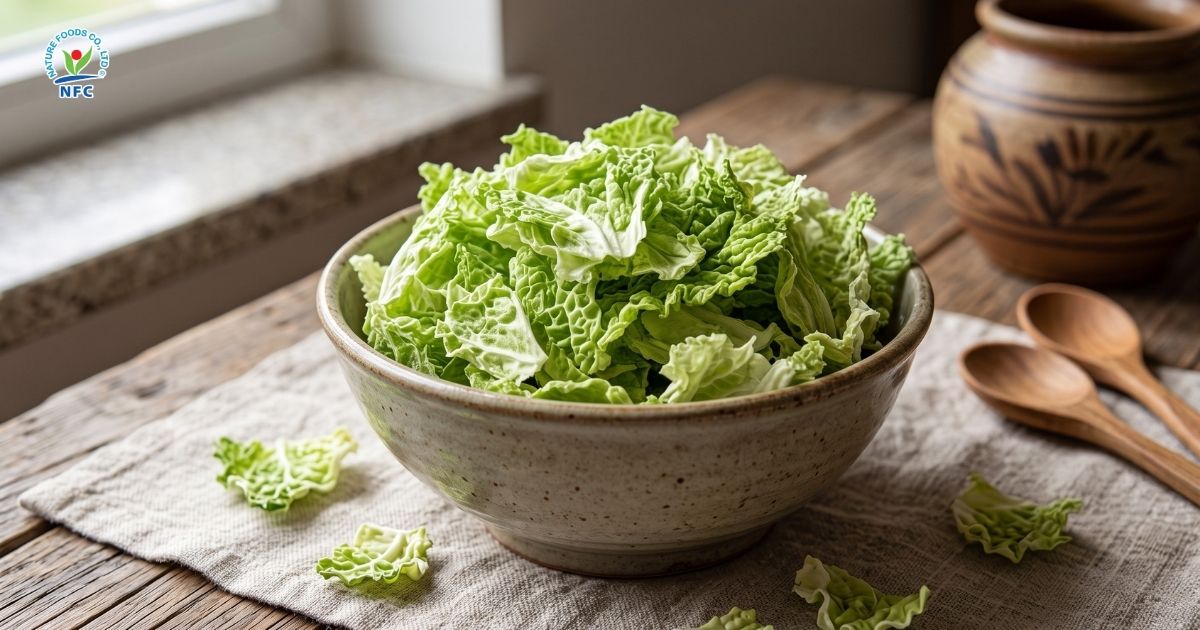
Mustard greens are highly valued for their rich vitamin, mineral, and bioactive nutrient content. However, this leafy vegetable carries high moisture and delicate leaf structures, making it extremely prone to rapid wilting, discoloration, and quality loss if not preserved or processed immediately. Vacuum freeze-drying technology (Freeze Drying – FD) was developed to overcome these perishable liabilities.
- Which Key Characteristics Are Preserved in Freeze-Dried Mustard Greens?
- Operational Cost Optimization & Supply Chain Solutions
- Industrial Applications of Freeze-Dried Mustard Greens
- Key Criteria for Selecting a Freeze-Dried Mustard Greens Contract Manufacturer
- Frequently Asked Questions Regarding Freeze-Dried Mustard Greens (FAQ)
Which Key Characteristics Are Preserved in Freeze-Dried Mustard Greens?
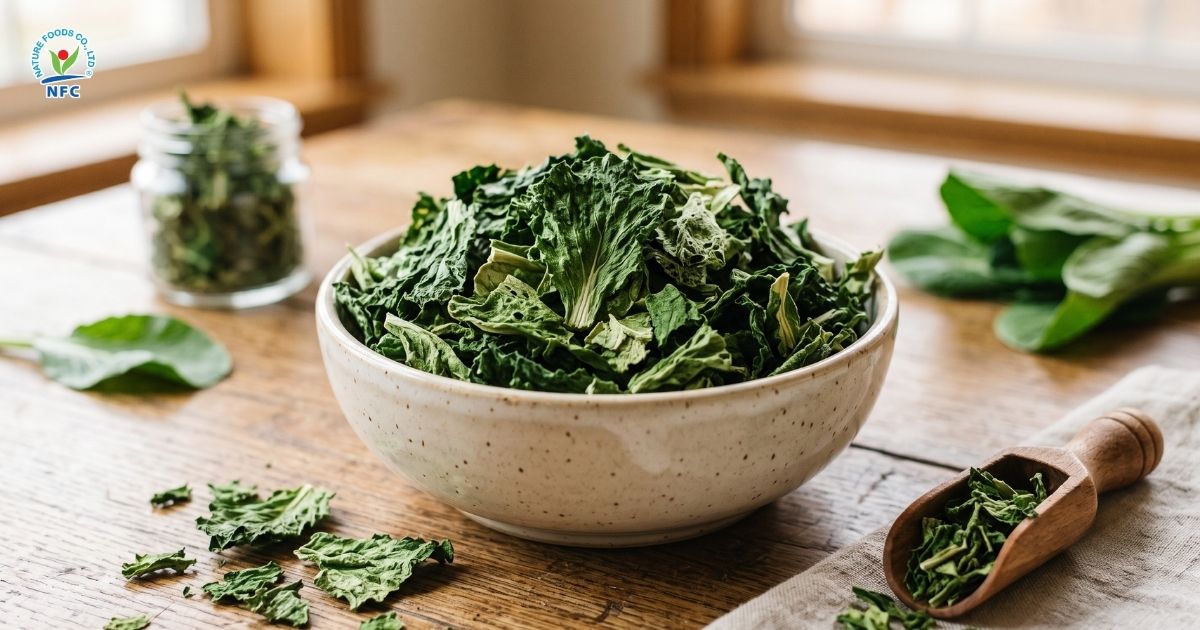
Freeze-dried mustard greens are produced by cryogenically flash-freezing mustard leaves at deep sub-zero temperatures (-30°C to -50°C), followed by vacuum moisture sublimation. Minimizing thermal exposure preserves natural crop characteristics far better than conventional heat dehydration.
1. Minimizing Loss of Thermo-Sensitive Bioactive Nutrients
The nutritional value of mustard greens stems from rich concentrations of Vitamin C, Vitamin K, Folate, dietary fiber, and natural antioxidant compounds. However, most vitamins and bioactive elements in mustard greens are highly thermo-sensitive. Conventional hot-air drying methods easily degrade these sensitive nutrients during dehydration.
By operating at sub-zero temperatures, vacuum freeze-drying technology prevents thermal degradation of heat-sensitive micro-nutrients, preserving the biological value of mustard greens. This is why freeze-drying is prioritized for premium wellness and functional food formulations.
2. Maintaining Vibrant Green Coloration & Visual Aesthetics
Coloration directly impacts consumer perception of product quality. Exposure to high processing temperatures causes mustard leaves to turn yellow or brownish-green due to natural chlorophyll degradation.
With vacuum freeze drying, moisture sublimation inside absolute vacuums preserves natural green chlorophyll pigments matching freshly harvested leaves. When formulated into convenience offerings like instant soups, noodles, porridges, or meal kits, this vibrant green appearance significantly elevates the consumer dining experience.
3. Preserving Leaf Cell Structure & Rehydration Kinetics
Beyond color, leaf and stem structures dictate finished mouthfeel. Instead of high thermal stress collapsing cell walls and causing shrinkage, freeze drying preserves the 3D cell framework intact without leaf contraction or shriveling.
Freeze-dried mustard greens feature a light crispy porous structure that rehydrates rapidly upon liquid contact, restoring a fresh-like texture. This delivers an exceptional advantage for food manufacturers developing convenience instant meal lines.
4. Retaining Authentic Botanical Flavor Profiles
The signature aroma and mild pungent flavor of mustard greens readily alter under extended heat exposure. Freeze-drying technology minimizes flavor transformation, locking in authentic fresh characteristics.
This allows freeze-dried mustard greens to seamlessly blend across diverse recipe formulations without altering the overall taste profile of the final dish.
| Evaluation Metric | Freeze-Dried Mustard Greens (Freeze Drying – FD) | Hot-Air Dried Mustard Greens (Air Drying – AD) |
|---|---|---|
| Dehydration Mechanism | Deep sub-zero freezing (-30°C to -50°C), vacuum moisture sublimation. | Circulating hot-air convection currents (60°C – 80°C) for thermal evaporation. |
| Visual Coloration | Preserves vivid natural green color matching freshly picked leaves. | Darkened, yellowed, or brownish hue due to thermal pigment breakdown. |
| Micro-nutrient Retention | Preserves 90% – 95% Vitamin C, K, Folate, and natural antioxidants. | 50% – 70% loss of Vitamin C and heat-sensitive micro-nutrients. |
| Cell Structure & Morphology | Retains 3D structure, porous cell matrix, zero shriveling or shrinkage. | Cellular collapse, tissue shriveling, wrinkled and distorted leaves. |
| Rehydration Kinetics | Ultra-fast (1 – 2 minutes) in liquid, restoring a fresh-like state. | Slow (5 – 10 minutes), retaining a chewy or firm bite post-soaking. |
| Water Activity (aw) & Moisture | Target moisture < 3% (aw < 0.3), isolating microbial & mold growth. | Moisture around 5% – 8%, shorter shelf life under ambient humidity. |
| Target F&B Application | Premium foods, Clean Label, Meal Kits, Gourmet Instant Soups/Porridges, Exports. | Mass-market seasonings for instant noodles, bouillons, cost-optimized foods (COGS). |
Below is the detailed breakdown for “Operational Cost & Supply Chain Solution” drafted to B2B SEO standards, directly addressing procurement and R&D operational liabilities:
Operational Cost Optimization & Supply Chain Solutions
In the food processing sector, utilizing raw fresh agricultural inputs like mustard greens introduces severe risks regarding material waste, warehouse overheads, and seasonal price volatility. Transitioning toward freeze-dried mustard greens delivers more than elevated sensory quality—it functions as a comprehensive strategy optimizing operational expenditures (OpEx) and standardizing supply chains.
1. Cold Chain Elimination
Fresh mustard greens contain high water levels, making them prone to crushing, wilting, or microbial decay within days post-harvest. To maintain quality, enterprises must invest in or rent expensive cold chain transport fleets and cold storage facilities (2°C to 8°C), incurring heavy power and maintenance bills.
Vacuum freeze-drying technology extracts over 95% of free water, pulling residual moisture down to an ultra-low level (below 3%), corresponding to water activity aw < 0.3. This threshold isolates molds, yeasts, and bacteria completely. Consequently, inventory can be warehoused at ambient room temperatures for 18 to 24 months without preservatives, permanently eliminating cold chain utility overheads.
2. Freight Weight Optimization & Warehouse Footprint Streamlining
Fresh mustard greens consist of over 90% water. Transporting raw produce means paying freight charges predominantly for liquid water mass.
-
Mass Reduction: Moisture sublimation extracts water while preserving the 3D cell framework, slashing raw material mass by 85% to 90%.
-
Trimming Freight Fees: Ultra-light weight slashes shipping expenses calculated by mass (Cost per Unit), particularly for export shipments to North America, Europe, Japan, or long-distance domestic transit.
-
Warehouse Footprint Efficiency: Standardized industrial packaging in multi-layer aluminum foil bags stacks neatly, maximizing warehouse floor density compared to bulky crates of fresh produce.
3. Zero Waste Pre-treatment & Factory Labor Savings
Processing fresh mustard greens at factory facilities generates substantial hidden costs:
-
Organic Yield Waste: Yield loss from trimming stems, cores, and bruised leaves averages 20% to 30% of raw input mass.
-
Labor Overhead & Floor Footprint: Demands dedicated factory staff for manual sorting, washing, sanitizing, cutting, and organic waste disposal.
Sourcing factory-processed freeze-dried mustard greens allows food brands to achieve 0% organic waste (Zero Organic Waste). Raw materials enter production clean, pre-cut, or milled to specification—compressing Standard Operating Procedures (SOPs) and reducing floor labor pressure.
4. Year-Round Sourcing Continuity & Fixed Input COGS
Fresh agricultural crops face extreme price shocks driven by weather anomalies, crop diseases, and seasonality. Relying on fresh produce forces Cost of Goods Sold (COGS) to fluctuate constantly.
Thanks to the extended shelf stability of FD technology, F&B manufacturers can sign long-term bulk procurement contracts during peak harvest seasons to lock in favorable rates. This ensures uninterrupted manufacturing schedules without risk of supply chain gaps.
Industrial Applications of Freeze-Dried Mustard Greens
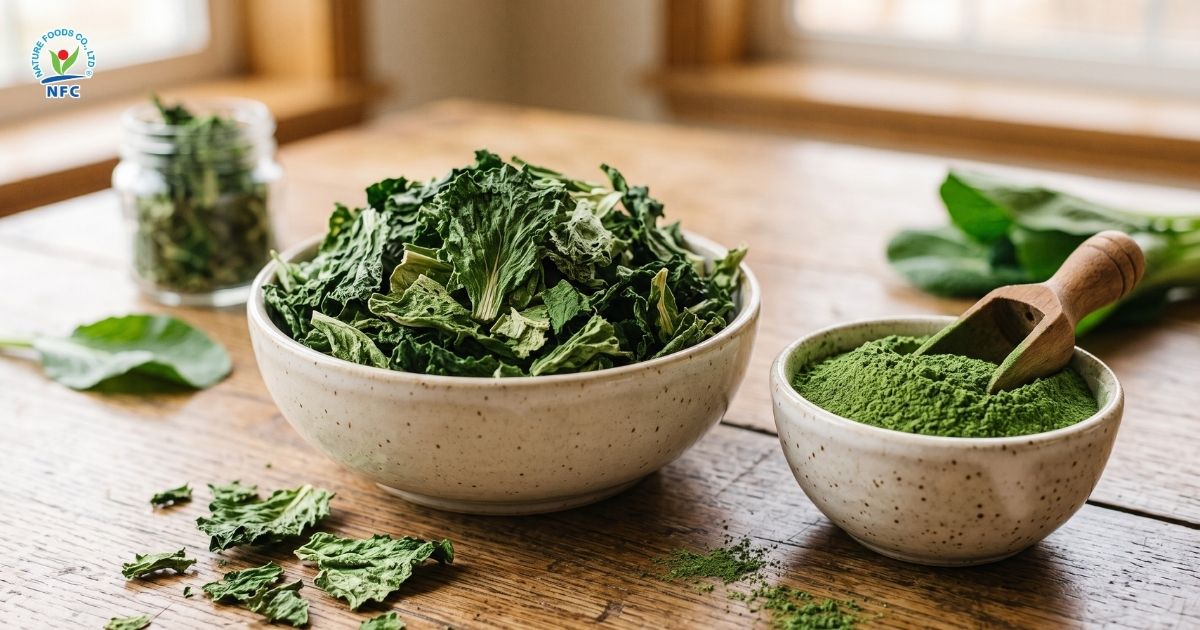
Preserving color, flavor, and rapid rehydration kinetics, freeze-dried mustard greens and other freeze-dried products integrate across versatile food recipes.
Whole Leaf & Cut-Piece Formats:
Following brief liquid soaking or direct addition during boiling, freeze-dried mustard green pieces serve as raw materials for classic dishes including soups, stir-fries, fried rice, hot pots, and braised recipes. Utilizing processed freeze-dried greens streamlines kitchen pre-treatment and insulates kitchens from fresh produce shortages.
Furthermore, they integrate seamlessly into instant noodles, ready-to-eat porridges, instant soups, meal kits, and pre-packaged meals—boosting green vegetable content and visual appeal.
Pure Powder Format (FD Mustard Green Powder):
Beyond whole or cut pieces, freeze-dried mustard greens can be fine-milled into pure powder. Mustard green powder adds value to soups, sauces, smoothies, cereals, vegetable drink mixes, and seasoning blends—enriching natural color and nutritional density.
Additionally, according to brand positioning, freeze-dried mustard greens combine flexibly with vegetables, grains, or spices to create novel food lines answering convenience and clean-label consumer trends.
Key Criteria for Selecting a Freeze-Dried Mustard Greens Contract Manufacturer
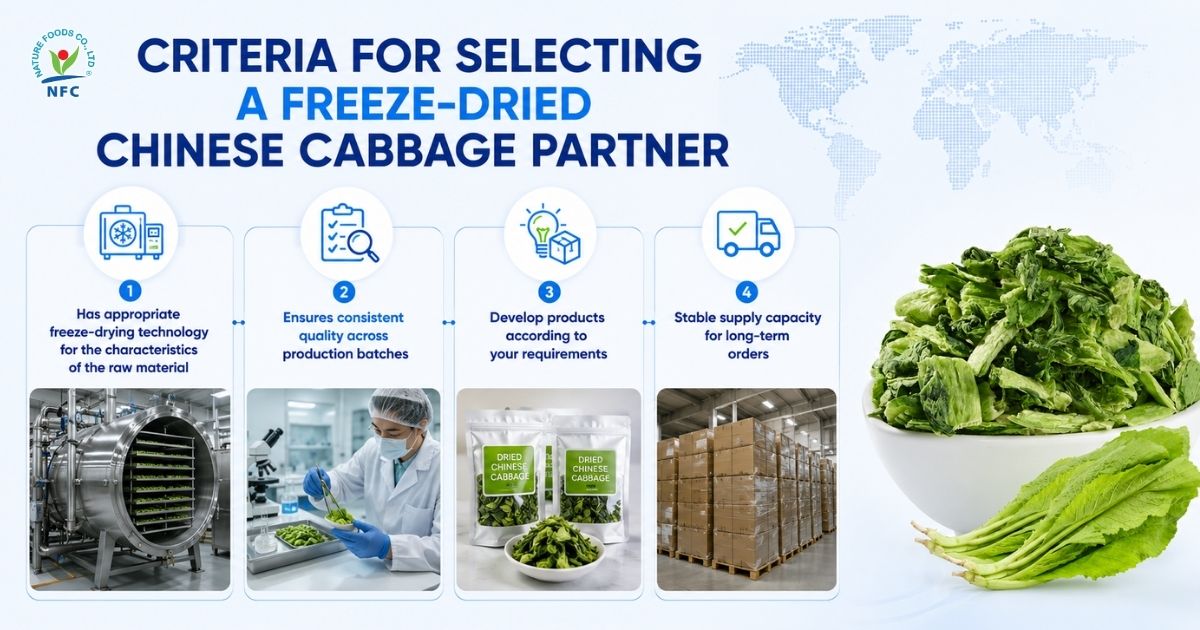
1. Process Capabilities Matched to Leafy Vegetable Attributes
Mustard greens feature delicate leaves and high water content, making them prone to color shift under improper heat. Enterprises should prioritize partners operating vacuum freeze drying (FD) paired with precision process controls to preserve color, structure, and natural bioactives.
At Nature Foods, mustard greens are processed via advanced vacuum freeze drying, minimizing thermal stress to preserve color, structure, and sensory attributes. Alongside FD, Nature Foods operates hot-air convective drying (AD) systems, giving clients flexible options aligned with budget and project goals.
2. Multi-Batch Consistency & Analytical Safety Controls
For B2B wholesale and export agreements, batch-to-batch consistency in color, size, moisture, and microbial safety is vital. Nature Foods operates under audited quality systems including BRCGS, ISO 22000, HACCP, FDA, HALAL, GLOBALG.A.P., and SEDEX – SMETA—ensuring multi-batch lot uniformity and clearing international export filters.
3. Full Turnkey Customization & R&D Support (OEM/ODM)
Enterprises require customized specifications (whole leaves, cut pieces, or fine powder) matched to proprietary product lines. Selecting an agile OEM/ODM partner compresses development timelines.
Through turnkey OEM/ODM services, Nature Foods supports clients from lab sample testing down to commercial manufacturing and export clearance. Managing a catalog of 300+ SKUs and an annual capacity clearing 3,000 tons, Nature Foods fulfills diverse B2B orders.
4. Industrial Facility Capacity for Long-Term Supply Security
A competent processing partner guarantees supply continuity, mitigating manufacturing disruptions. Located in Nhon Trach 1 Industrial Zone (Dong Nai), backed by 400+ professionals and extensive experience supplying major domestic brands and exporting to Japan, Australia, and Southeast Asia, Nature Foods delivers the scale required for long-term B2B supply contracts.
Frequently Asked Questions Regarding Freeze-Dried Mustard Greens (FAQ)
1. Can Nature Foods customize freeze-dried mustard green particle formats to private corporate specs?
Yes. Depending on the target application (instant noodle/porridge toppings, rice seasonings, meal kits, or powder formulations), Nature Foods provides versatile cutting and processing specifications:
- Cut Pieces / Leaf Strips: 5x5mm, 10x10mm, or 15x15mm dimensions.
- Diced / Fine Flakes: Formulated for instant baby porridges or rice seasonings.
- 100% Pure Fine Powder: Milled from 80 to 120 mesh fineness, serving as a natural green colorant and nutrient booster for instant noodles, Clean Label seasonings, and detox drinks.
2. What is the Minimum Order Quantity (MOQ) for freeze-dried mustard greens processing?
3. Does Nature Foods provide R&D formula development and complimentary sample testing?
4. What is the usable shelf life of freeze-dried mustard greens, and what storage rules apply?
- Shelf Life: Inside unopened protective packaging, freeze-dried mustard greens maintain a commercial shelf life of 12 to 24 months at ambient room temperature.
- Storage Conditions: Due to their micro-porous cell wall structure, freeze-dried greens absorb ambient humidity rapidly upon exposure. Products are hermetically sealed in multi-layer aluminum foil barrier bags (vacuum-sealed or nitrogen-flushed). Post-opening, packages must be re-sealed immediately to protect crispness.
5. Does freeze-dried mustard greens turn bitter or suffer color and flavor shifts compared to fresh leaves?
6. Should enterprises select hot-air dried (AD) or freeze-dried (FD) mustard greens to optimize unit COGS?
Selection relies on targeted retail market positioning:
- Select Hot-Air Drying (AD): Best suited when minimizing input COGS is the primary objective for mass-market offerings (e.g., standard instant noodle vegetable sachets, value bouillons).
- Select Freeze Drying (FD): Recommended for Premium categories, Clean Label wellness foods, gourmet instant soup blocks, meal kits, or export lines requiring vibrant green color, instant rehydration, and preserved nutrients.
7. Does the Nature Foods facility hold international safety accreditations to support exports to the US, EU, and Japan?
8. What is the standard B2B cooperation process for contract manufacturing at Nature Foods?
B2B partnerships follow a transparent 4-step workflow:
- 1. Specification Intake: Documenting technical parameters (leaf/cut sizes, powder mesh, target moisture, microbiological limits, end applications).
- 2. Lab Sample Development (R&D): NFC’s laboratory executes trial runs and dispatches complimentary sample lots for partner sensory and rehydration evaluation.
- 3. Specification Locking: Fine-tuning specs based on client feedback, locking wholesale quotations, and finalizing contracts.
- 4. Commercial Production & Delivery: Executing automated mass production under BRCGS standards, performing analytical quality checks, and delivering on schedule.