- Overview of the Current Wholesale Soft-Dried Mango Market
- Technology Comparison: Soft-Dried Mango vs. Air-Dried Mango (AD) vs. Freeze-Dried Mango (FD)
- Why Food Enterprises are Shifting toward Freeze-Dried Mango Contract Manufacturing (FD)?
- Industrial OEM/ODM Contract Processing and Wholesale Supply at Nature Foods
- Conclusion
- Frequently Asked Questions in Soft-Dried Mango Wholesale and Processing (FAQ)
Overview of the Current Wholesale Soft-Dried Mango Market
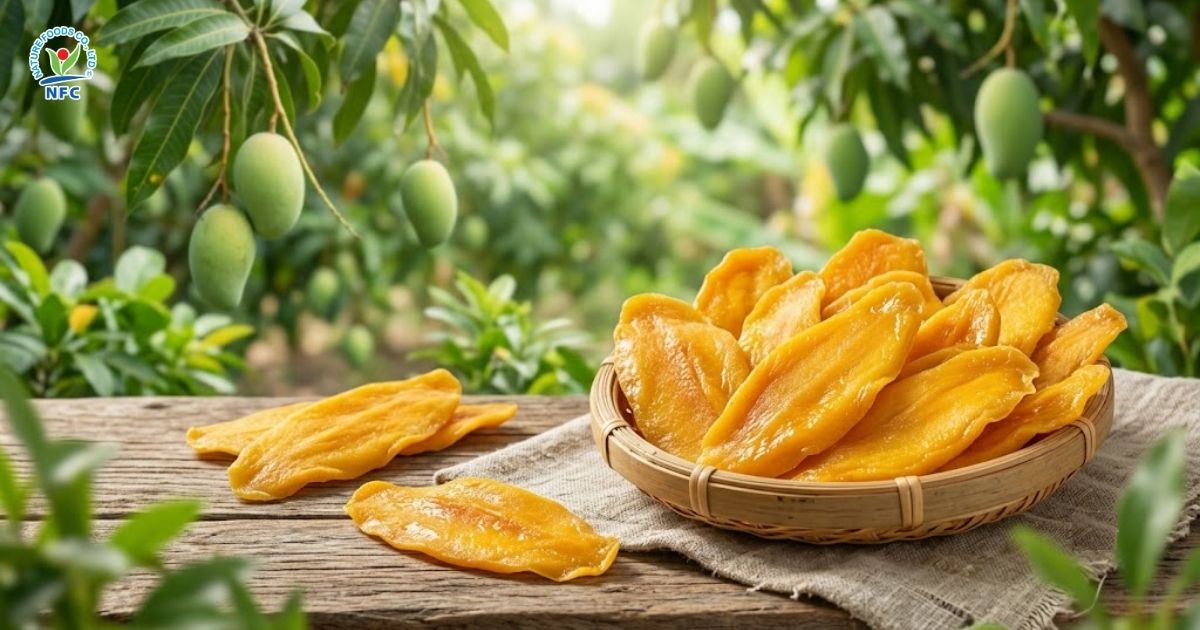
In the ready-to-eat fruit snack category, soft-dried mango has always been a staple commodity capturing the highest market share across supermarkets and food wholesalers. Consumer retail demand for this product line remains continuously high because the natural sweet and sour flavor profile of mangoes satisfies the palates of almost all age groups.
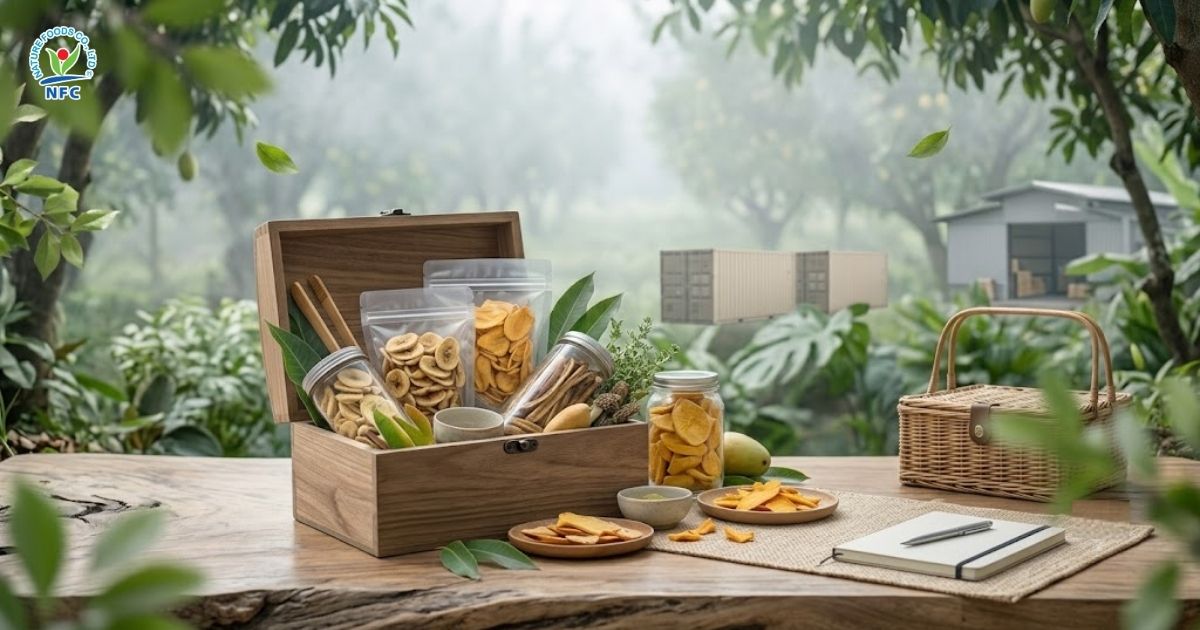
The wholesale soft-dried mango market has recently become more vibrant thanks to innovative variations, such as chili-flavored soft-dried mango. Beside standard zipper bags for daily snacking, brands are investing heavily in versatile packaging structures such as glass jars and elegant gift boxes to serve the premium corporate gifting demand during holidays and festivals.
The strong appeal of this gift segment drives a massive surge in consumption volume during peak seasons, transforming it into a highly profitable revenue anchor that volume wholesalers cannot afford to miss.
Although the downstream retail market is highly promising, commercial entities frequently face severe operational disruptions due to the high seasonality of fresh crops. During off-season periods or peak rushes, volatile raw agricultural material pricing and the risk of supply chain gaps remain persistent worries for product managers. Furthermore, storing raw fruits necessitates expensive cold storage warehouse footprint, while mechanical loss and spoilage rates due to crushing during logistics remain high.
To fundamentally eliminate these operational risks, proactively establishing a wholesale soft-dried mango sourcing channel with a locked-in, multi-year factory wholesale pricing structure is the most practical strategy.
Packaging Restructuring Trends and the Strong Commercial Potential of Premium Gifts
Consumer buying patterns regarding dried fruit items are demonstrating clear market division. Customers no longer settle for viewing soft-dried mango as a basic low-end snack enclosed within simple, clear plastic pouches.
The strong growth of glass jars, airtight PET jars, and beautifully engineered designer gift sets has significantly driven up the commercial value of mango slices. Particularly during peak intervals like Lunar New Year or Mid-Autumn Festival, the retail demand for clean agricultural hampers demonstrates explosive growth.
For volume wholesalers, selecting an ingredient channel that delivers perfectly shaped mango slices that do not suffer from sugar migration and display impeccable color uniformity is a vital requirement to cleanly enter this high-margin premium gifting segment.
Logistical Vulnerabilities and the Fiscal Pressures of Cold Storage for Fresh Fruits
Trading fresh mangoes places commercial companies in a highly vulnerable posture because the shelf life of mature fruits is extremely narrow. Long-haul transit chains from core agricultural hubs in the Mekong Delta or Southeastern provinces consistently face high mechanical loss rates of 15% to 25% due to crushing and stem decay.
To extend the perishable lifespans of fresh crops, procurement offices must maintain expensive cold rooms and refrigerated transit logistics fleets, which directly drains net operating margins.
Conversely, transitioning toward soft-dried mango distribution completely isolates enterprises from these operational pressures. Dehydrated items with precise moisture boundaries can be smoothly stored at room temperature for 12 to 18 months, balancing working capital and driving down warehouse running bills.
Strict Quarantine Barriers and the Surge of Deeply Processed Agricultural Exports
Fresh Vietnamese mangoes are highly prized internationally, yet raw export tracks are narrowing fast. Major global economies like South Korea, Japan, and China continuously implement technical trade barriers tracking fruit flies and pesticide residue limits.
In sharp contrast, deeply processed agricultural segments like soft-dried mango enjoy significant export clearance advantages. Precise thermal processing and rigorous water activity metrics entirely remove microbial and biological risks.
Therefore, proactively securing a wholesale source that satisfies international food safety compliance for formal export distribution is an intelligent strategic pathway helping Vietnamese commercial firms accelerate global revenue growth.
Technology Comparison: Soft-Dried Mango vs. Air-Dried Mango (AD) vs. Freeze-Dried Mango (FD)
The thermal handling methodology applied is the direct deciding factor governing final color performance, mechanical texture, residual moisture limits, and the absolute commercial value of the mango pieces.
Soft-Dried Mango: Retaining Natural Moisture for a Soft, Chewy Profile
This product category utilizes low-temperature dehydration paired with continuous air circulation channels to gradually pull moisture out of the fruit pulp fibers. Following processing, the material maintains a precise residual moisture boundary of around 15% – 20%, allowing natural crop sugars to concentrate into a soft, jammy structure.
The resulting end lot displays an appealing orange-yellow color, a soft and pleasantly chewy texture, and a rich, concentrated sweetness that is highly addictive. The singular disadvantage of this line is that due to high water activity parameters, any minor packaging failure can easily trigger sugar migration or oxidation darkening after extended warehousing.
Air-Dried Mango (AD): Optimizing Unit Cost for Industrial Scale Mass Production
Standard air-dried mango (Air Drying – AD) implements continuous high-temperature airflow inside processing chambers to force moisture out rapidly, bringing internal water activity down to an exceptionally low index. The absolute strongest asset of this mechanical setup is its capability to streamline production cost variables, perfectly answering massive high-volume contract runs for value-focused consumer segments.
Tuy nhiên vì chịu tác động trực tiếp từ nhiệt độ cao trong thời gian dài, lát xoài thường bị teo tóp bề mặt, cấu trúc biến thành dạng khô cứng, màu sắc hơi sẫm lại do đường bị caramen hóa và hao hụt một lượng lớn các vitamin nhạy nhiệt có sẵn trong quả tươi.
Freeze-Dried Mango (FD): Preserving Shape and Honeycombed Crispy Textures
If your brand positioning targets top-tier premium consumer experiences or serves formal export initiatives into high-standard trading zones, vacuum freeze-drying is the definitive operational solution. The freeze-drying workflow (Freeze Drying – FD) runs on sub-zero quick freezing to solidify water coordinates, subsequently utilizing deep vacuum sublimation to convert microscopic ice directly into gaseous vapor without passing through a liquid phase.
Owing to this sub-zero range principle, the mango slices perfectly preserve their authentic vivid yellow coloration and open cellular walls, creating an exceptionally lightweight, crispy, and porous mouthfeel. The optimized final material weight slashes global shipping overhead while protecting over 95% of native nutritional compounds and volatile aromatic elements.
Why Food Enterprises are Shifting toward Freeze-Dried Mango Contract Manufacturing (FD)?
Securing Complete Product Differentiation Instead of Low-Margin Price Wars
Compared to standard mass-market air-dried or soft-dried options, freeze-dried mango delivers unique attributes regarding color, structure, and sensory performance. These technical advantages allow enterprises to successfully engineer premium SKUs across elite gift lines, natural snack boxes, and advanced export portfolios. Rather than participating in race-to-the-bottom price wars, brands can capture superior loyalty by anchoring focus on verified lot quality and high-end user experiences.
Riding the Global Consumer Wave Toward Clean Label Alignments
Modern consumer groups are increasingly strict, systematically filtering out offerings built on artificial preservatives or chemical texturants. Freeze drying locks in the pure crop taste and identity without requiring added sugars, artificial dyes, or chemical texturants. Fulfilling this rigorous Clean Label baseline positions the item perfectly as a trusted raw choice for premium granola blending houses, raw natural fruit powders, or premium mix-ins for high-end beverage and hospitality chains.
Trimming Capital Expenditures When Deploying Novel Product Portfolios
Installing a proprietary industrial freeze-drying facility demands immense corporate investment across heavy machinery procurement, cleanroom setup, and technical engineering overhead. Sourcing via accredited B2B OEM/ODM contract processors enables brands to agilely launch new lines without absorbing massive up-front capital risks or heavy asset liabilities.
Under a contract manufacturing framework, enterprises enjoy total scalability over production volumes, tailored slice sizing, and time-to-market strategies. This is uniquely beneficial for corporate portfolios looking to test advanced freeze-dried products before executing permanent infrastructure decisions.
Industrial OEM/ODM Contract Processing and Wholesale Supply at Nature Foods
For brands looking to launch innovative lines or establish a highly stable source of processed mango ingredients, partnering with a high-capacity OEM/ODM contract factory represents an intelligent operational choice. Nature Foods delivers export-grade wholesale supply and turnkey processing solutions for agricultural ingredients, deploying both industrial vacuum freeze-drying (FD) and mass hot-air dehydration (AD) pipelines to support domestic brands and international distributors comprehensively.
Advanced Infrastructure and Synchronized Manufacturing Capacity in Nhon Trach
At Nature Foods, the entire manufacturing sequence—spanning washing, deep freezing, chamber sublimation, to fine grinding—is fully handled within an uncompromising, single-direction closed linear factory layout. This rigid spatial architecture allows our QC departments to impeccably track microbiological metrics, completely isolating processing phases to eliminate cross-contamination risks.
Our industrial complex is located inside the prime Nhon Trach 1 Industrial Zone, Dong Nai, spanning a massive industrial footprint equipped with high-capacity automated freeze-drying and hot-air dehydration loops. This layout ensures that NFC can comfortably absorb high-volume commercial contracts, running steady production schedules to guarantee prompt arrival timelines for partners.
Crucially, our raw fresh fruit streams are procured directly from contracted agricultural zones conforming to strict GLOBALG.A.P. standards. Harvested crops are quickly moved to our loading zones using specialized refrigerated logistics fleets, followed by automated ozone-washing, peeling, and cutting loops to achieve a completely uniform shape and size specification.
We strictly guarantee that raw inputs carry zero pesticide residues and display uniform physiological ripeness values. This careful procurement oversight ensures the final processed mangoes retain a brilliant golden color, a rich sweet-and-sour depth, and clean, natural structures that honor consumer wellness standards.
Securing Seamless Global Custom Clearance via Accredited International Credentials
Recognizing the strict technical trade barriers governing deeply processed agricultural exports to international territories, Nature Foods has fully audited all quality systems to match the absolute highest international paradigms. Our manufacturing plant holds a comprehensive portfolio of elite food safety credentials, including BRCGS, ISO 22000, and HACCP certificates.
NFC’s QA/QC quality management system performs strict sampling and verification for each dehydration run (Batch). Crucial attributes tracking residual moisture borders and water activity thresholds are precision-monitored using digital instruments, ensuring final shipments hit ideal dryness targets and avoid moisture migration or sugar leakage during extended storage.
Furthermore, to fully empower our commercial clients to execute official export distribution into major economic channels, our facilities maintain current FDA (USA) registrations and full HALAL credentials (for Islamic markets).
NFC has also cleanly achieved compliance under the strict SEDEX – SMETA ethical trade and corporate social responsibility framework. This acts as an essential passport, allowing your finished consumer SKUs to seamlessly clear compliance reviews for multi-national retail chains and supermarket groups across North America and Europe with zero regulatory friction.
A Proven Track Record Vetted by Billion-Dollar Multi-National Food Brands
Our multi-year strategic alliances with premier domestic and global consumer giants, including Unilever, Acecook, Ajinomoto, Masan Consumer, KFC, Orion, Mondelēz International, and more, stands as unambiguous proof of Nature Foods’ operational integrity and capacity to deliver on industrial-scale wholesale agreements.
Consistently clearing comprehensive, unannounced Factory Audits deployed by these multi-national conglomerates proves that NFC processing workflows conform to international standards. We unswervingly commit to:
-
Absolute protection of proprietary R&D formulas and private corporate recipes.
-
Providing comprehensive, transparent product registration dossiers and microbiological lab test data.
-
Maintaining absolute consistency over lot standards and factory wholesale pricing, independent of harvest cycles or weather disruptions.
Turnkey OEM/ODM Contract Manufacturing and Adaptive Private Labeling Solutions
Nature Foods operates far beyond basic custom drying; we supply holistic, end-to-end industrial processing frameworks tailored to the precise needs of procurement directors and corporate product engineers:
-
Versatile Sizing Formats: Precision slicing to mirror your engineering targets, including large fruit slices for retail snacks, symmetrical dices for granular granola mixers, or finely milled pure mango powders to introduce authentic background flavors inside dairy yogurts, baking mixes, and beverage formulations.
-
Adaptive Packaging and Container Options: Supplying heavy bulk aluminum sacks to cleanly integrate with industrial manufacturing lines, high-barrier retail zipper pouches, or completely finished containers finalized under your custom private labels (White Label) for premium retail and gifting markets.
-
Strategic Cost Fine-Tuning: Our advisory specialists are fully prepared to construct balanced technical solutions blending premium freeze-dried (FD) lots with economical air-dried (AD) lines. This strategic approach maximizes your enterprise profit margins, diversifying product choices to capture multiple market demographics simultaneously.
Conclusion
Soft-dried mango, air-dried mango (AD), and vacuum freeze-dried mango (FD) each satisfy discrete operational pathways inside the modern food manufacturing spectrum, depending tightly on target product metrics, retail positioning, and cost baselines.
The paramount factor for commercial brands involves securing unwavering lot uniformity and selecting a high-capacity manufacturing partner capable of maintaining those technical parameters across high-speed industrial scales.
If your group is evaluating ingredient suppliers or requires pilot testing for an upcoming product roadmap, the technical team at NFC is fully equipped to map out custom processing configurations, quality credentials, and multi-year supply strategies adjusted to your precise scale.
Frequently Asked Questions in Soft-Dried Mango Wholesale and Processing (FAQ)
1. What is the shelf life capability of soft-dried mango and what warehouse conditions are required?
2. Can soft-dried mango be processed according to custom corporate specifications?
3. What is the Minimum Order Quantity (MOQ) tracking soft-dried mango contract manufacturing?
Master MOQ boundaries are dictated by your specific technical parameters, target dimensions, and packaging specifications. Under a commercial B2B arrangement, enterprises are encouraged to communicate their forecast volume requirements directly so that our plant advisors can construct the most viable cost and timeline model.
As your strategic B2B ally equipped with an internationally accredited industrial infrastructure and synchronized technology setups, Nature Foods is always prepared to move with you to refine premium goods from Vietnamese crops, unlocking extensive retail paths across local and global frontiers.