
BRC certification is the global food safety standard that every business strives for to affirm capability and credibility. For N F C, this standard has become the foundation of our entire production process, enabling us to create high-quality, safe, and internationally compliant freeze-dried products. If you want to understand why BRC is considered a “passport” for export and why N F C is consistently trusted by partners, continue reading to discover the full value of this standard.
What is BRC Certification?
BRC Certification (BRCGS) stands for the BRC Global Standard for Food Safety, a worldwide food safety management standard developed by the British Retail Consortium.
It is designed to help organizations across the food supply chain ensure that production, processing, packaging, and distribution activities deliver safe products to consumers.
Today, BRC has become an internationally recognized “quality passport,” especially important for businesses exporting food or supplying major retailers.

Key Requirements of BRC Certification
To achieve BRC certification, businesses must meet stringent food safety management requirements, including:
- Senior Leadership Commitment: Leadership must demonstrate a strong commitment to meeting BRC requirements, ensuring adequate resources, effective communication, and clear safety and quality objectives.
- HACCP System (Hazard Analysis and Critical Control Points): A crucial foundation for controlling biological, chemical, or physical hazards in production. BRC requires HACCP to be properly established, implemented, and maintained.
- Prerequisite Programs (PRP): These include sanitation, pest control, personnel hygiene, equipment maintenance, and other fundamental conditions supporting HACCP and ensuring a clean production environment.
- Quality Management & Process Control: Includes control of raw materials, supplier management, traceability, product testing, and continuous process monitoring.
- Non-conforming Product Control & Corrective Actions: Businesses must define procedures for handling non-compliant products, withdrawals/recalls, and implementing corrective actions to prevent recurrence.
- Internal & External Audits: Routine internal audits and third-party certification audits ensure ongoing compliance with BRC requirements.
- Management Review: Top management must regularly review system performance and implement improvements as needed.
- Continuous Improvement: Businesses must identify opportunities for improvement—through customer complaints, risk assessments, or technology changes—and implement systematic enhancements.

Role and Benefits of BRC Certification
Achieving BRC certification delivers significant strategic and operational benefits:
-
Builds credibility with customers and partners
-
Opens access to export markets, especially in the EU, US, and major global retailers
-
Reduces food safety risks through structured control programs
-
Optimizes operational costs by minimizing waste and errors
-
Enhances competitive advantage in a demanding global market
-
Strengthens internal food safety culture across the workforce

Comparison Between BRC and ISO 22000
| Criteria | BRC Certification | ISO 22000 |
|---|---|---|
| Scope | Global Food Safety Standard for manufacturers, packers, distributors | International standard for Food Safety Management Systems |
| HACCP Requirement | Mandatory, central component | Required, but focuses more on management system structure |
| Assessment Method | Very detailed point-by-point inspection of processes and facilities | System-level audit emphasizing documentation & management |
| Market Application | Highly preferred for export, major retailers | Global use; ideal for building integrated food safety systems |
| Continuous Improvement | Mandatory with documented actions | Required but more conceptual within the management system |
| Certification Complexity | More demanding and costlier | More flexible and may be lower cost |
In short: BRC is highly practical and operationally detailed, while ISO 22000 is broader and management-focused.
BRC Implementation Process for Businesses
- Gap Assessment
- Leadership Commitment
- Develop/Improve HACCP & PRP
- Documentation Development
- Employee Training
- Process Control & Monitoring
- Internal Audit
- Pre-audit (optional)
- Official BRC Certification Audit
- Corrective Actions
- Certification & Ongoing Maintenance
Does N F C Have BRC Certification?
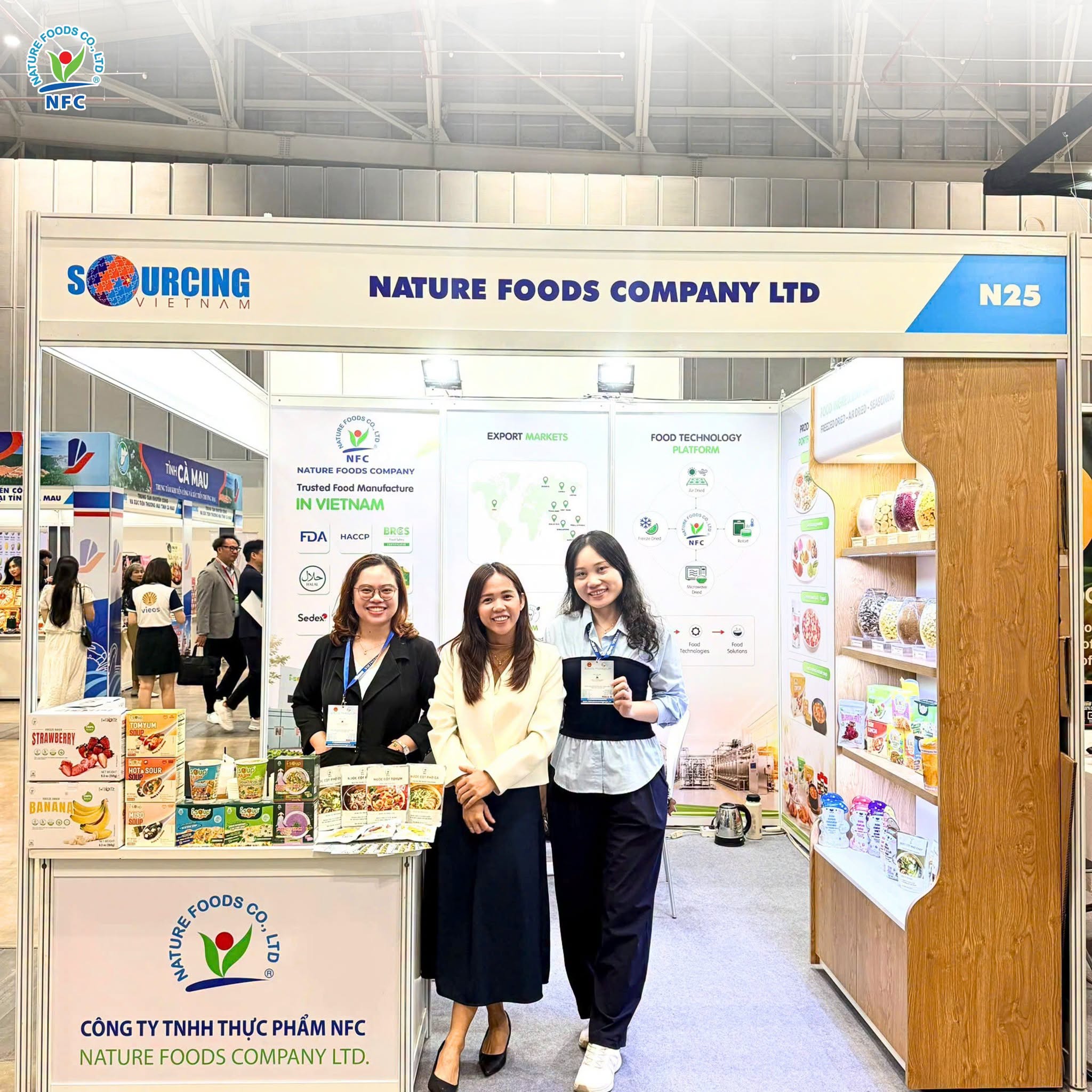
As one of Vietnam’s leading freeze-dried food manufacturers, N F C (Nature Foods) has committed to international-standard food safety from the very beginning.
Since 2002, we have invested heavily in strict food safety systems such as HACCP, ISO 22000, and BRCGS.
Across all product lines — from freeze-dried fruits and vegetables to seafood and seasonings — N F C proudly displays top global standards including HACCP, ISO 22000, SMETA, FDA, and especially BRCGS, affirming our commitment to delivering “clean eating – green living” products to consumers worldwide.
For N F C, BRC certification is not merely a symbol of credibility; it is the solid foundation enabling us to enter demanding markets such as Europe, Japan, and Southeast Asia.
With a tightly managed production system, rigorous quality control, and a culture of continuous improvement, N F C ensures that every product meets global standards and delivers full value to customers and partners.
Conclusion
BRC certification is not only one of the world’s leading food safety standards — it is also a “passport” that helps businesses succeed in the most demanding global markets.
By fully implementing HACCP, PRP, quality management, and continuous improvement, organizations can build transparent, safe, and sustainable operations.
For N F C, achieving BRC certification is clear proof of our commitment to delivering safe, internationally certified products. It forms the foundation for expanding markets, strengthening competitiveness, and accompanying customers on the journey toward a cleaner, higher-quality, and sustainable food future.