ISO 22000 is increasingly becoming a mandatory standard for businesses in the food industry as consumers demand higher levels of safety and transparency. As a pioneer in applying modern freeze-drying technology, N F C proudly holds ISO 22000 certification and operates a strict food safety management system. This article will help you understand what ISO 22000 is, the implementation process, and why this standard is crucial for all food businesses.
What is ISO 22000?
ISO 22000 is an international standard for Food Safety Management Systems (FSMS) issued by the International Organization for Standardization (ISO). It applies to all businesses involved in the food supply chain – from production, processing, and packaging to transportation and distribution.
ISO 22000 helps businesses identify, control, and prevent food safety hazards, including biological, chemical, and physical risks, ensuring the final products are safe for consumers, compliant with regulations, and enhancing brand credibility.

Key requirements of ISO 22000

To comply with ISO 22000, businesses must develop and operate a comprehensive food safety management system that controls hazards at every stage of the production chain. Core requirements include:
Internal and external communication
ISO 22000 emphasizes transparent communication among stakeholders. Businesses must establish clear communication processes with internal staff, customers, suppliers, partners, and regulatory authorities. This ensures timely identification, reporting, and handling of food safety issues, minimizing production risks.
Documented management system and food safety policies
Businesses must prepare a complete set of documents required by the standard, including:
-
Food safety policy
-
Objectives and scope of application
-
Production process flowcharts
-
Standard Operating Procedures (SOPs)
-
Control forms and records
This documentation ensures transparent, consistent, and manageable operations.
HACCP plan and hazard analysis
ISO 22000 fully integrates HACCP principles. Businesses must:
-
Identify potential hazards from raw materials, equipment, environment, and personnel
-
Assess risk levels
-
Determine Critical Control Points (CCPs)
-
Establish monitoring measures and corrective actions
This step is crucial to ensure the final product is safe before reaching consumers.
Prerequisite programs (PRPs)
PRPs include foundational conditions to ensure a safe and hygienic production environment, such as:
-
Facility and equipment sanitation
-
Pest control
-
Water and waste management
-
Personal hygiene regulations for employees
-
Routine maintenance and equipment calibration
PRPs support and reduce contamination risks throughout the production process.
Internal audits and continuous improvement
ISO 22000 requires regular internal audits to:
-
Check compliance levels
-
Identify non-conformities
-
Implement corrective and preventive actions
Continuous improvement ensures the food safety management system remains effective, compliant, and market-ready.
Benefits of ISO 22000 certification

ISO 22000 brings tangible benefits to food businesses. Beyond improving product quality, it serves as a “passport” for market expansion and building lasting consumer trust. Key benefits include:
-
Enhanced food safety
ISO 22000 establishes strict hazard control systems at every stage – from raw materials and production to distribution. This ensures final products meet international standards, minimizes contamination risks, and reduces product recalls. -
Increased credibility and customer trust
Certified businesses are recognized for transparent, professional, and safe processes, boosting brand reputation and competitiveness. -
Market expansion and export opportunities
Many countries and major distributors require ISO 22000 certification or equivalent standards. Certification facilitates access to demanding markets like the EU, Japan, Korea, and the U.S., while enhancing international collaboration. -
Operational optimization and long-term cost reduction
ISO 22000 promotes standardized operations, reducing production errors, minimizing raw material waste, and lowering costs from rework or product disposal. Over time, this improves efficiency and saves operational expenses. -
Regulatory compliance and risk mitigation
ISO 22000 ensures compliance with food safety laws, reducing the risk of violations, penalties, and other legal issues affecting business operations.
ISO 22000 compared to other standards (HACCP, GMP, ISO 9001…)
| Standard | Scope | Main Objective | Key Difference |
|---|---|---|---|
| ISO 22000 | Entire food supply chain (from raw materials to distribution) | Comprehensive food safety management | Integrates HACCP principles + ISO management system; most modern and holistic |
| HACCP | Focuses on production and processing | Identify and control hazards during production | Core part of ISO 22000; ISO 22000 extends into a full management system |
| GMP | Facilities, personnel, equipment, production conditions | Ensure good production and hygiene practices | Considered PRPs in ISO 22000; foundational conditions for HACCP |
| ISO 9001 | All industries, not just food | Overall quality management | Focuses on general product/service quality, not specialized in food safety like ISO 22000 |
ISO 22000 implementation process in businesses

Implementing ISO 22000 requires a well-structured, unified, and practical food safety management system. A typical implementation process includes:
Current status survey and gap analysis
Experts assess the existing system against ISO 22000 requirements, identifying non-conformities and planning specific improvements.
Develop ISO 22000 documentation
Businesses prepare required documents, including:
-
Food safety policy
-
System objectives and scope
-
Production flowcharts
-
SOPs and work instructions
-
Recording and control forms
Staff training
Relevant personnel receive training on:
-
ISO 22000 awareness
-
HACCP principles
-
PRPs
-
Food hygiene and safety practices
System application and operation
After documentation and training, the system is applied in production, including record-keeping, CCP monitoring, SOP execution, and PRP maintenance.
Internal audits and corrective actions
Before certification, internal audits check compliance, identify gaps, and implement corrective actions to ensure the system meets all requirements.
Certification audit by an independent body
A licensed certification body evaluates the business. If compliant, the business receives ISO 22000 certification and may use the certification logo on products and communications.
When should businesses consider ISO 22000?

ISO 22000 is suitable for any business in the food supply chain. Consider implementation if:
-
The business is involved in production, processing, packaging, or distribution of food.
-
You want to enhance customer trust and gain a competitive edge.
-
You plan to expand distribution networks or export internationally.
-
The business has faced quality incidents and needs clear hazard control.
-
You want to standardize processes to optimize costs and improve management.
N F C – an ISO 22000 certified food producer
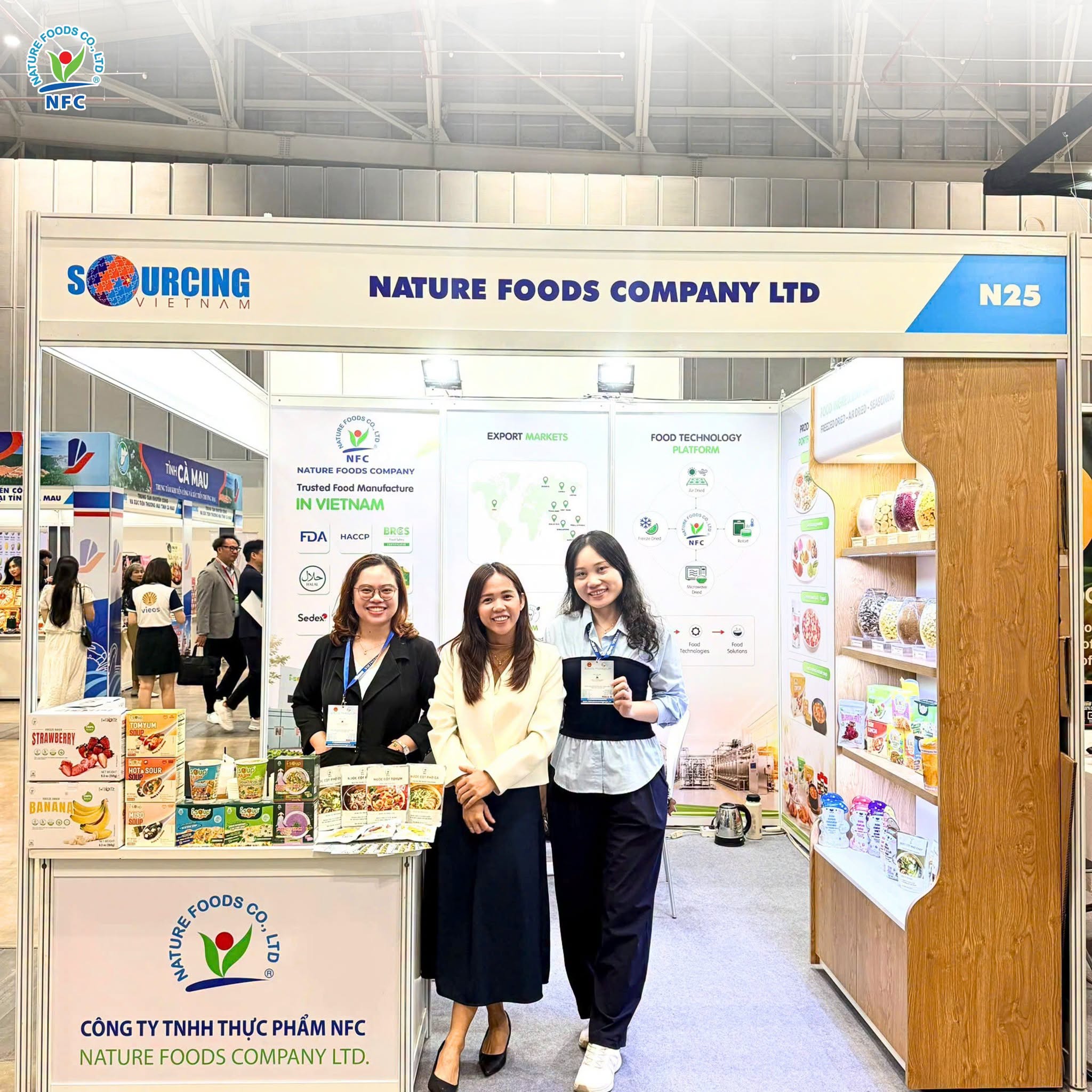
N F C specializes in high-quality freeze-dried and convenient foods. Holding ISO 22000 certification, we are committed to safety, quality, and transparency throughout our production process.
At N F C, ISO 22000 is applied across:
-
Raw material control
-
Modern freeze-drying production lines
-
Closed, sterile packaging processes
-
Regular quality testing before market release
This standardized system ensures N F C products retain natural flavor, high nutritional value, and absolute consumer safety.
Conclusion
ISO 22000 is a core standard enabling food businesses to control hazards, ensure product safety, and enhance market competitiveness. Implementing this standard not only meets growing market demands but also demonstrates responsibility for consumer health.
As an ISO 22000-certified company, N F C is committed to delivering safe, convenient, and high-quality products that meet modern consumer trends and international standards. We continuously innovate, upgrade processes, and invest in technology to bring the best value to our customers and the community.