See also: What is OEM? 5 Benefits of OEM Services
In an increasingly competitive market, many businesses are choosing the ODM model as an optimal approach to develop their own branded products. So, what is ODM, and why has this model become increasingly popular in industries such as food, cosmetics, and technology? Let’s explore together with N F C (Nature Foods) in the article below!
Mục lục
- What is ODM?
- Difference Between ODM and OEM
- Comparison between ODM and OEM
- The ODM Production Process
- Advantages of the ODM Model for Businesses
- Risks and Limitations of ODM
- Common Industries Using the ODM Model
- When Should Businesses Choose ODM?
- N F C – Vietnam’s Leading ODM Partner in Freeze-Dried & Heat-Dried Foods
- Conclusion
What is ODM?
ODM (Original Design Manufacturer) is a manufacturing model in which the manufacturer is responsible for both the design and production of a finished product according to the brand’s requirements. In other words, businesses can select an existing product model, customize the logo or packaging, and launch it to the market.
Unlike the OEM model—where the client provides the design—ODM allows companies to save on R&D costs, shorten time-to-market, and leverage the manufacturer’s existing technology.

Difference Between ODM and OEM
What is OEM?
OEM (Original Equipment Manufacturer) is a model where the brand provides product designs, formulas, or technical specifications, and the OEM manufacturer handles production according to those requirements.
The business retains full ownership of the design or formula, while the OEM is only responsible for manufacturing. This model is suitable for brands with an internal R&D team or their own product ideas.
Example: A beverage company provides a juice formula, and the OEM produces it following the brand’s specifications and packaging.
| Tiêu chí | ODM | OEM |
| Thiết kế sản phẩm | Do ODM đảm nhận | Do khách hàng cung cấp |
| Quyền sở hữu trí tuệ | Thường thuộc ODM | Thuộc về thương hiệu |
| Chi phí đầu tư ban đầu | Thấp hơn | Cao hơn (do phải tự R&D) |
| Thời gian ra mắt sản phẩm | Nhanh | Lâu hơn |
| Mức độ linh hoạt | Tùy biến ít hơn | Linh hoạt cao hơn |
Thus, ODM is suitable for new businesses that want to launch products quickly without large investments, while OEM suits established brands that want full creative and technical control.

The ODM Production Process
A standard ODM production process typically includes:
-
Research & Development (R&D): The ODM manufacturer studies market trends, formulas, and materials to create potential product models.
-
Product & Packaging Design: Develop 3D prototypes, packaging, and color schemes.
-
Testing & Quality Certification: Ensure compliance with safety and technical standards (e.g., GMP, ISO).
-
Mass Production: Manufacture products using advanced production lines.
-
Packaging – Delivery – Technical Support: Provide finished goods and assist with market launch.
This process helps businesses shorten product development time while maintaining consistent quality.

Advantages of the ODM Model for Businesses
ODM offers many practical benefits, especially for small and medium-sized enterprises aiming to enter the market quickly without large investments:
-
Cost Savings: Businesses don’t need to build factories, R&D labs, or hire engineers—the ODM handles everything from concept to mass production.
-
Faster Time-to-Market: Instead of spending years on product development, brands can launch within months.
-
Access to Advanced Technology: ODM manufacturers often have state-of-the-art facilities and experienced R&D teams, ensuring international-level quality.
-
Consistency & Quality Control: Standardized production (ISO, GMP) ensures product consistency and maintains brand reputation.
-
Easier Product Line Expansion: Once a partnership is established, it’s easy to expand into new product lines using existing resources and technology.

Risks and Limitations of ODM
Despite its advantages, ODM also carries certain risks:
-
Intellectual Property Risks: The design or formula often belongs to the ODM, not the brand. Without clear contracts, businesses may lose control over their product.
-
Limited Customization: Since ODM products are based on existing templates, customization options can be restricted.
-
Dependency on Manufacturers: Brands depend heavily on their ODM partner’s capacity and reliability.
-
Quality Variation: Without strict supervision, product quality may vary between batches.
Common Industries Using the ODM Model
1. Food industry
The ODM food manufacturing model is rapidly growing in Vietnam due to the rising demand for high-quality production and strict regulatory requirements.
ODM food manufacturers that meet GMP or HACCP standards not only provide exclusive formulations but also support businesses with product registration, packaging design, and commercial product development.
As a result, small brands and startups can quickly launch functional foods, beverages, or nutritional products while maintaining international safety standards.

2. Electronics, Home Appliances, and Technology Devices
In the electronics and technology sectors, the ODM production model is widely applied to products such as smartphones, televisions, speakers, headphones, and smart home appliances.
Major brands often collaborate with ODM manufacturers to develop hardware designs, software systems, and even user interfaces, before branding the products under their own names.

3. Cosmetics and Personal Care Industry
ODM in the cosmetics industry is currently one of the fastest-growing models. Full-package ODM manufacturers provide the entire process—from formula research, ingredient selection, quality testing, and packaging design to legal documentation.
This allows businesses to simply choose a sample product, adjust the packaging, logo, or fragrance to create their own identity, and then launch it to the market in a short time.
This model is especially suitable for local cosmetic brands or startups that want to test the market without investing in manufacturing facilities.

When Should Businesses Choose ODM?
ODM is suitable when a company:
-
Lacks R&D or production capabilities.
-
Wants to test the market quickly at low cost.
-
Wishes to leverage an existing manufacturer’s expertise and technology.
-
Plans to expand its product portfolio without investing in new infrastructure.
N F C – Vietnam’s Leading ODM Partner in Freeze-Dried & Heat-Dried Foods
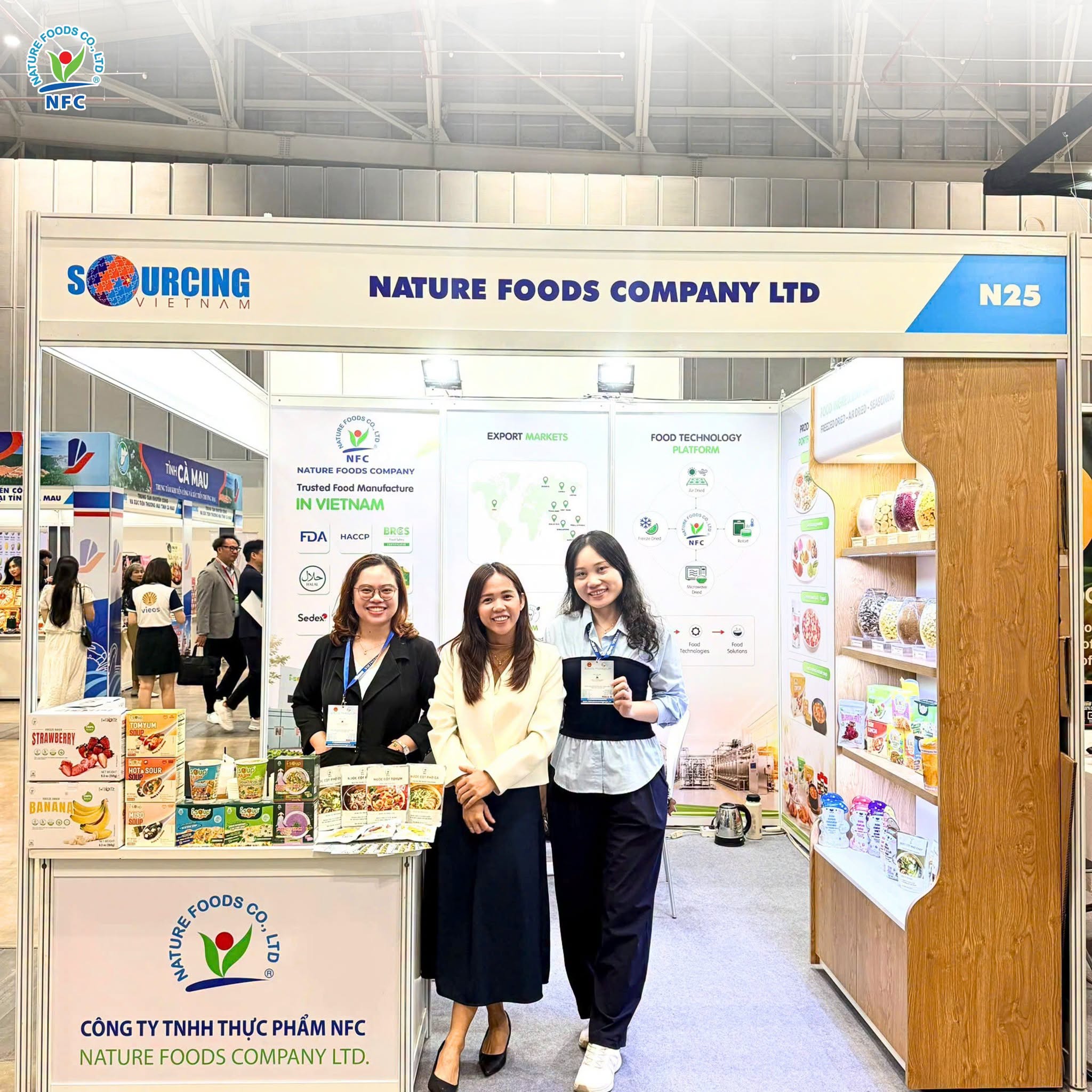
With over 23 years of experience in food processing, N F C (Nature Foods) is proud to be a leading ODM manufacturer specializing in freeze-dried and heat-dried foods. Our ISO and HACCP certified factory, combined with advanced drying technology, preserves the natural flavor, color, and nutrients of raw materials.
We combine deep drying technology expertise with a skilled R&D team to help businesses:
-
Develop custom product formulas aligned with brand goals.
-
Optimize production costs and shorten launch time.
-
Maintain consistent quality that meets international standards.
If you’re looking for a trusted ODM partner for freeze-dried food products, contact N F C today to bring your product ideas to life.

Conclusion
The ODM model allows businesses to build their own product lines without investing in factories or R&D teams. In today’s competitive market, ODM helps companies reduce costs, speed up time-to-market, and ensure stable product quality – making it a strategic choice for many brands.
With over two decades of experience, N F C (Nature Foods) is your reliable ODM partner for developing high-quality freeze-dried food products. We provide end-to-end manufacturing solutions from formula research, testing, and packaging design to international-standard mass production.
Contact N F C (Nature Foods) today to start developing your own ODM food product line with your brand’s unique identity.